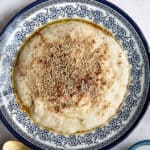
Easy Persian Haleem
A delicious classic Persian porridge, made with wheat and turkey. Serve it with melted ghee, cinnamon and sugar.
Servings: 12
Ingredients
- 2½ cups Coarse bulgur
- 2 pounds Turkey breast boneless and skinless
- 1 large Onion cut into quarters
- 1 Cinnamon stick
- 1 tbsp Cinnamon
- ½ cup Ghee melted
- Granulated sugar for serving
- Sesame seeds for topping
Instructions
- Place the bulgur in a large bowl and fill the bowl with water to it comes about 1 1/2 inch above the bulgur. Let it soak for 2 hours. The bulgur will expand and will be lighter in color.
- Drain the water, place the bulgur in a large pot and add 16 cups of water. Turn the heat to medium and let it cook for about 4 hours until the bulgur falls apart and is extra tender.
- Meanwhile, place the turkey breast in a separate pot and fill the pot with water. Add the cinnamon stick and the quartered onion. Cook the turkey with cinnamon and onion for 2 hours or until the turkey is completely cooked and tender.
- Once the bulgur is fully cooked, blend it in the pot using an immersion blender.
- Shred the turkey using a stand mixer with paddle attachment or an electric mixer. Add 1 ½ to 2 cups of the blended bulgur mix and combine to form a paste.
- Add the turkey mix back into the pot with the bulgur and stir well to combine. Simmer on medium low for about 1 hour. Mix the melted ghee with cinnamon and a pinch of salt. Add the cinnamon and ghee to the pot and stir to combine. Cook for 30 more minutes, stirring occasionally.
- Divide between bowls and top with ghee, cinnamon, and sesame seeds. Serve with granulated sugar, honey or maple syrup.
Video
Notes
Proper Soaking of Bulgur: Soaking the bulgur for at least 2 hours is essential. This helps the bulgur absorb water, making it cook faster and ensuring a smoother texture in the final dish.
Low and Slow Cooking: Allow the bulgur to cook on medium heat for a prolonged period (about 4 hours). This slow cooking process breaks down the grains, creating the signature creamy texture. Stir occasionally to prevent sticking.
Blending for Smoothness: Use an immersion blender to blend the bulgur after it’s fully cooked. This step ensures that the haleem is smooth and velvety, rather than grainy. Blend until you achieve a consistency similar to porridge.
Shredding the Turkey: Shredding the turkey finely is important for the texture of the haleem. Using a stand mixer with a paddle attachment will make this process easier and ensure the turkey is well-incorporated into the bulgur. The turkey should be almost paste-like before it’s mixed back into the bulgur.
Balancing Flavors with Ghee and Cinnamon: The addition of ghee (or unsalted butter) and cinnamon towards the end of the cooking process adds a rich, warm flavor to the haleem. Make sure to mix it thoroughly into the pot so the flavors are evenly distributed.
Consistency Check: As haleem thickens during cooking, it’s important to stir it regularly, especially towards the end. The consistency should be thick but not dry. If it’s too thick, you can add a bit of hot water to reach your desired consistency.
Personalize Your Toppings: Haleem is versatile in its toppings. While traditional toppings include sesame seeds, ghee, and a sprinkle of cinnamon, you can also experiment with sugar, maple syrup, or even a pinch of salt to cater to your taste preferences.
Nutrition
Calories: 248kcal | Carbohydrates: 24g | Protein: 20g | Fat: 9g | Saturated Fat: 5g | Polyunsaturated Fat: 1g | Monounsaturated Fat: 3g | Trans Fat: 0.01g | Cholesterol: 60mg | Sodium: 161mg | Potassium: 324mg | Fiber: 6g | Sugar: 1g | Vitamin A: 20IU | Vitamin C: 1mg | Calcium: 30mg | Iron: 1mg