Khoresh Bademjan (Persian Eggplant Stew)

Nov 29, 2019, Updated Sep 29, 2026
This post may contain affiliate links.
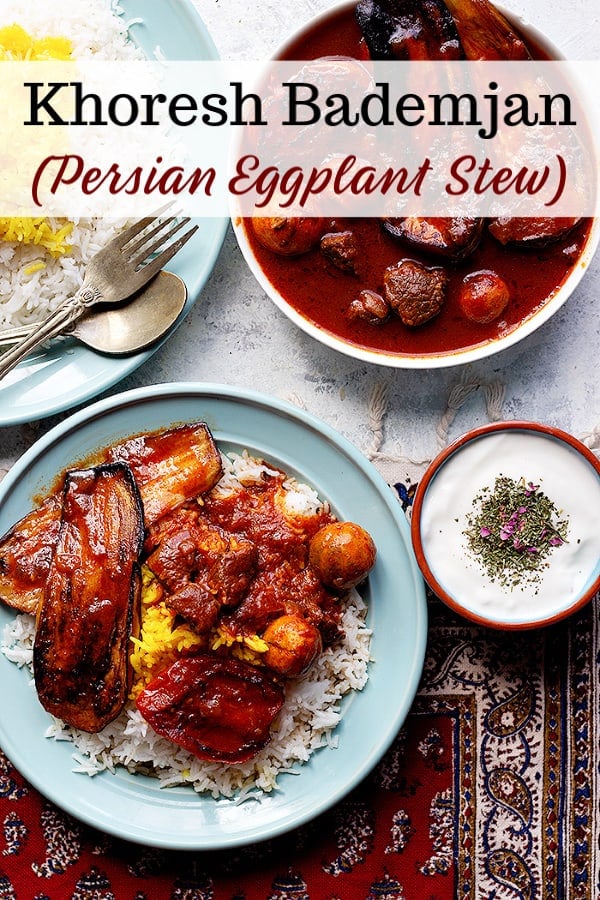
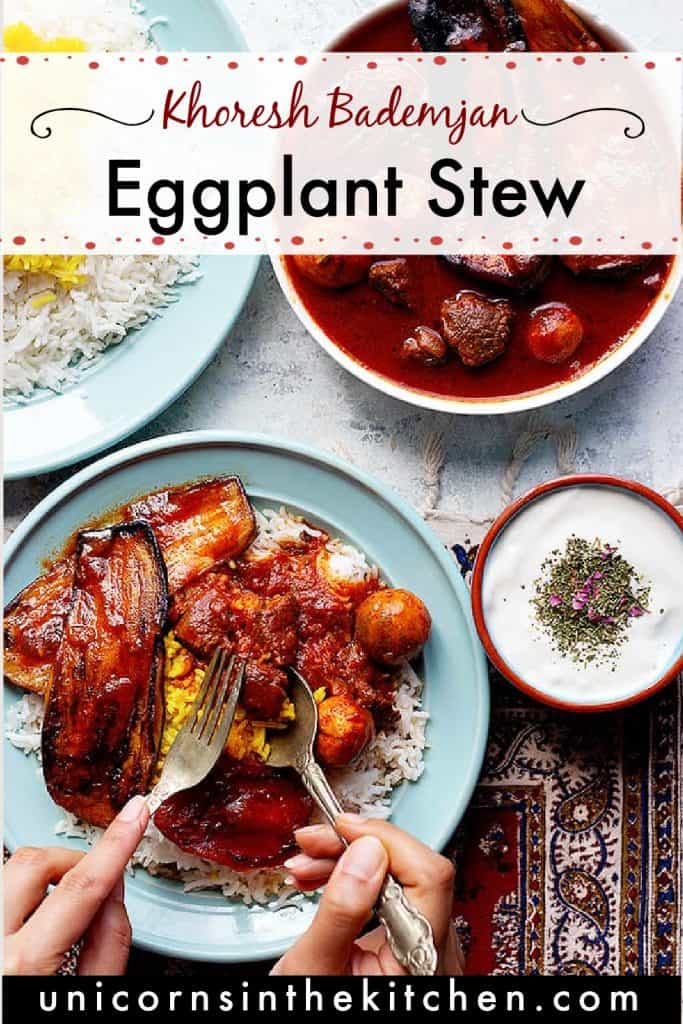
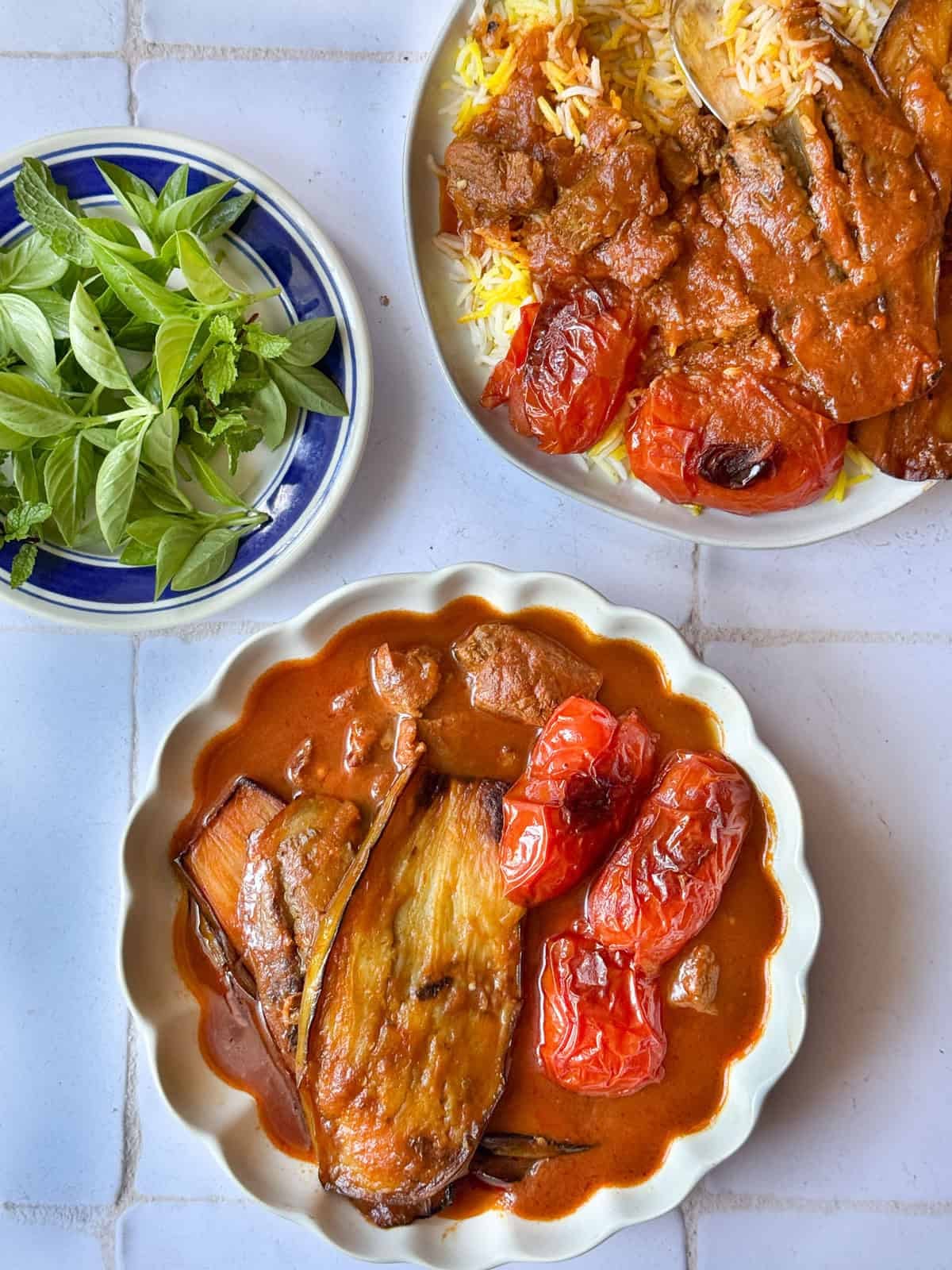
Khoresh bademjan is a Persian eggplant stew. Chunks of beef simmers slowly in spiced tomato sauce, then fried eggplant and tomatoes go in at the end to finish the stew. It’s always served with rice and to me, it’s the definition of comfort food.
This was one of my comfort dishes growing up. My maman made it often, and the smell of it going in the pot is one of the homiest things I know. When I saw her flipping the rice out onto the platter with the golden tahdig on top, I knew a good lunch or dinner was waiting. She also made it look easy, because there was always fried eggplant in the freezer. All she had to do was pull it out and drop it into the stew.
What Goes Into Khoresh Bademjan?
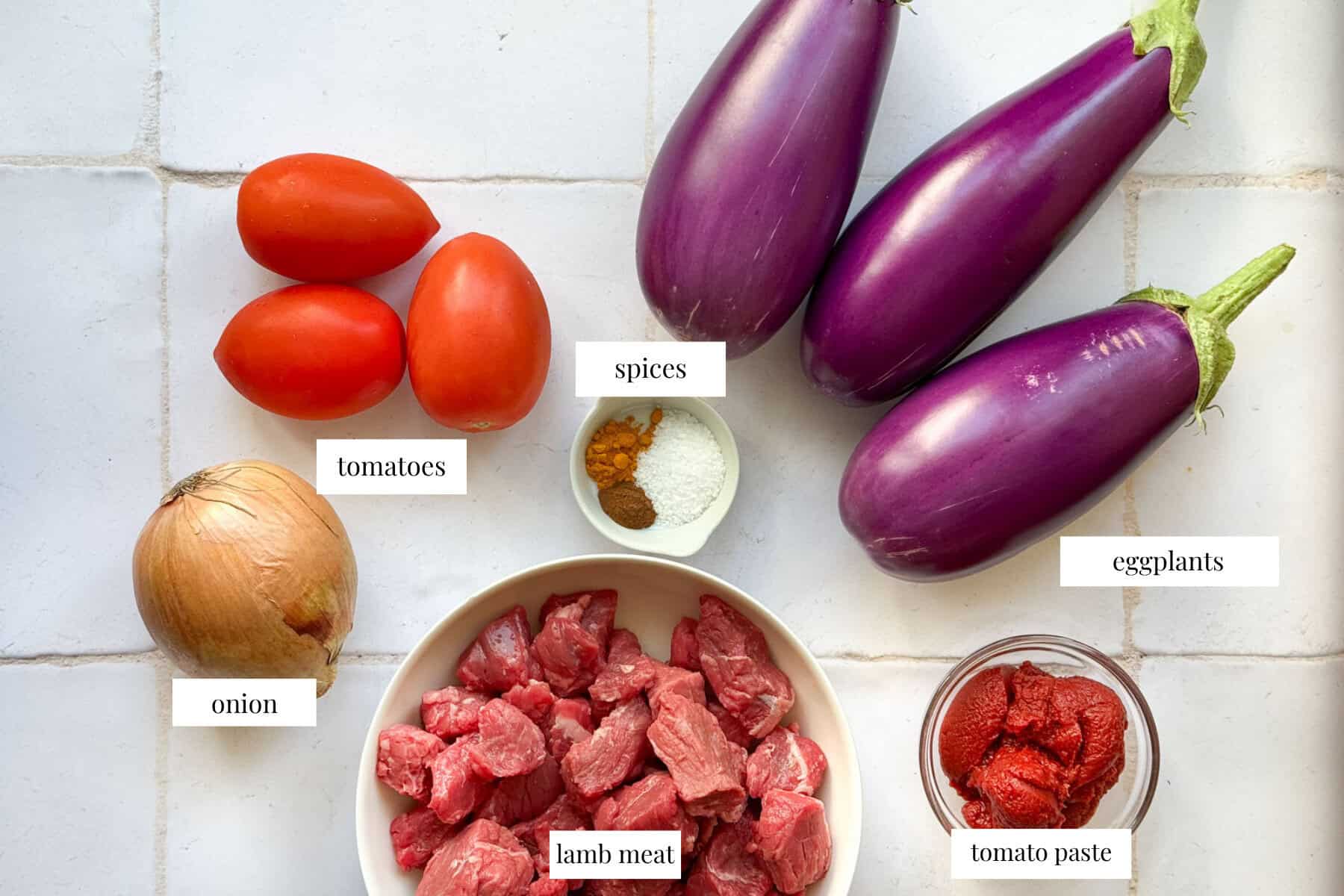
Stew meat: I grew up having this dish with lamb, however, I have tried it with beef as well and both work.
Yellow onion: The base of every Iranian stew. Cook until golden and then add the meat.
Turmeric: Turmeric wants to hit hot oil to lose its raw edge. It is the backbone of Persian savory cooking and you will notice its absence immediately.
Tomato paste: Four tablespoons, which is more than it sounds. Stir it in and let it cook with the meat for a minute before the water goes in, so it darkens slightly and releases its flavor.
Cinnamon: A quarter teaspoon sounds like nothing, and it is the ingredient people skip. Do not skip it. It will not make the stew taste of cinnamon. What it does is sit underneath the beef and round it out, the way cinnamon does with red meat throughout Middle Eastern cooking. You will not taste the cinnamon at all, but you will absolutely know if it is missing. It goes in at the end with the salt, once the beef is already tender.
Neutral oil: A third of a cup, divided. Avocado, grapeseed or canola, anything without a strong flavor of its own. Two tablespoons for the onion and beef, three for the eggplant, and whatever is left for the tomatoes.
Italian eggplants: Four, sliced half an inch thick with the skin on. There is more on choosing and frying them below, because this is the key ingredient in this recipe.
Roma tomatoes: Three, cut in half and fried separately rather than dropped in raw. Frying concentrates them and they hold their shape in the pot.
Lemon or dried Persian limes: The non negotiable sour note at the end. Both work and they do different things, which is worth a section of its own further down.
Choosing and Frying The Eggplant
I prefer Italian eggplants to make khoresh bademjan because of their size. However, globe eggplants or Chinese eggplants work as well.
Picking a good one. Look for bright, glossy skin with no dull patches. It should feel heavy for its size, which means it is dense rather than dried out and pithy. Press it gently: no soft spots, no bruising, no blemishes. A light eggplant with dull skin will be full of seeds and bitter.
Leave the skin on. I do not peel them. The skin holds the slices together through the frying and the simmering, and it looks better in the bowl.
Slice them half an inch thick. Rounds or lengthwise planks, whichever you prefer. It makes no difference to the result, so cut them whichever way suits the eggplant you have.
Fry them for color, not to cook them through. Five minutes a side in hot oil. You are after golden color and a little softening, nothing more. The eggplant finishes cooking in the stew, and if you fry it all the way now it will collapse later.
One important note: Frying is the traditional way and it gives the best flavor, because the eggplant takes on some of the oil and turns silky. If you would rather not fry, roast the slices or put them in the air fryer until they are somewhat golden brown. The stew will still be good.
How To Make Khoresh Bademjan
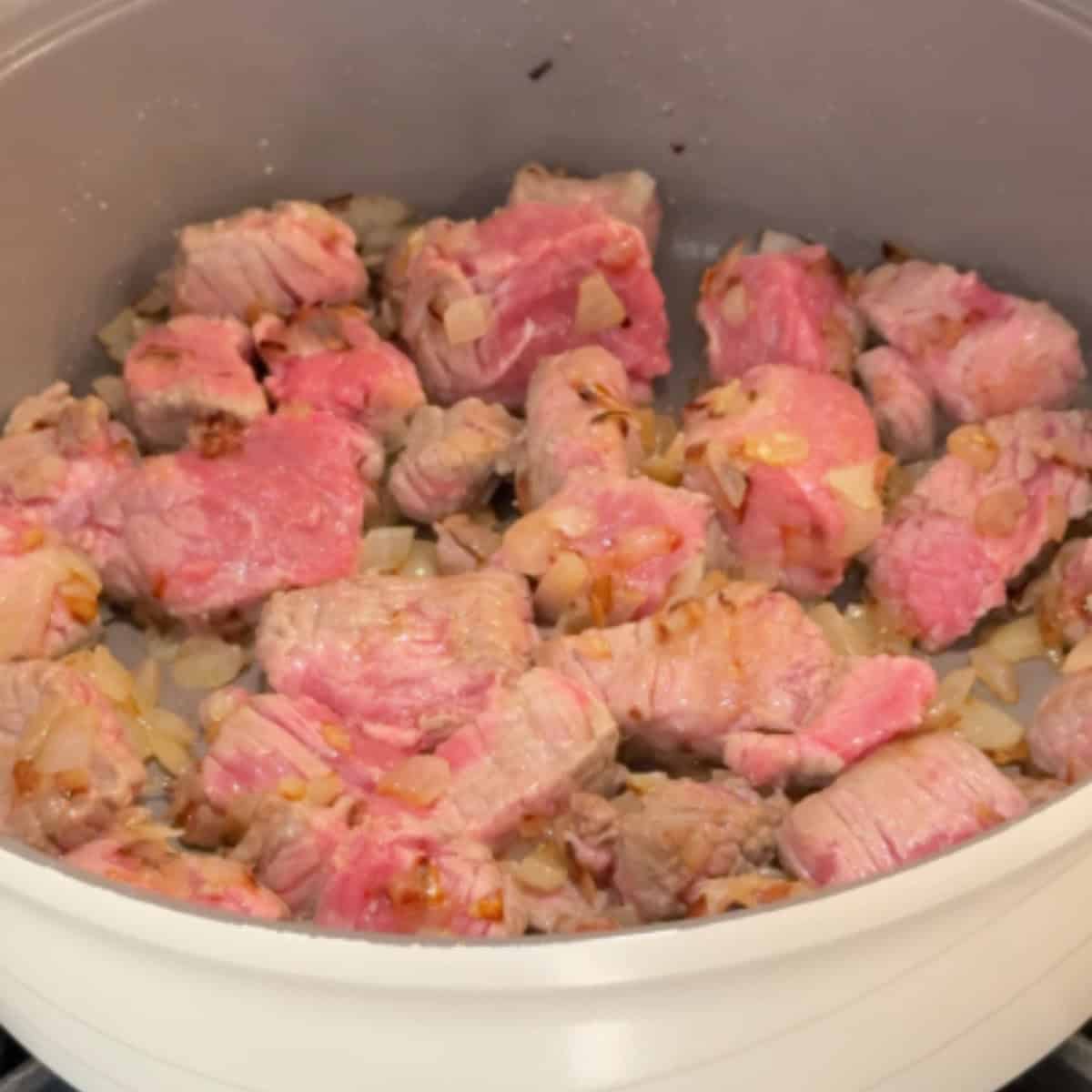
Saute the onion until golden, then add the beef and cook until almost brown on all sides.
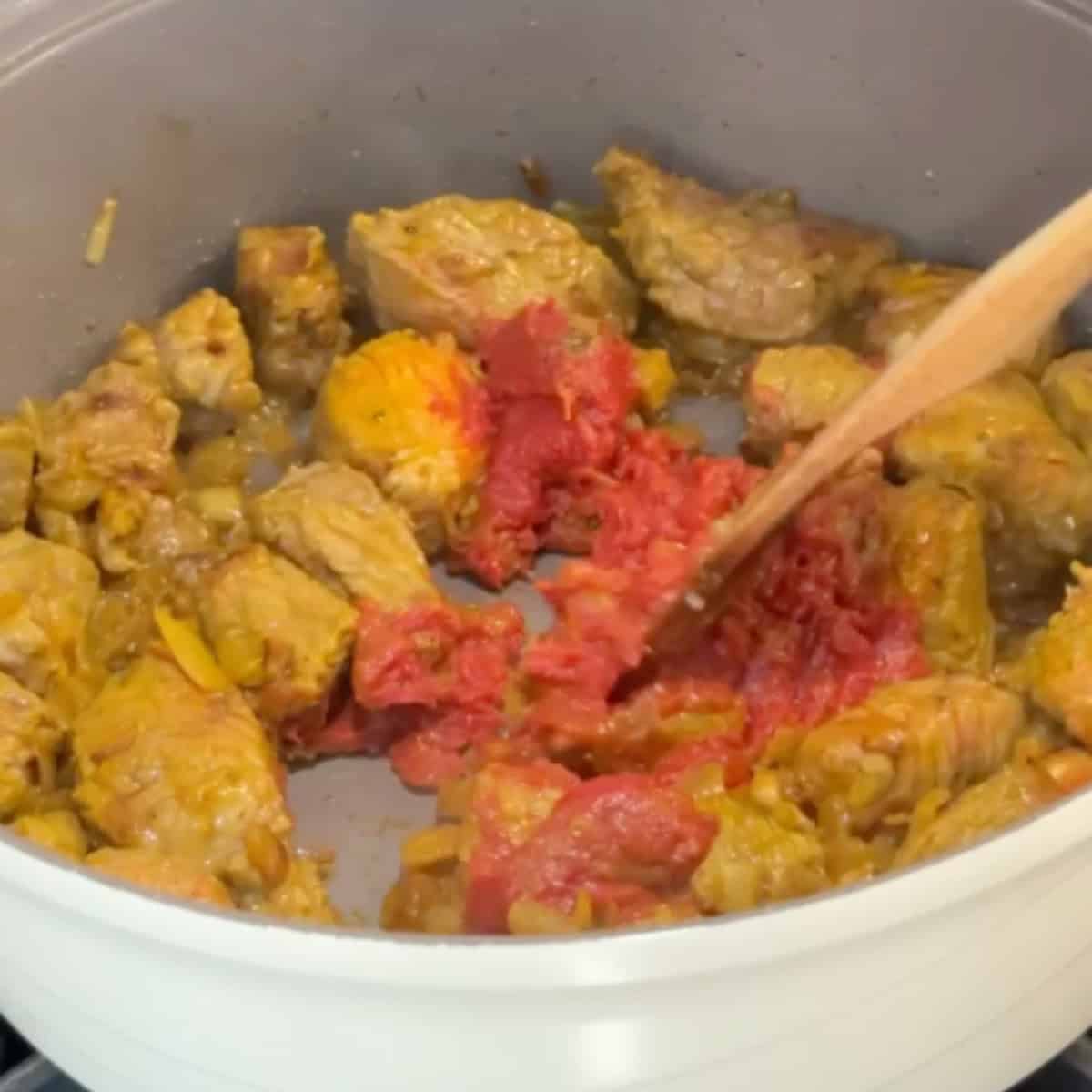
Add in the turmeric and black pepper followed by the tomato paste and cook for a few minutes.
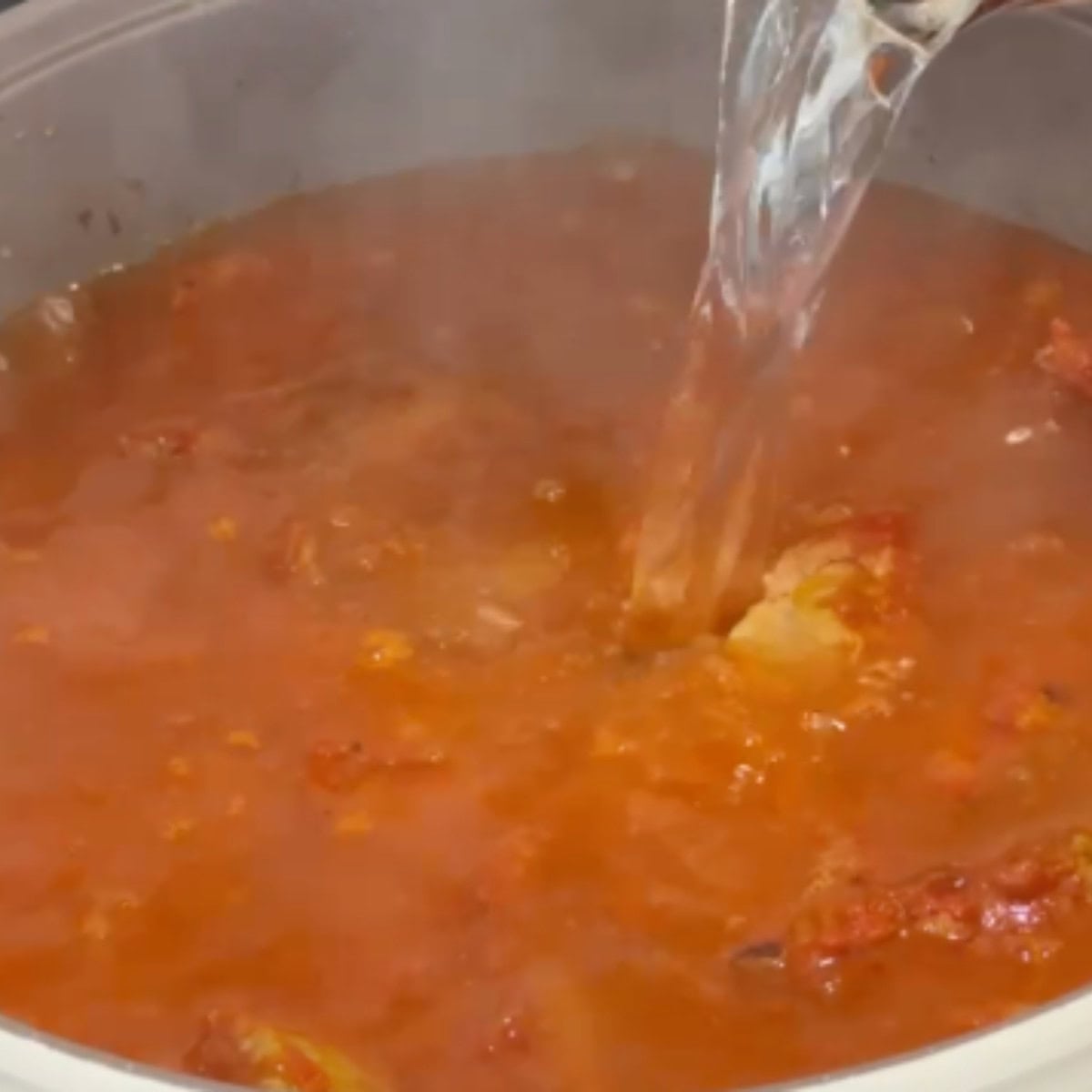
Pour in the water, bring to a simmer and cook covered for about 2 hours until the beef is tender.
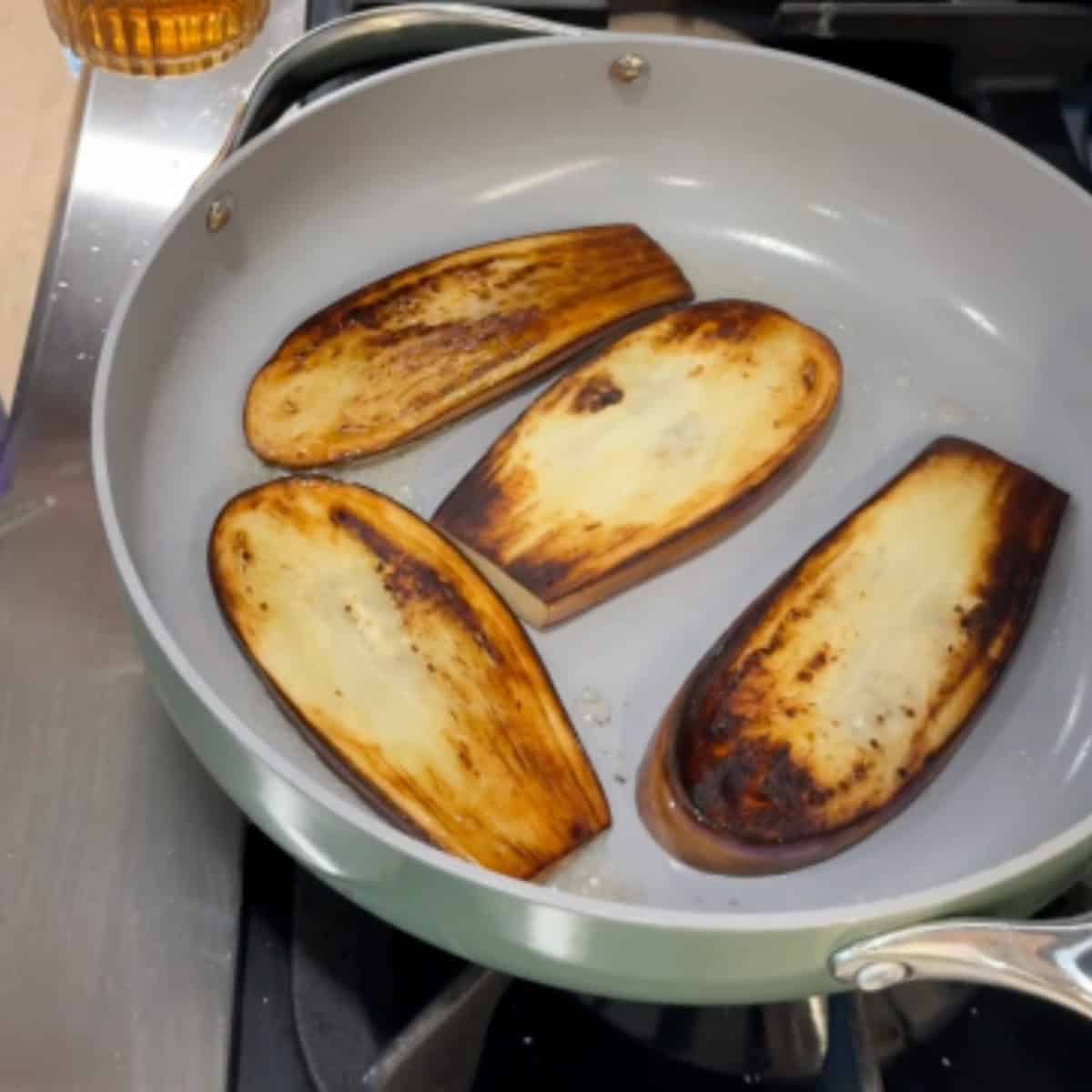
While the stew simmers, fry the sliced eggplant for about 5 minutes on each side, until golden.
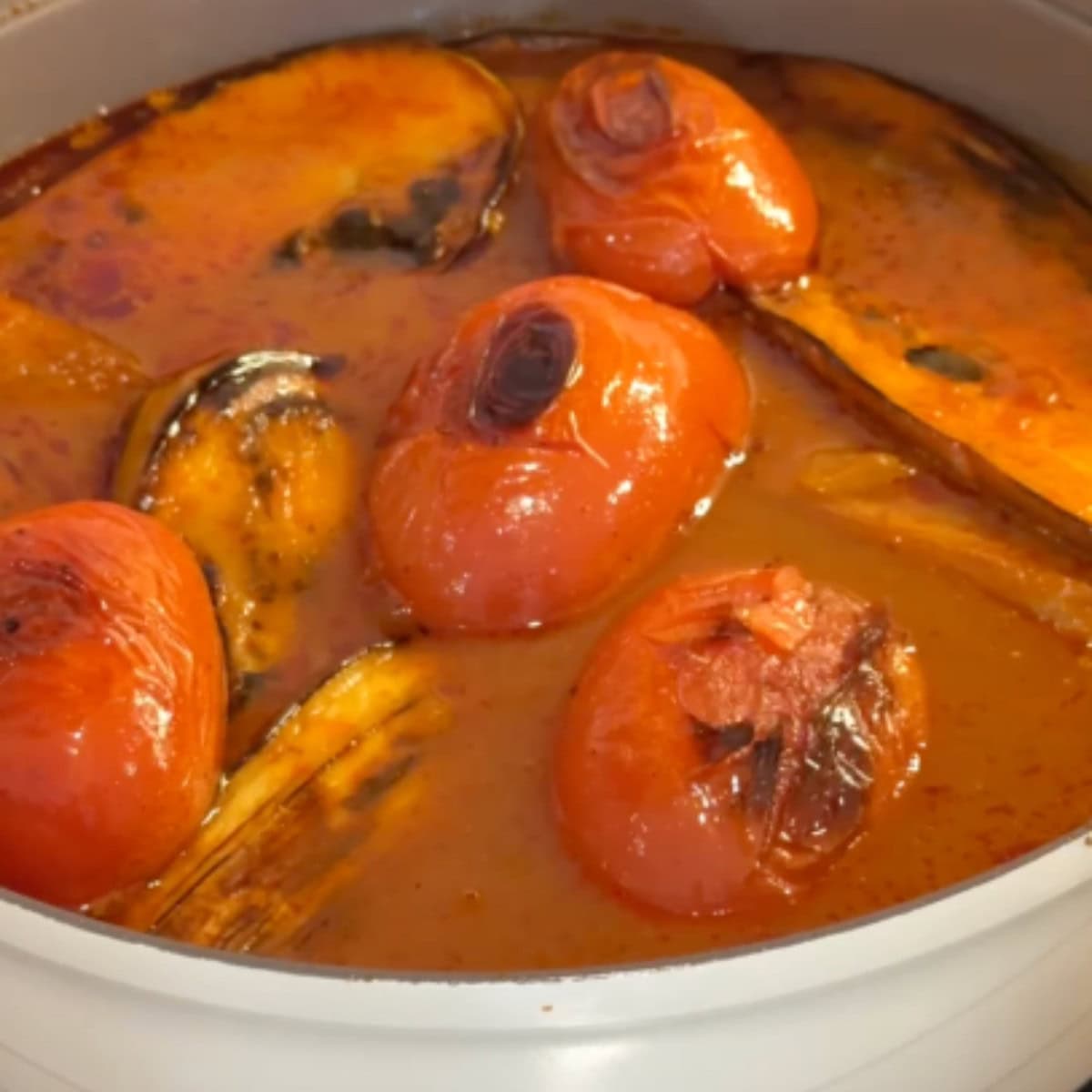
Once the beef is cooked, add the fried eggplants and tomatoes to the stew.
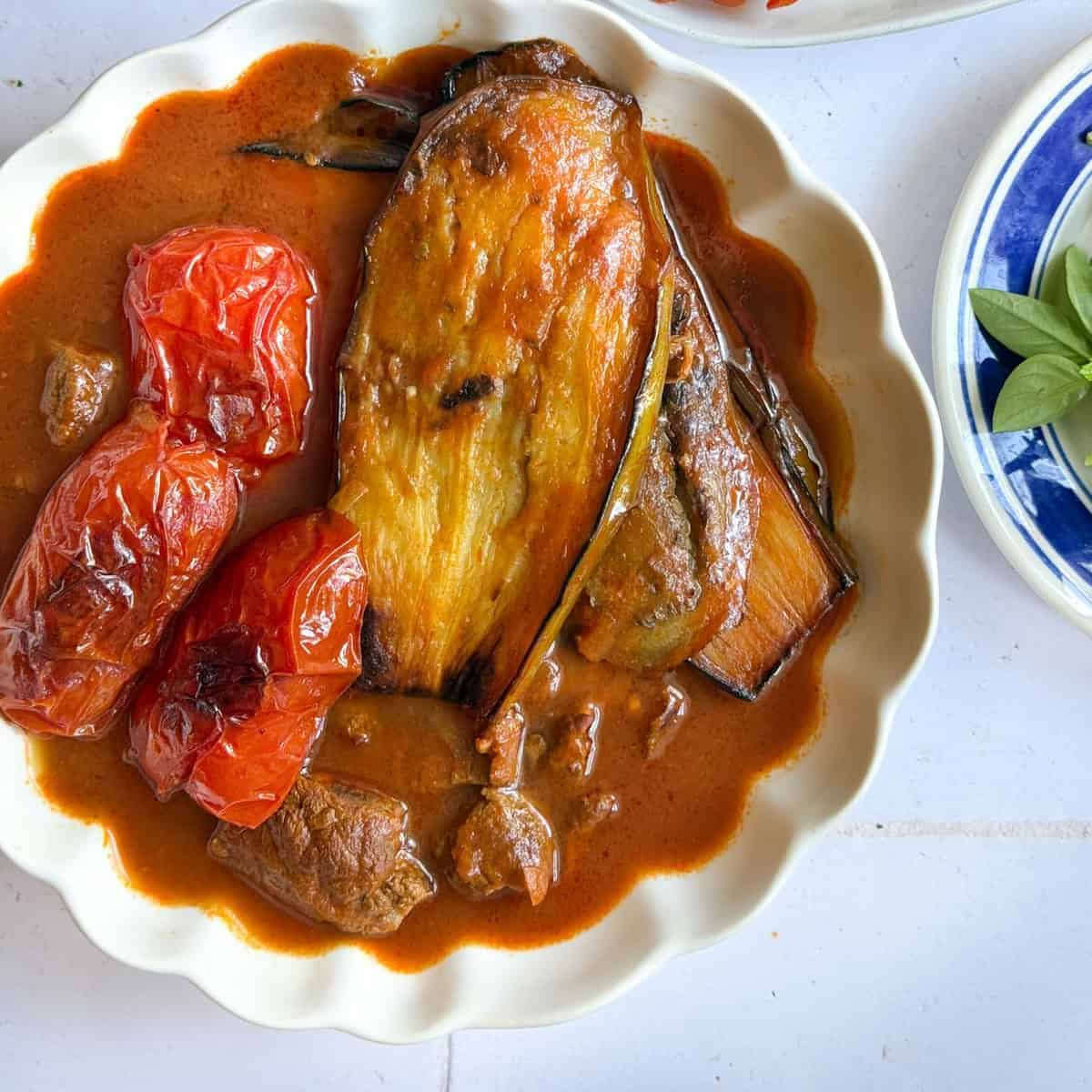
Finish with fresh lemon juice and serve with rice.
The Freezer Trick
This is the thing that made it a weeknight dish in our house rather than a weekend one. My mom always had fried eggplant in the freezer. Particularly because good eggplants were not always in season, so when she found them, she would get a lot to fry and freeze for later.
Fry a big batch when eggplants are cheap and in season, let the slices cool completely, then freeze them flat on a tray before transferring them to a bag. They keep for months. When you want the stew, you take out what you need and add the slices straight to the pot, still frozen, at the same point in the method. They only need to heat through and absorb the sauce.
Lemon vs Dried Lime
Khoresh bademjan needs something sour, and you have two good options. This is the one real choice in the recipe, so here is how to use each.
Dried Persian limes (limoo amani): Use 4 or 5 whole. Pierce each one two or three times with a fork first, otherwise the liquid cannot get in and the flavor cannot get out. Add them in the last 10 minutes of simmering, before the eggplant goes in. If you want more sourness at the end, press one against the side of the pot with a spoon to release the juice. Do not leave them in for the whole two hours, because they can turn bitter.
Fresh lemon: The juice of one lemon, squeezed in off the heat right before you ladle the stew into bowls. Adding it earlier cooks off the brightness, which is the whole point of it.
I use lemon for this one. The eggplant is already rich and the tomato paste is already deep, and a dried lime pushes the whole pot further in that direction. Fresh lemon does the opposite, and it lifts everything right at the moment you taste it.
Dried limes are still my choice for khoresh gheimeh with split chickpeas and fried potatoes, where the deeper sourness is exactly what the split chickpeas need. Different stew, different job.
Lemon also means you do not need a specialty ingredient to make this properly, which matters if you do not live near a Persian grocery.
How To Serve
Persian steamed white rice is the standard, and a crisp tahdig at the bottom of the pot is what turns dinner into an occasion. A bowl of plain yogurt on the side is not optional in my house either.
If you are building a bigger Persian table around it, ghormeh sabzi, the herb and dried lime stew is the other stew everyone asks for, and kashke bademjan, the creamy eggplant dip makes a good starter if you already have eggplants out.
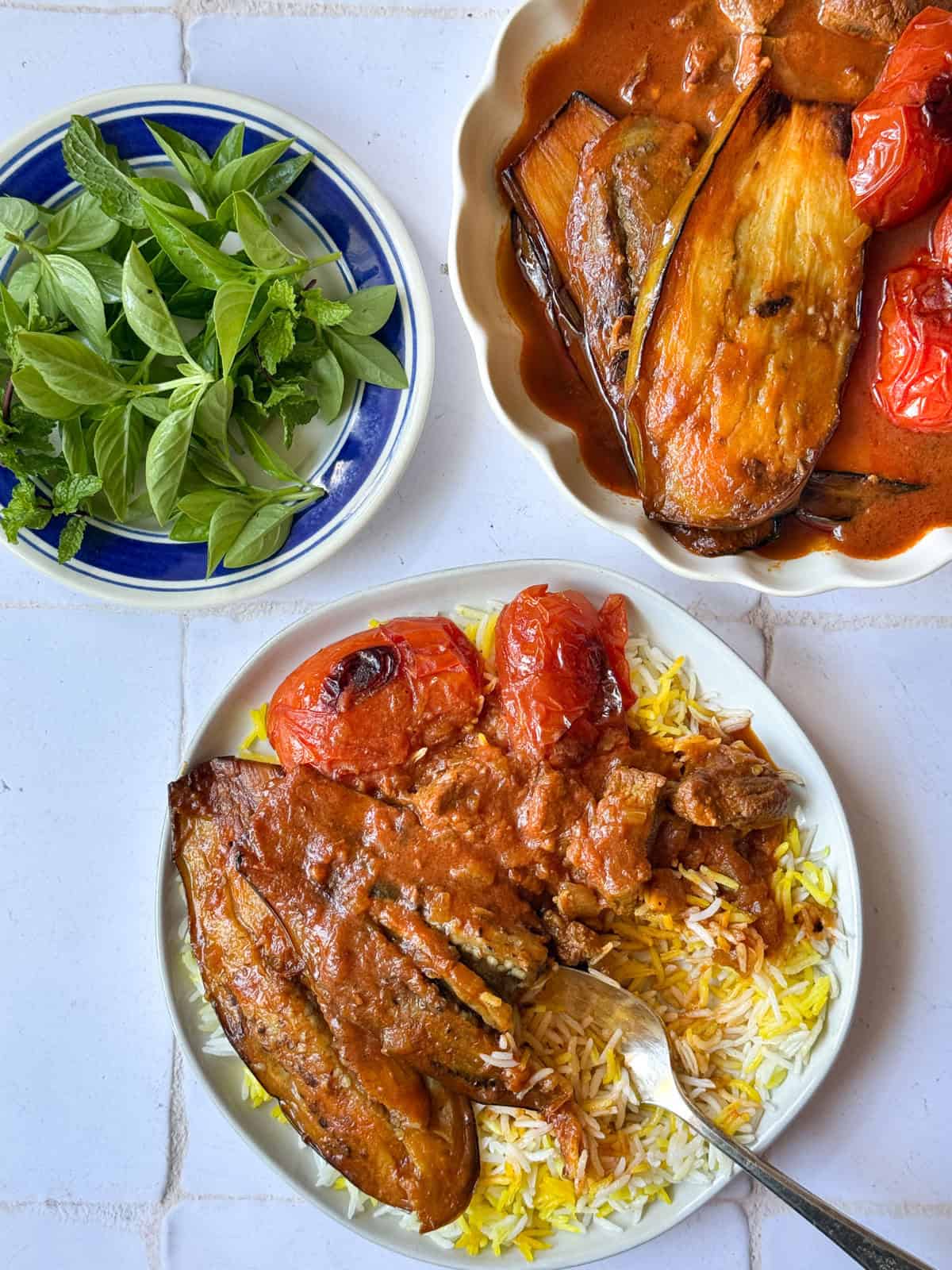
Storage and Make Ahead
Khoresh bademjan keeps in the fridge for three to four days and genuinely improves on the second day, once the eggplant has had time to take on the sauce. Reheat it gently on the stove so the slices do not break up.
It freezes well too, for up to three months. Leave the lemon juice out of any portion you plan to freeze and add it fresh when you reheat.
Yes, and it is better for it. Make the stew a day in advance and add the lemon juice when you reheat and serve.

Khoresh Bademjan (Persian Eggplant Stew)
Video
Ingredients
- ⅓ cup neutral oil, divided (avocado, grapeseed or canola)
- 1 large yellow onion, chopped
- 1 lb beef stew meat, cut into 1 inch cubes
- ½ tsp turmeric
- ½ tsp black pepper
- 4 tbsp tomato paste
- 6 cups water
- 4 Italian eggplants, sliced ½ inch thick, skin on
- 3 roma tomatoes, cut in half
- 1 tsp coarse salt
- ¼ tsp cinnamon
- 1 lemon, juice of
Instructions
- Heat 2 tablespoons of the neutral oil in a large pot over medium heat. Add the chopped onion and cook for about 5 minutes, until golden.
- Add the beef and sear until browned on all sides. Stir in the turmeric and black pepper.
- Stir in the tomato paste and cook for about a minute, until it darkens slightly.
- Pour in the water and bring to a simmer. Cook for about 2 hours, until the beef is completely tender.
- Meanwhile, heat 3 tablespoons of the neutral oil in a pan over medium heat. Fry the eggplant slices for about 5 minutes per side, until golden. You only want color here; they finish cooking in the stew.
- In the same pan, using the last of the neutral oil, fry the tomato halves for about 4 minutes per side.
- When the beef is tender, add the salt and cinnamon. Simmer for 10 minutes.
- Add the fried eggplant and tomatoes to the pot and simmer for another 10 minutes.
- Take the pot off the heat and squeeze in the lemon juice just before serving. Serve over rice.
Notes
- Neutral oil means avocado, grapeseed or canola.
- Fry the eggplant for color only. It finishes cooking in the stew.
- Add the lemon juice at the very end, off the heat, just before serving.
- To use dried Persian limes instead of fresh lemon juice, pierce 4 or 5 with a fork and add them in the last 10 minutes of simmering, before the eggplant. Do not simmer them longer than that or they can turn bitter.
- Lamb can replace the beef; start checking for tenderness at about 1 hour 30.
- Fried eggplant freezes beautifully. Add it to the stew straight from frozen.
Nutrition
Nutrition information is automatically calculated, so should only be used as an approximation.










At first, I foolishly thought I didn’t like this despite loving every component individually, and then I realised my mistake: Do not reheat this with the limes still in there. The limes are amazing and their aroma is typically wonderful, but when I microwaved them they developed an awful smell that ruined the dish.
I would also recommend ensuring you don’t skimp on the lamb, as it really balances out the dish (and is obviously delicious). The fried tomato is likewise an excellent element that I wouldn’t skip.
Now that I’ve learned from my mistakes, I can say that this is a truly delightful stew!
So good
This was delicious and a good use of the last of the garden eggplants and tomatoes. I added chopped fresh Roma tomatoes to the pot with the limes instead of serving on the side. I’m enjoying all the Persian recipes on your site!
Glad you enjoyed this recipe!
I made this last night and it was amazing! Thanks so much for an excellent recipe of my favourite persian food.
glad you liked it!
My husband and I really enjoyed this dish. It was also really simple to make!
Glad to know you enjoyed it!
These flavors sound absolutely incredible! And love that it’s served over rice. Such a yummy dinner idea!