How To Make Chicken Stock From Scratch

Sep 26, 2026
This post may contain affiliate links.
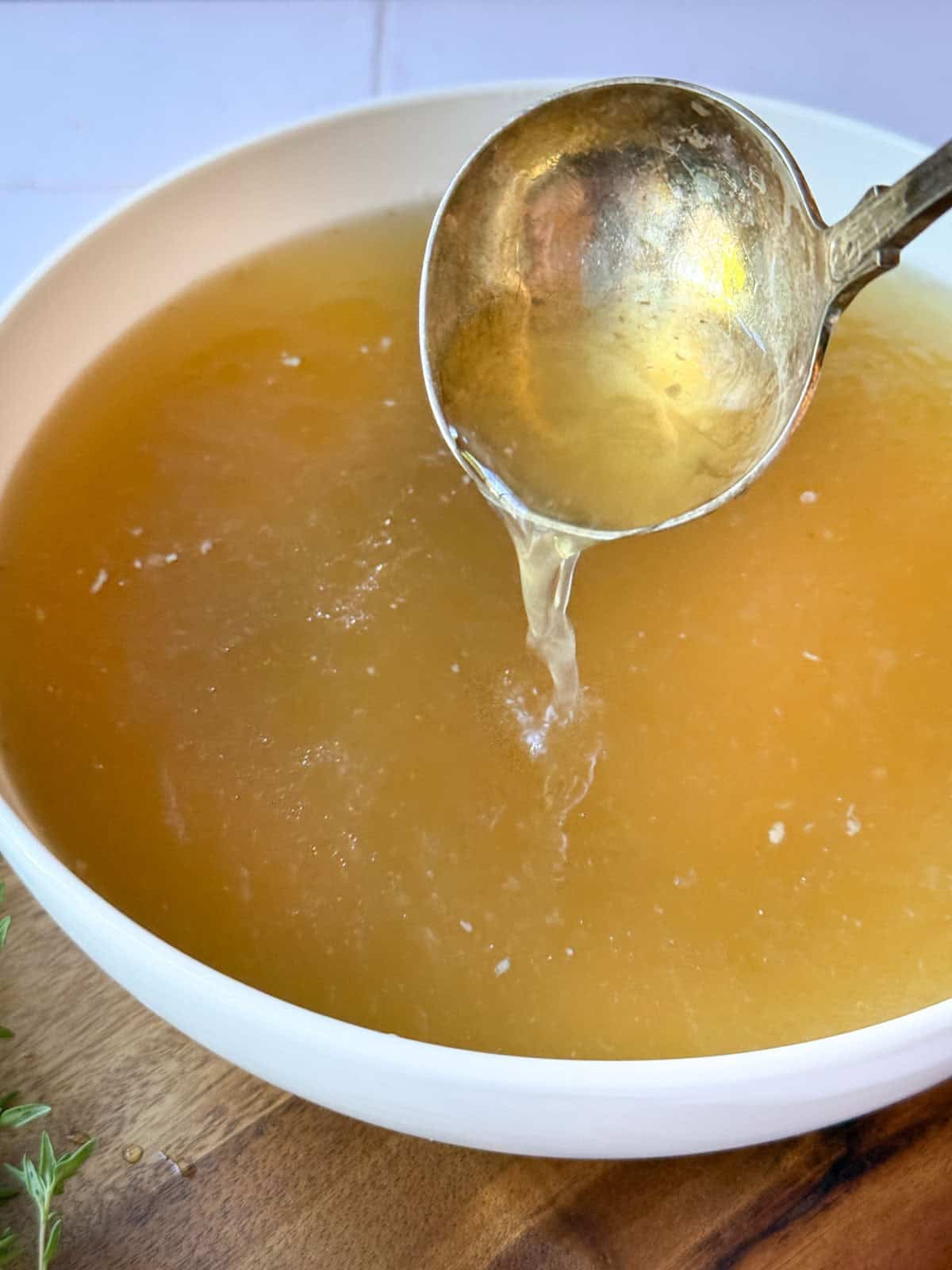
There is no comparison between homemade chicken stock and the boxed stuff. Once you have a few containers of this in your freezer, every soup you make gets better with no extra effort on the day.
It costs almost nothing, especially if you save the bones from a roasted chicken or pick up backbones when your market has them. There are no preservatives in it, no additives, nothing you would not put in yourself. And apart from about ten minutes of prep, the pot does all the work.
Is Homemade Chicken Stock Worth It?
Six hours sounds like a lot until you look at what you are actually doing during those six hours, which is nothing. Everything goes into the pot at once, you skim the foam off in the first twenty minutes, and then you leave it alone. Total hands on time is about ten minutes.
What you get in return is stock with real body, made from bones you would have thrown out, seasoned exactly the way you want because you left the salt out. It costs a fraction of what cartons cost and it tastes like actual stock. Make it on a day you are home anyway, freeze it in portions, and you are set for months.
Chicken Stock Or Chicken Broth?
Worth clearing up, because the two words get used interchangeably and they do not technically mean the same thing.
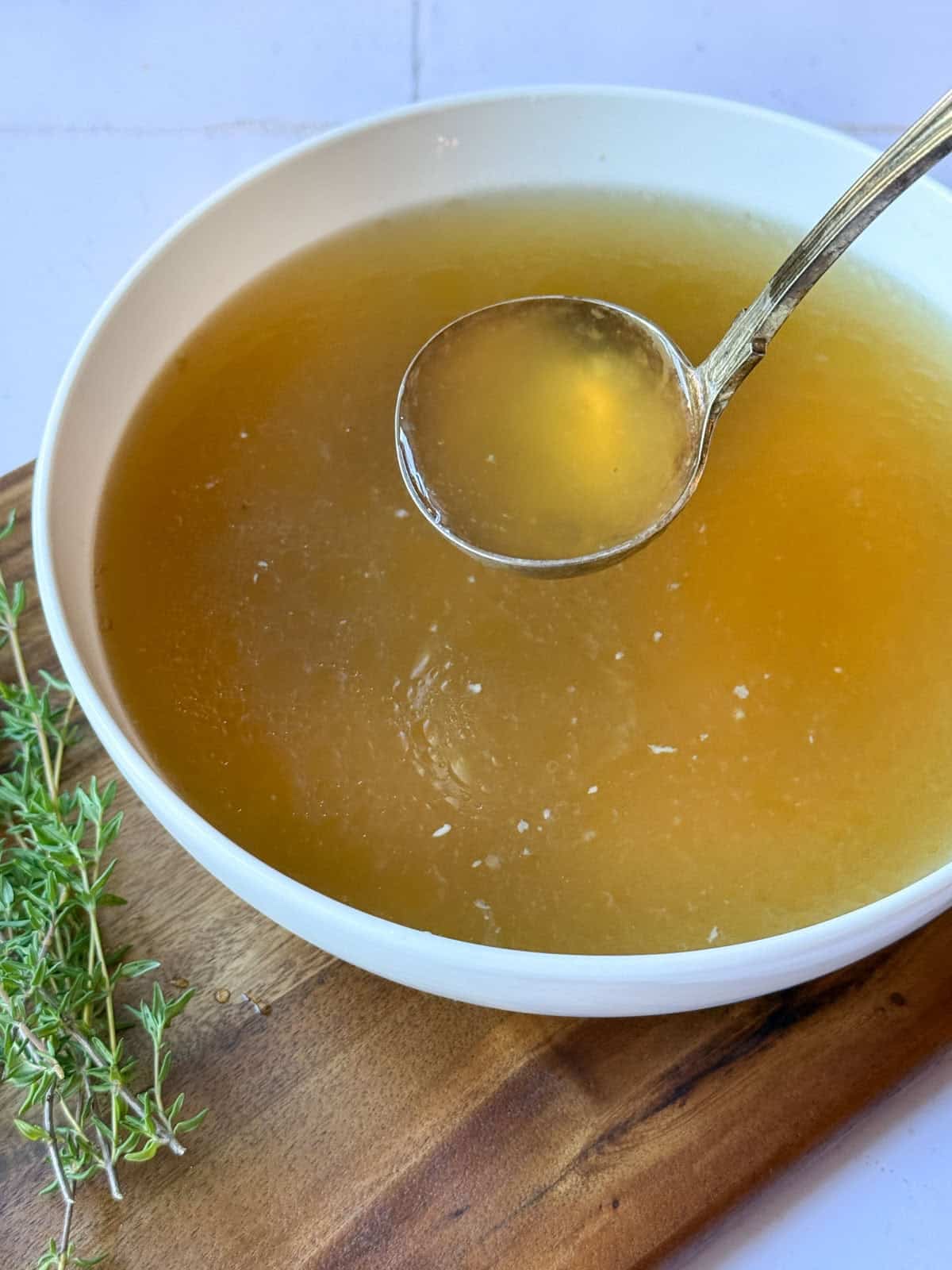
Stock is made from bones. The long simmer pulls collagen out of them, which is what gives you that rich body and the slight gel when it chills. Stock is left unseasoned so it can go into anything. Broth is traditionally made from meat rather than bones, cooked for a shorter time, and seasoned so you can drink it on its own.
What we are making here is stock. Backbones and roasted chicken carcasses usually come with a little meat still attached, and that is fine. It adds flavor and does not change the category. American grocery shelves blurred the line between the two words decades ago, so if a recipe calls for chicken broth, this is what you want to reach for.
How I Developed This Reicpe
I wanted stock with as little prep as possible, so most of my testing went into figuring out what actually earns its place in the pot.
Herbs are not optional. I tested a batch without them and it tasted flat. Thyme is my default, but oregano or a handful of parsley stems both work.
Trim the fat and skin off the bones first. I used backbones and they came with a fair amount of both. If you leave them on, you end up with a thick layer of fat solidified on top once it chills, and you have to deal with it later. Two minutes of trimming up front saves you that.
Leave it unsalted. This is the part people push back on, but it matters. You are going to use this in lentil soup, in rice, in braises, and every one of those gets seasoned as you cook. If the stock is already salty you lose control, and there is no way to walk it back once the soup reduces.
Skim more than once. Foam comes up in the first twenty minutes and again as things settle. Take it off each time and you get a clear, clean stock instead of a cloudy one.
Go the full six hours. Four hours gives you stock. Six gives you better stock, with more body and more pulled out of the bones. It is mostly hands off time, so let it go.
How To Make Chicken Stock
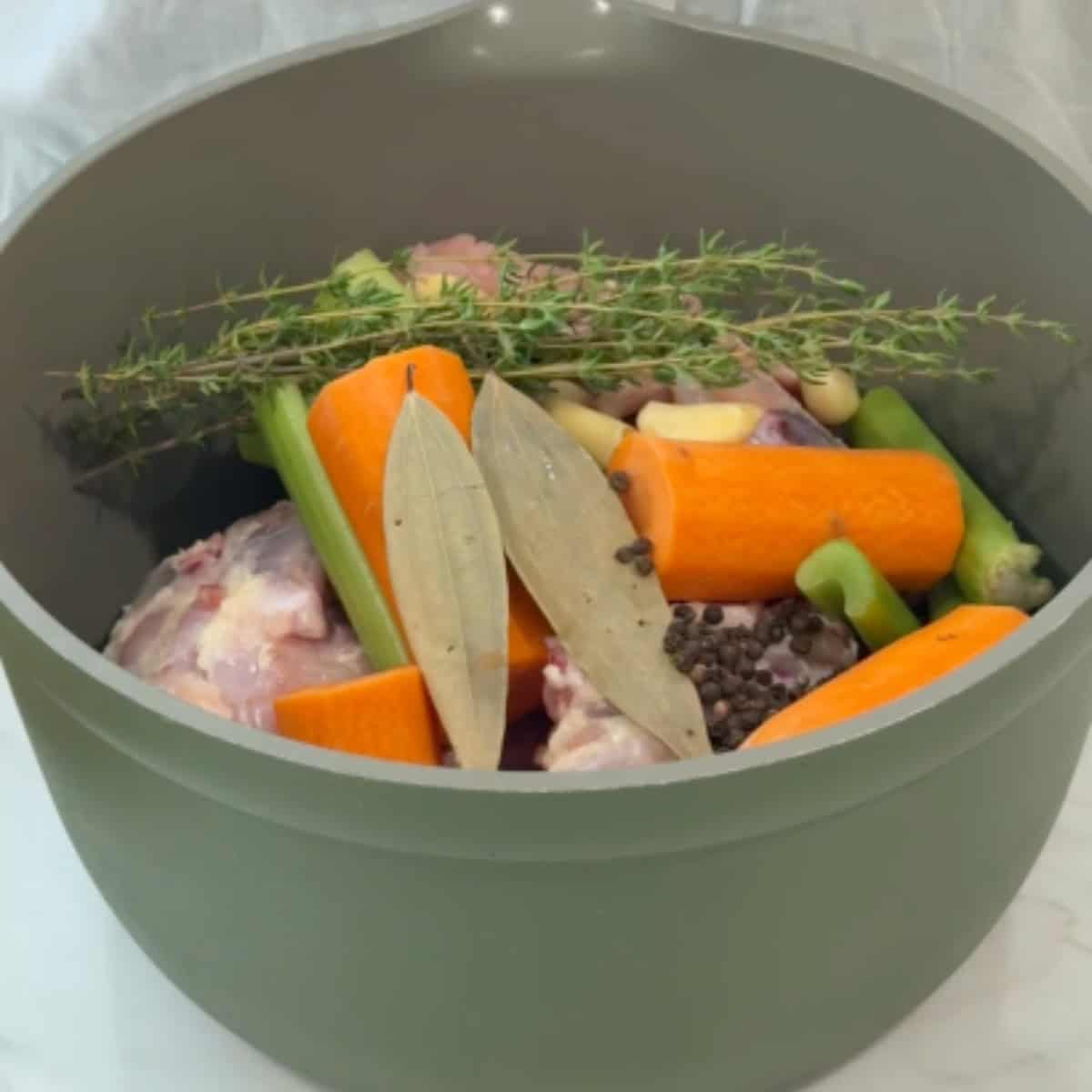
Place the chicken bones, onions, carrots, celery, peppercorns, and thyme in a large stockpot. Add enough water to cover by two inches.
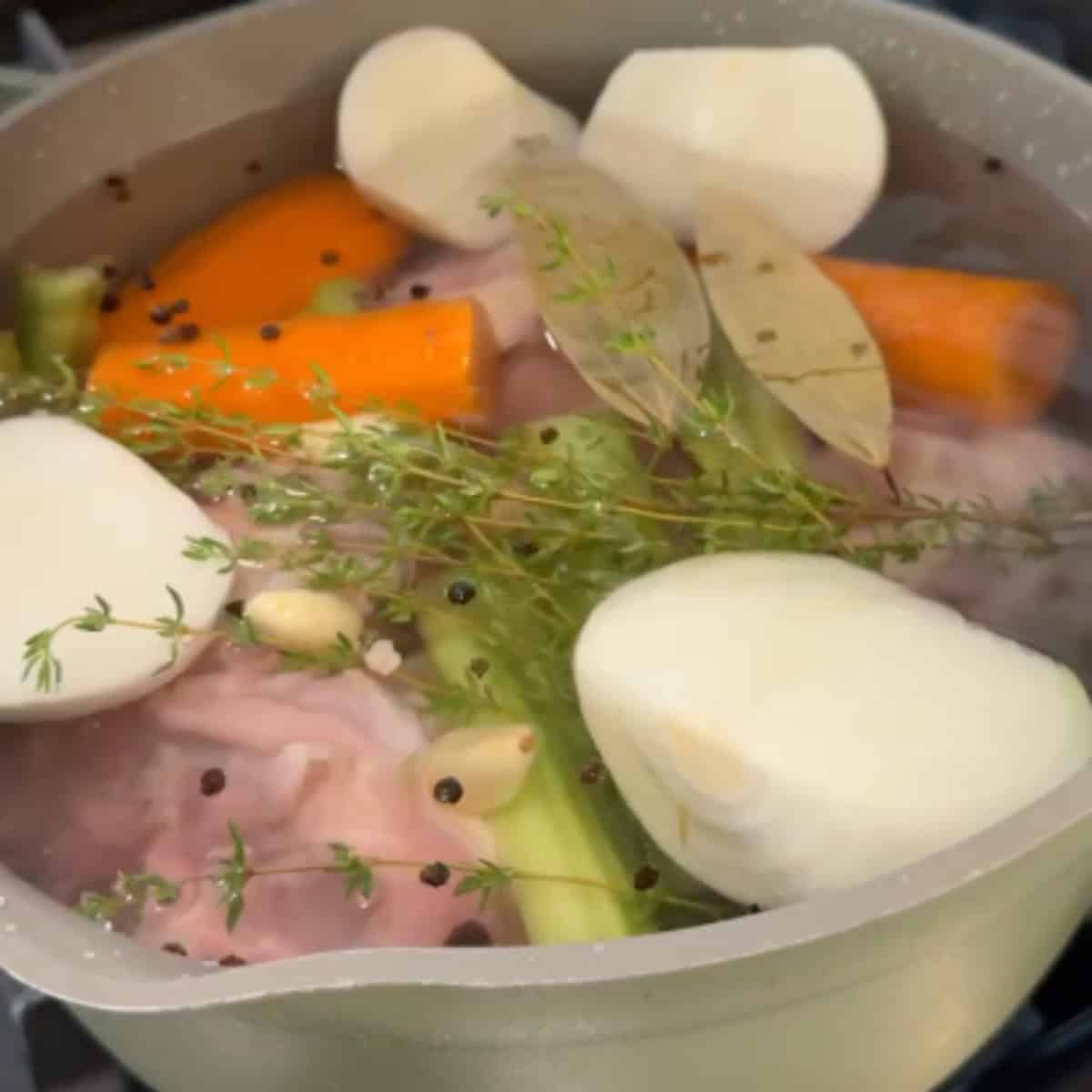
Bring the pot to a boil over medium high heat. As it heats, foam will rise to the surface. Skim it off with a spoon and discard.
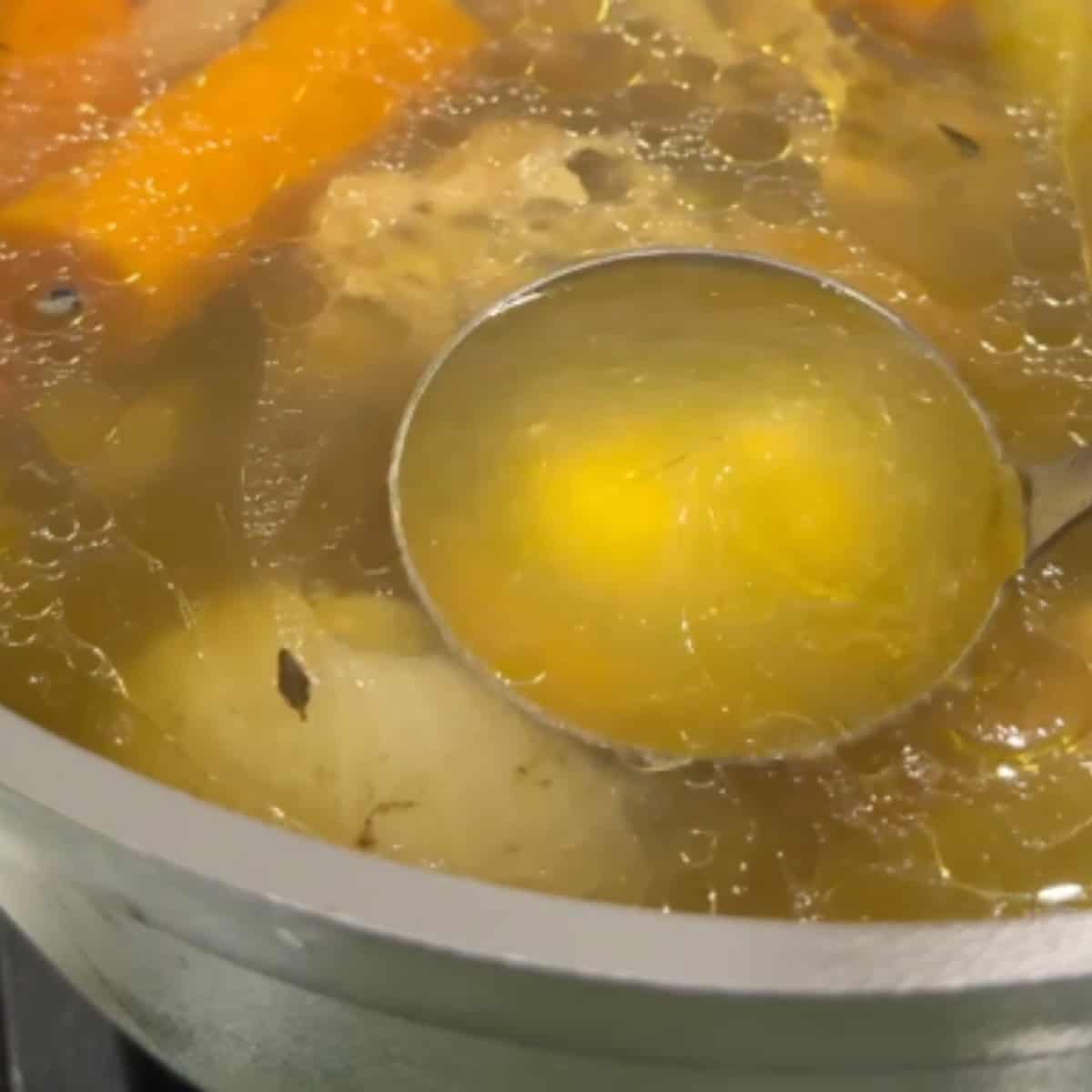
Drop the heat to medium low so the stock is barely bubbling, and let it go for six hours. Check occasionally and skim any new foam that comes up.
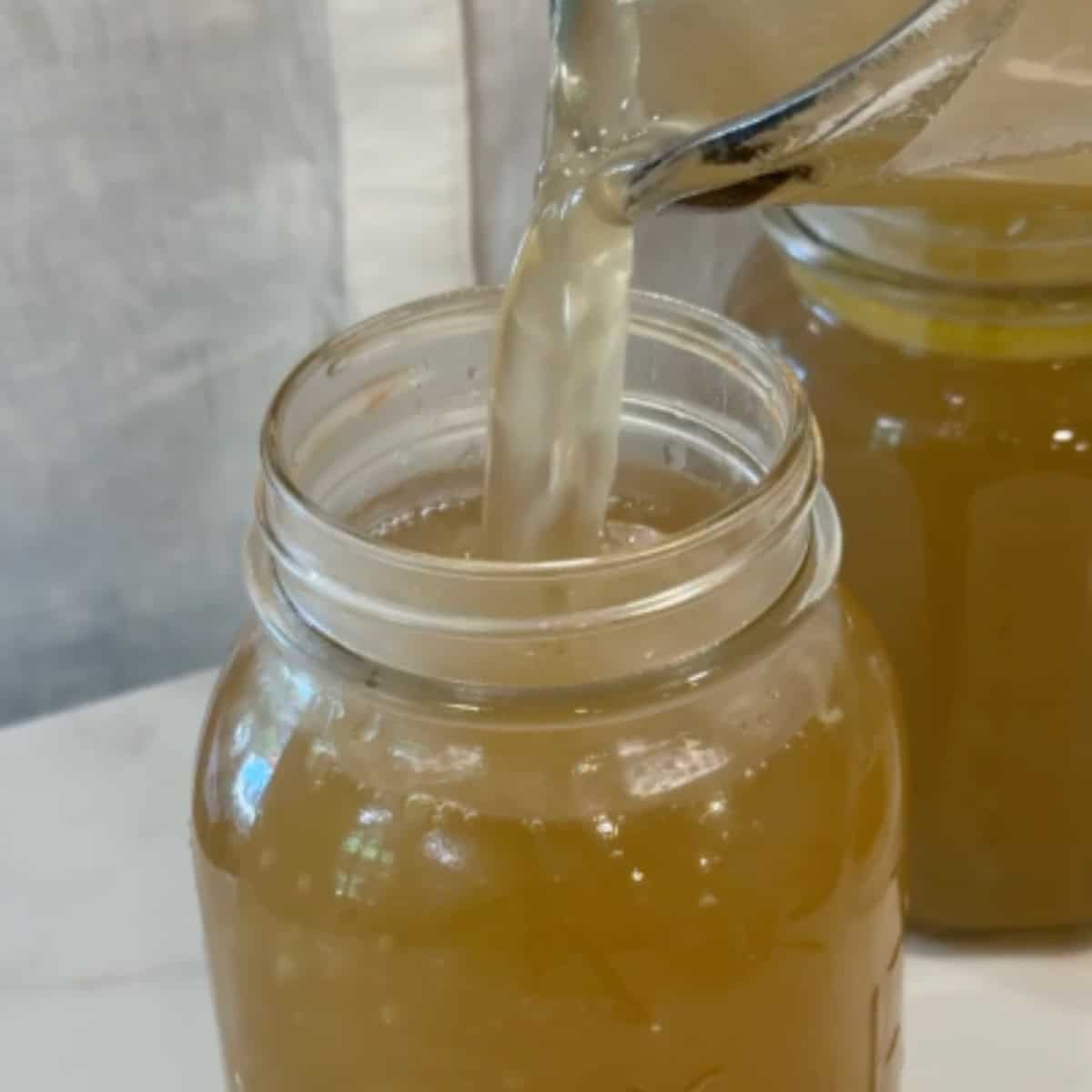
Remove the bones and vegetables, then pour the stock through a fine mesh sieve or colander. Let it cool and refrigerate.
How To Use And Store Chicken Stock
Refrigerate for up to five days, or divide it into containers and freeze for up to three months. I usually portion mine and when I need stock, I let it thaw in the fridge overnight, or just put it in a pot over medium heat to thaw.
Use it anywhere a recipe calls for stock, broth, or water. My Turkish red lentil soup is written with water, but swap in this stock and it turns noticeably richer and more filling. It is also excellent in Mediterranean green lentil soup and unstuffed cabbage soup, where the liquid is doing most of the flavor work.
Did you make this recipe? I’d love to hear about it! Please comment and leave a 5-star🌟 rating below. You can also follow us on Instagram, Facebook, Pinterest or subscribe to our newsletter to get a free e-Cookbook!
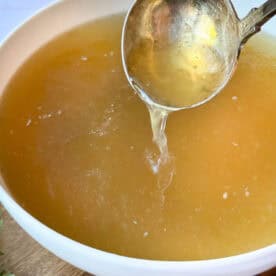
Homemade Chicken Stock
Ingredients
- 5 lbs chicken bones, fat and skin trimmed
- 3 onions, halved
- 3 carrots, cut into large pieces
- 3 celery stalks, cut into large pieces
- 1 tbsp whole peppercorns
- 5 sprigs thyme
- Water, enough to cover by 2 inches
Instructions
- Place the chicken bones, onions, carrots, celery, peppercorns, and thyme in a large stockpot. Add enough water to cover by 2 inches.
- Bring to a boil over medium high heat. As it heats, foam will rise to the surface. Skim it off and discard.
- Reduce heat to medium low so the stock stays at a low simmer. Cook for 6 hours, skimming any foam or impurities that rise to the top.
- Remove the bones and vegetables. Pour the stock through a fine mesh sieve or colander.
- Cool and refrigerate, or divide into containers and freeze.
Notes
- Trim any fat and skin from the bones before starting so you do not end up with a thick fat layer on the chilled stock.
- Rotisserie chicken carcasses, roasted chicken bones, and chicken backs all work. A little meat left on the bones is fine. You can ask your the butcher at your local supermarket for chicken bones and they often give it to you.
- Do not salt the stock. Season the dishes you use it in instead.
- Thyme is my default, but oregano or parsley stems work too. Do not skip the herbs entirely.
- Six hours gives a richer stock than four. It is mostly unattended time.
- Refrigerate up to 5 days or freeze up to 3 months.
Nutrition
Nutrition information is automatically calculated, so should only be used as an approximation.