How To Make Turkish Coffee

Mar 03, 2026
This post may contain affiliate links.
Turkish coffee is not just a drink. It is a ritual, a conversation starter, and in many households, a daily act of hospitality. I spent years living in Istanbul, where making and drinking Turkish coffee was as natural as breathing. Once you learn the proper technique, it becomes one of those simple pleasures you will return to again and again. This guide walks you through everything you need to know, from the right equipment and grind to the two-boil method that gives you that signature thick foam. Serve it alongside homemade Turkish delight or a piece of pistachio baklava and you have an experience that is hard to beat.
What Is Turkish Coffee?
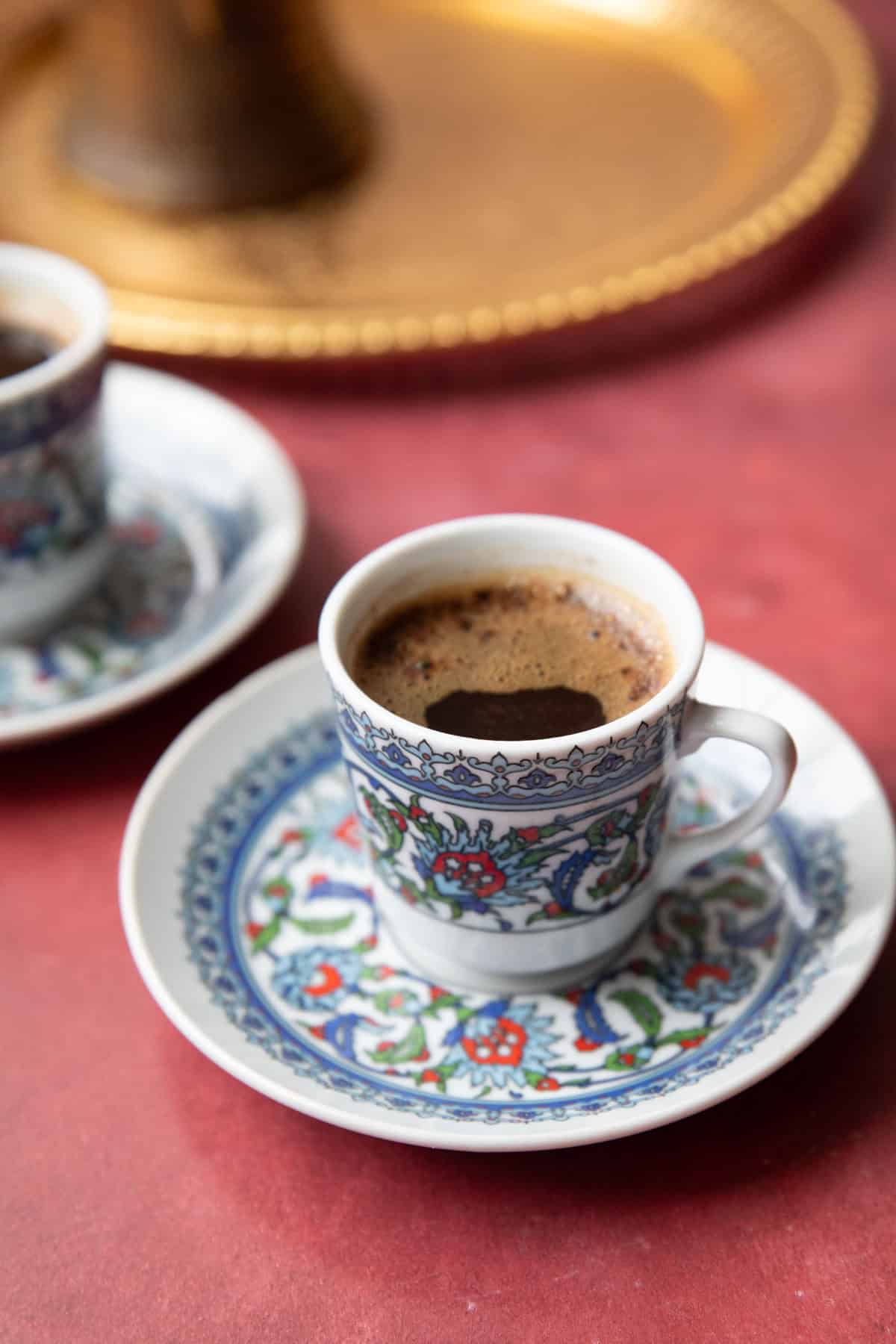
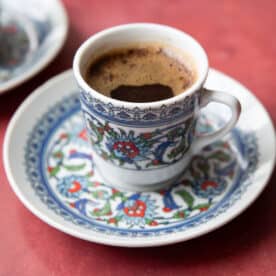
Turkish coffee is a method of brewing very finely ground coffee beans unfiltered in a small copper or brass pot called a cezve (pronounced jez-veh). Unlike most brewing methods, the coffee grounds are not separated from the water before drinking. Instead, the grounds settle naturally to the bottom of the cup. The result is a small, intensely rich cup of coffee with a thick layer of foam on top and a velvety, concentrated flavor that is completely unlike drip or French press coffee.
Turkish coffee has been brewed this way for centuries, and in 2013 it was recognized on UNESCO’s Intangible Cultural Heritage list. It is deeply woven into the social fabric of Turkey, Greece, the Middle East, and much of the Balkans. In Turkey, there is even a saying: a cup of coffee commits one to forty years of friendship.
Table of Contents
The Best Turkish Coffee: Mehmet Efendi
If you want to make authentic Turkish coffee at home, the coffee you use matters enormously. The most iconic brand is Kurukahveci Mehmet Efendi, a coffee roaster that has been operating in Istanbul since 1871. Their shop sits just outside the entrance to the Egyptian Spice Bazaar (Misir Carsisi) in the Eminonu district, and the line outside it is almost always long. The smell of freshly ground coffee drifts out into the street and stops people in their tracks. When I lived in Istanbul, I actually preferred their smaller location in Kadikoy on the Asian side of the city -though even there you could usually expect to find a short queue. (They have non-Turkish coffees too – while we were riding out the pandemic in Istanbul, my husband became fond of their Colombian blend.)
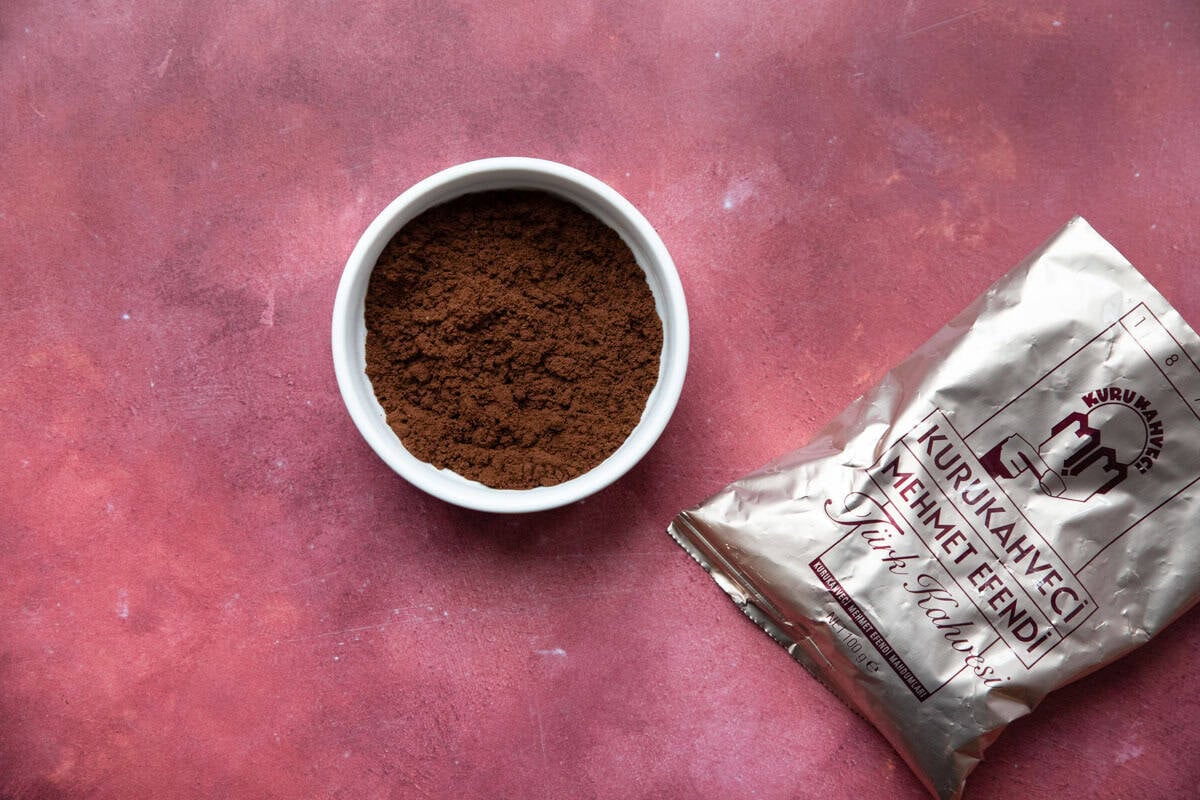
If you can’t make it to Istanbul, Mehmet Efendi coffee is widely available online and in Middle Eastern grocery stores; other brands I’ve tried and had good experiences with include Elite and Khave Dunyasi (a coffeehouse chain in Turkey with an insanely good pistachio latte). Whatever brand you use, make sure it is labeled specifically as Turkish coffee grind, as regular espresso or drip grind is too coarse and will not give you the right texture or foam.
Turkish Coffee Sweetness Levels
One of the most important things to know about Turkish coffee is that sugar, if you want it, is added during brewing, not after. You cannot stir sugar into your cup once the coffee is made without disturbing the grounds. When someone offers you Turkish coffee in Turkey, they will ask how sweet you want it. Here are the four traditional levels:
- Sade (plain): No sugar at all. This is the purest way to taste the coffee and is preferred by serious coffee drinkers.
- Az şekerli (lightly sweet): About half a teaspoon of sugar per cup. A gentle sweetness that does not overpower the coffee.
- Orta (medium sweet): One teaspoon of sugar per cup. The most popular choice in Turkey.
- Çok şekerli (very sweet): Two teaspoons of sugar per cup. Rich, sweet, and smooth.
To add sugar, stir it into the cold water and coffee in the cezve before placing it on the heat. Once brewing begins, do not stir.
What You Need
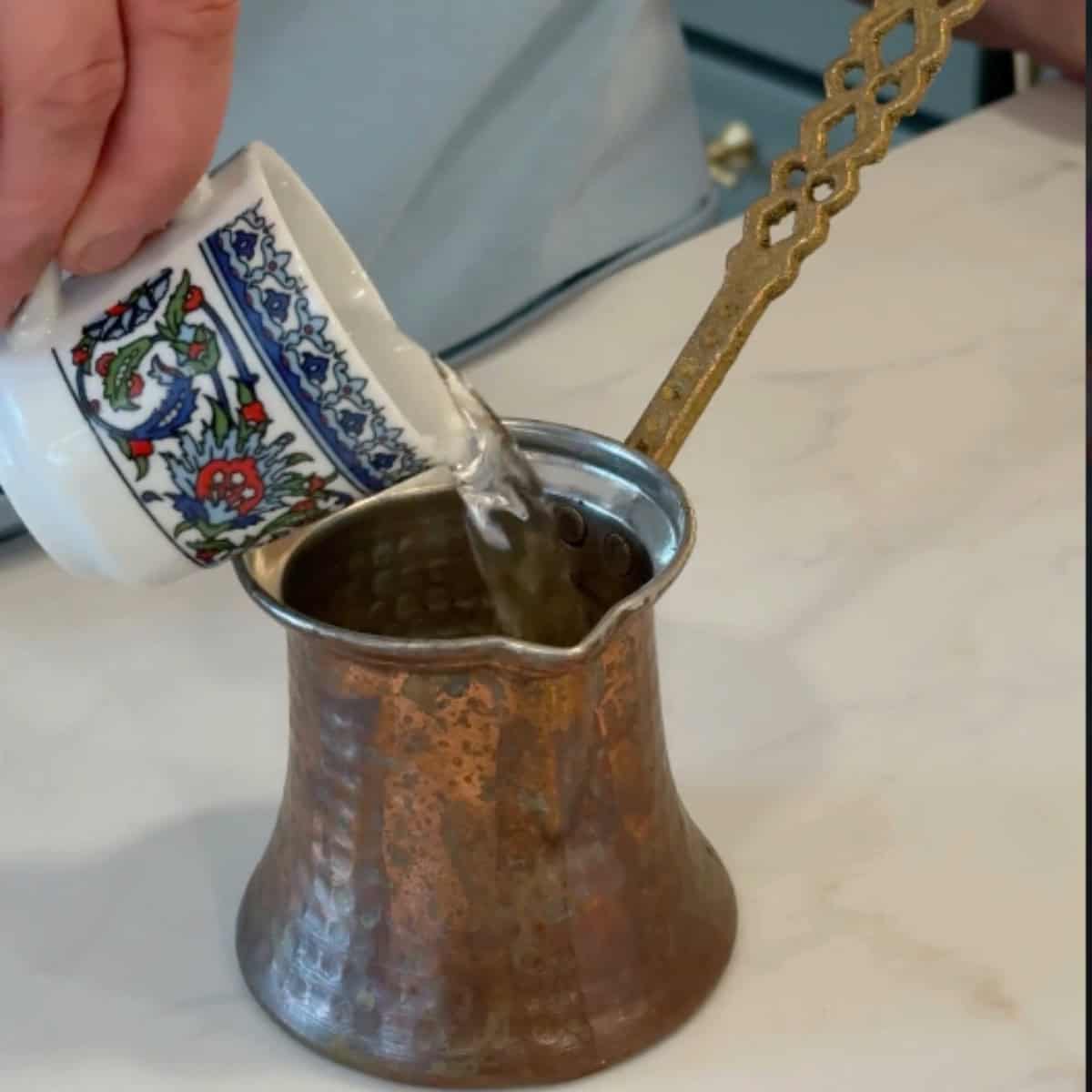
- A cezve (Turkish coffee pot): This small, long-handled pot is essential. Copper or brass are traditional, but stainless steel works well too. Make sure yours is sized for one to two cups, as Turkish coffee is always brewed in small quantities.
- Finely ground Turkish coffee: Mehmet Efendi is the gold standard, but any coffee labeled Turkish grind will work.
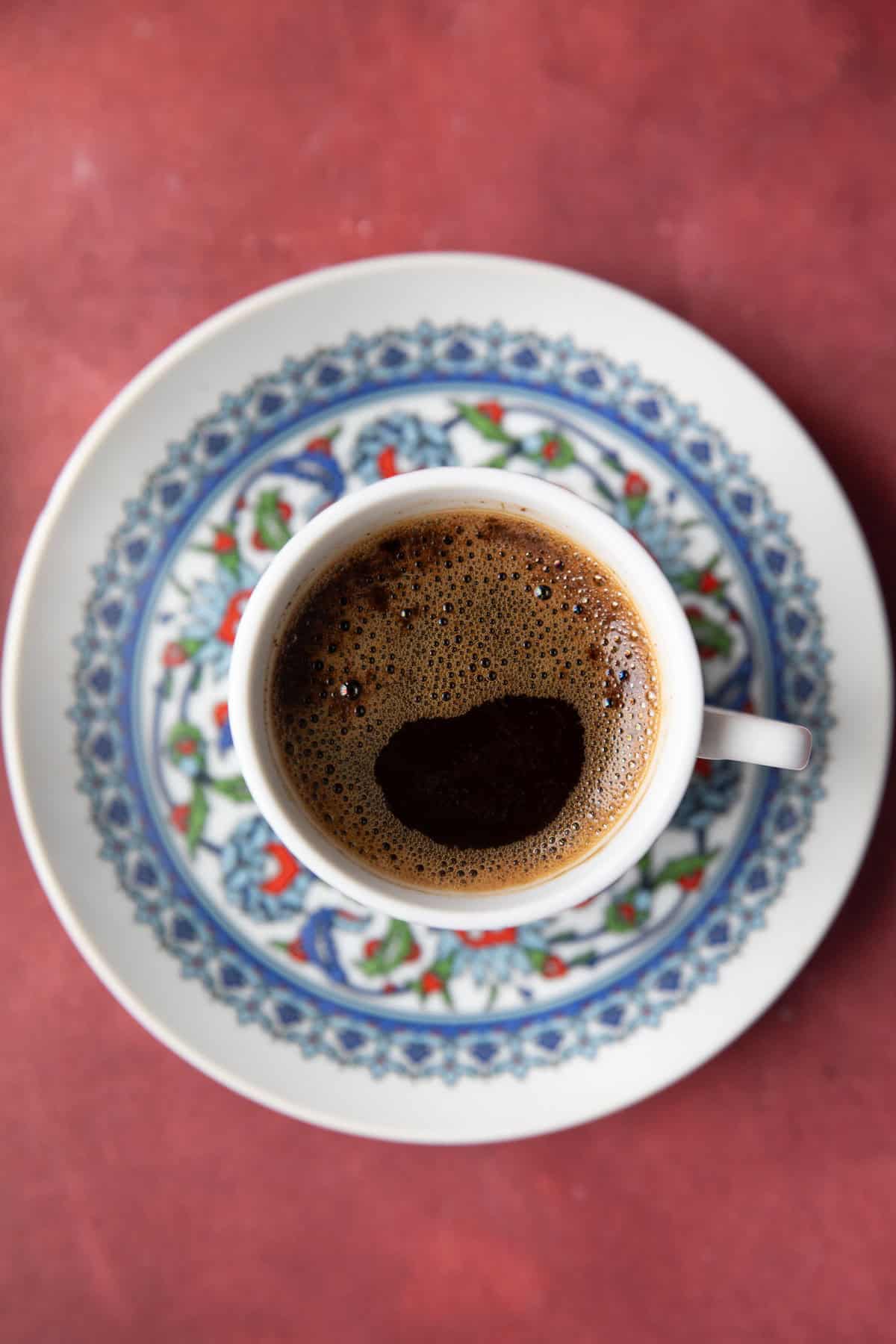
- Turkish coffee cups (demitasse): Small cups that hold about 2 to 3 oz of liquid. The small size is intentional, this is a slow drink to be savored. If you visit a housewares store in Turkey, you’ll find them in every style imaginable; my personal favorite is a Harry Potter demitasse I brought back from Istanbul!
- Cold water: Always use cold water and measure it using your coffee cup so the ratio is always correct.
How To Make Turkish Coffee
Measure your water. Use your Turkish coffee cup to measure the water directly into the cezve. For two cups, fill each cup with cold water and pour both into the cezve. This ensures the perfect ratio every time.
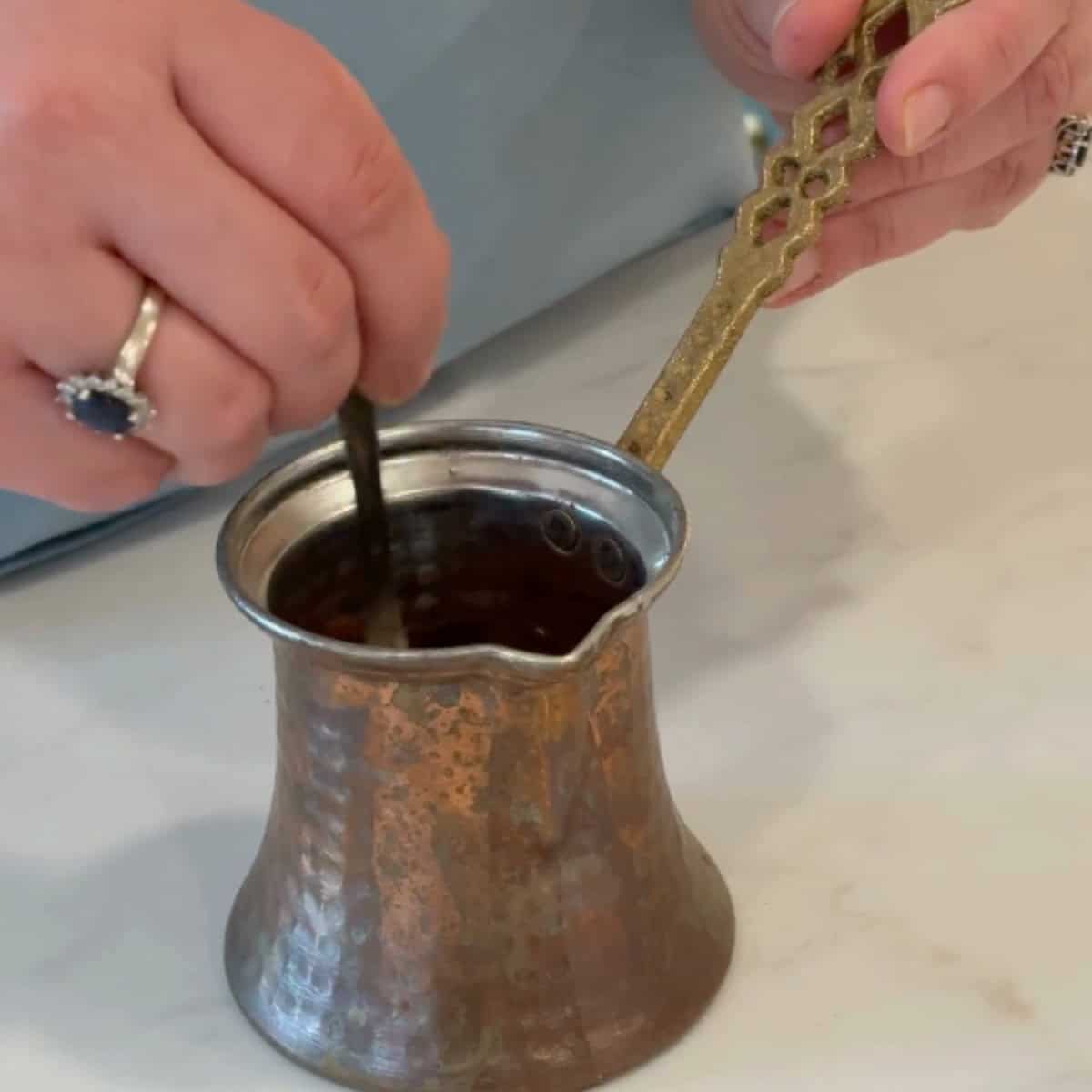
Add the coffee. Add 3 heaped teaspoons of finely ground Turkish coffee to the water. If you are adding sugar, add it now as well. Give it one gentle stir to combine, then do not stir again.
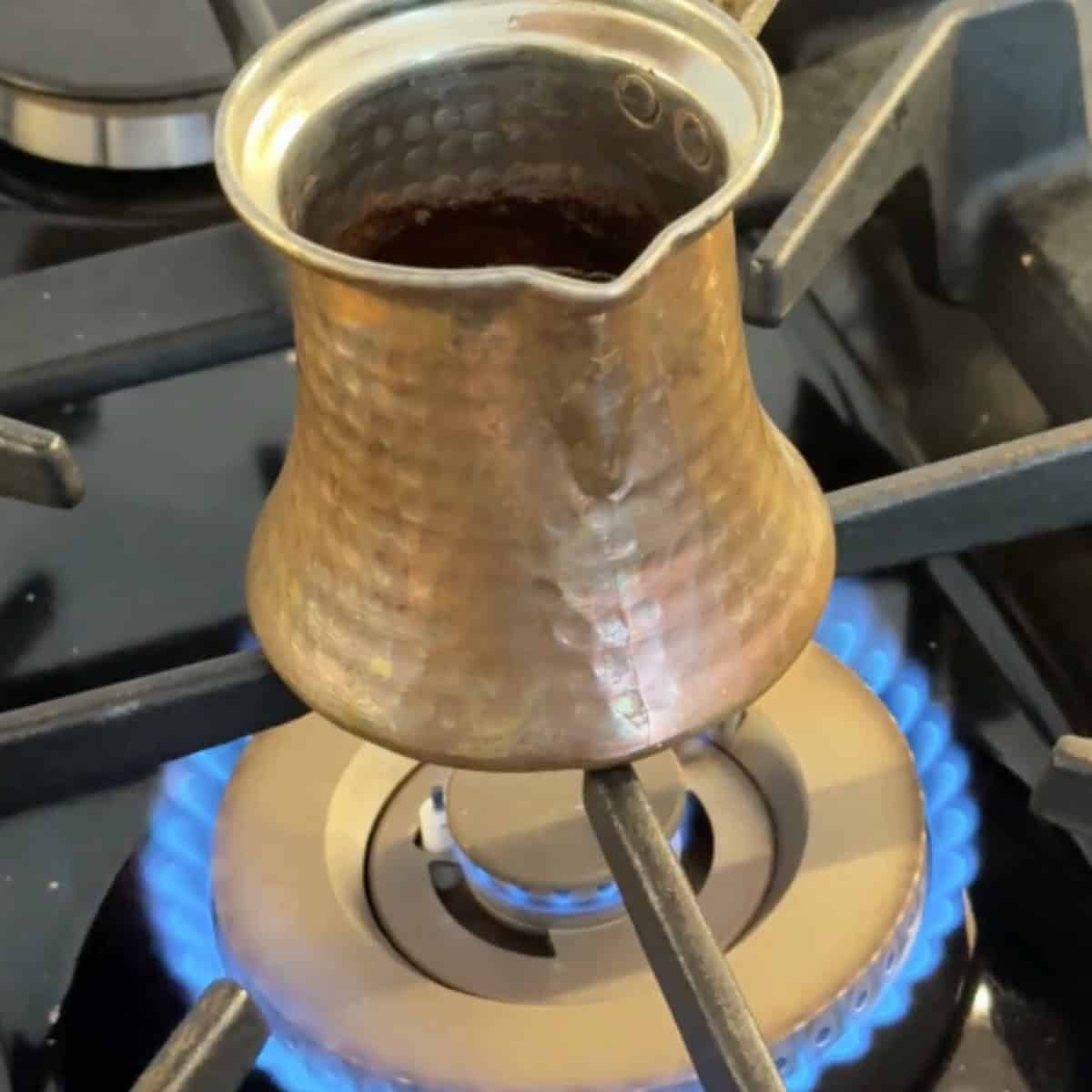
Heat slowly. Place the cezve over medium to low heat. Low and slow is the key here. You want the coffee to heat gradually so the foam has time to develop. Never rush this step by turning up the heat.
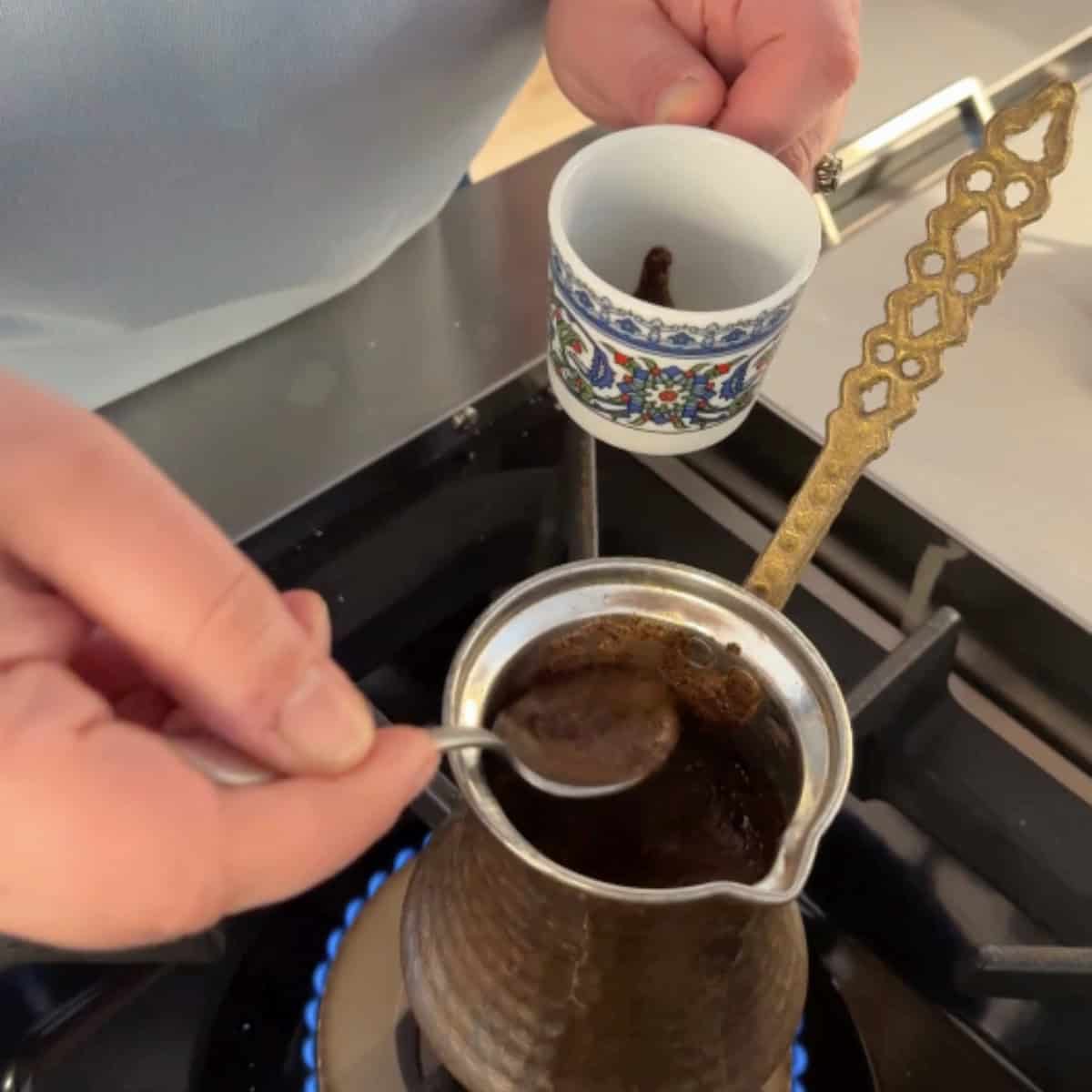
Spoon the foam into your cups. Watch the cezve closely. As the coffee heats, a thick dark foam will begin to rise. Just before it reaches a full boil and the foam is at its peak, remove the cezve from the heat. Using a small spoon, divide the foam between your two cups. This step is important because once the coffee boils fully, you lose the foam permanently.
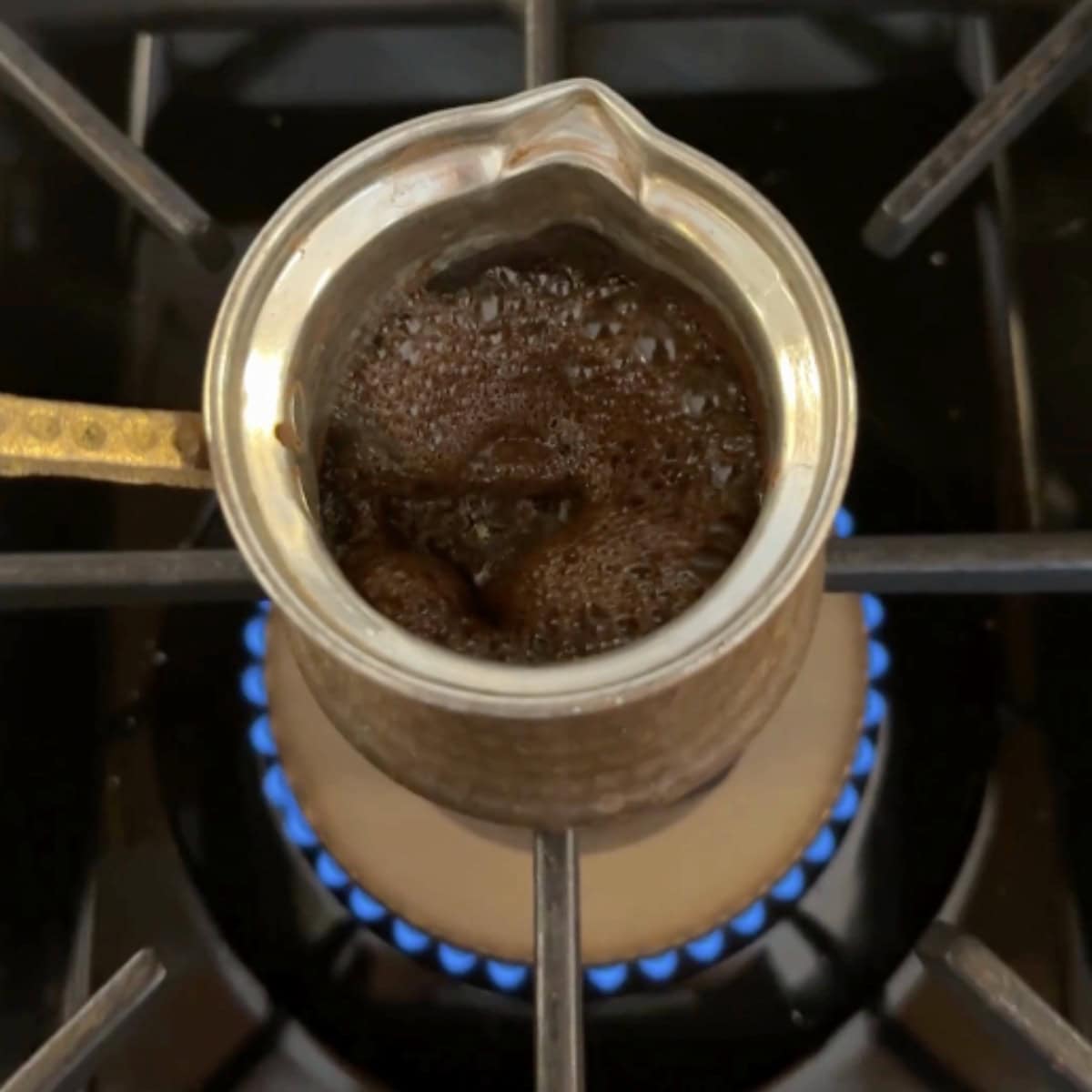
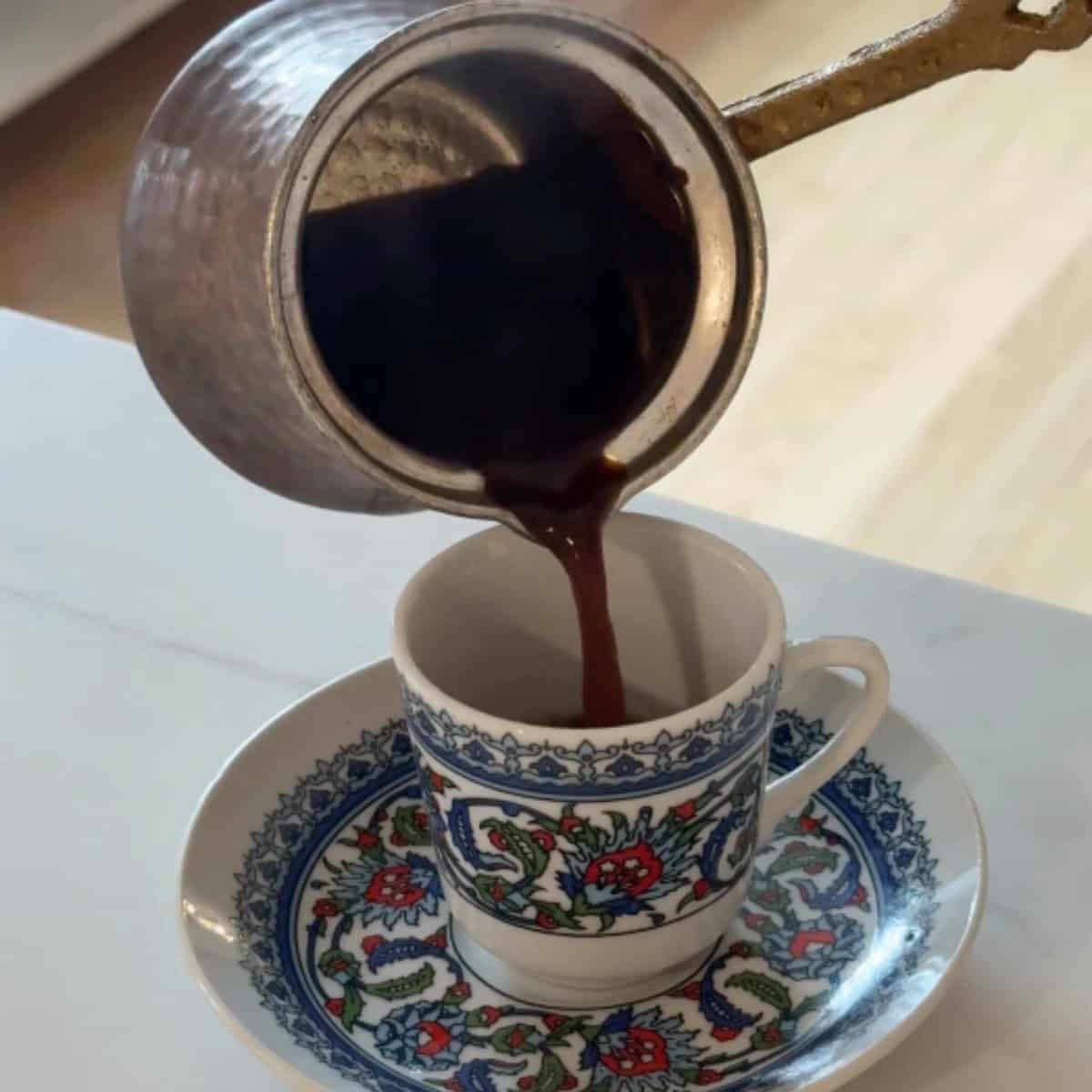
Second boil. Return the cezve to the heat and bring it to a boil one more time. As soon as it rises again, remove it from the heat immediately. Pour the coffee slowly into the cups over the foam you already added. The grounds will settle to the bottom within a minute or two.
Rest and serve. Let the coffee rest for about one minute before drinking to allow the grounds to fully settle. Serve with a small glass of cold water, which is the traditional accompaniment. The water cleanses the palate so you can fully appreciate the coffee.
Tips For The Best Turkish Coffee
Use cold water, always. Starting with cold water gives the coffee more time to develop flavor and foam as it heats gradually.
Never boil the coffee fully. A full rolling boil kills the foam and makes the coffee bitter. Watch it constantly, especially in the final minute.
Low heat is everything. Medium to low heat is non-negotiable. High heat rushes the process and you will end up with flat, bitter coffee and no foam.
Do not stir after the initial mix. Once you have stirred the coffee and sugar into the cold water, leave it alone. Stirring during heating disrupts the foam.
Preheat your cups. Pour a small amount of boiling water into your cups while the coffee is brewing, then discard it before pouring the coffee. Warm cups keep the coffee hot longer.
Reading The Coffee Grounds
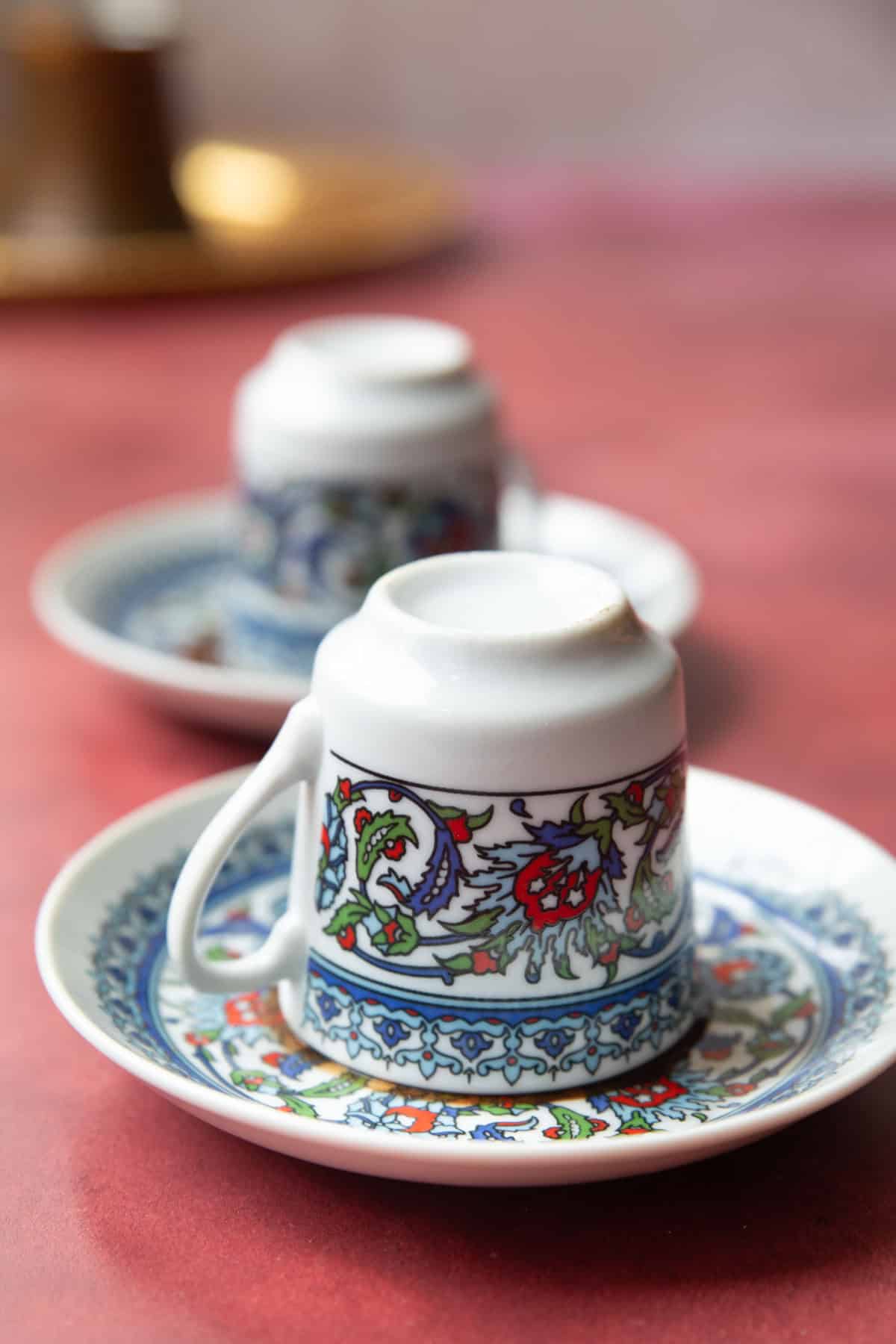
After you finish your coffee, flip your cup upside down onto the saucer and let it cool completely. Once cool, a friend reads the patterns left by the grounds, a tradition known as kahve falı (coffee fortune telling), or tasseography in English. It’s a beloved ritual in Turkish culture, and honestly one of the most fun parts of serving Turkish coffee to guests.
What To Serve With Turkish Coffee
Turkish coffee is always served with something sweet on the side. The bitterness of the coffee and the sweetness of the treat are meant to balance each other. Here are the classic pairings:
- A piece of homemade Turkish delight (lokum), the most traditional accompaniment to Turkish coffee in Turkey and often included with an order of Turkish coffee in high-end coffee shops.
- A square of pistachio baklava or walnut baklava for a rich, syrupy contrast.
- A slice of revani (Turkish semolina cake) soaked in light syrup.
If you enjoy hot drinks and want to explore more, my Persian tea recipe is another beautiful way to bring a Middle Eastern brewing tradition into your kitchen.
Frequently Asked Questions
No. The grounds settle to the bottom of the cup naturally and you stop drinking when you reach them. You will feel the resistance as the grounds approach. That is your cue to stop.
A cezve is really the right tool for this. A small saucepan can work in a pinch, but you will have less control over the foam and the results will not be quite as good. If you make Turkish coffee regularly, investing in a proper cezve is well worth it.
Both are concentrated and use finely ground coffee, but the brewing method is entirely different. Espresso is brewed under pressure through a machine, while Turkish coffee is brewed slowly in water over heat with no filtration and no pressure. Turkish coffee also retains the grounds in the cup, while espresso does not.
It is best enjoyed fresh. Reheating disturbs the settled grounds and you lose the texture and flavor that make it special. Turkish coffee takes only a few minutes to make, so it is always worth brewing a fresh pot.
Did you make this recipe? I’d love to hear about it! Please comment and leave a 5-star🌟 rating below. You can also follow us on Instagram, Facebook, Pinterest or subscribe to our newsletter to get a free e-Cookbook!
How To Make Turkish Coffee
Ingredients
- 2 Turkish coffee cups cold water, measured using the cup
- 3 heaped teaspoons finely ground Turkish coffee
- Sugar to taste, optional: 0 tsp for sade, 1/2 tsp for az sekerli, 1 tsp for orta, 2 tsp for cok sekerli
Instructions
- Measure the water. Use your Turkish coffee cup to measure cold water directly into the cezve (classic Turkish coffee pot). Fill each cup and pour both into the pot.
- Add coffee and sugar. Add 3 heaped teaspoons of Turkish coffee and sugar if using. Stir once to combine, then do not stir again.
- Heat slowly. Place the cezve over medium to low heat. Let it heat gradually without rushing.
- Spoon the foam. As the coffee rises and a thick foam forms, remove from heat just before it fully boils. Spoon the foam evenly between two cups.
- Second boil. Return the cezve to heat and bring to a boil one more time. Remove immediately and pour slowly into the cups over the foam.
- Rest and serve. Let sit for one minute for grounds to settle. Serve with a glass of cold water and a sweet treat on the side.
Notes
- Never use boiling or hot water. Always start with cold water.
- Watch the cezve at all times during the last minute of brewing. It can boil over quickly.
- Foam is a sign of a well-made Turkish coffee. Protect it by keeping the heat low and moving slowly.
- Serve immediately. Turkish coffee is always enjoyed fresh.
Nutrition
Nutrition information is automatically calculated, so should only be used as an approximation.