
This post may contain affiliate links.
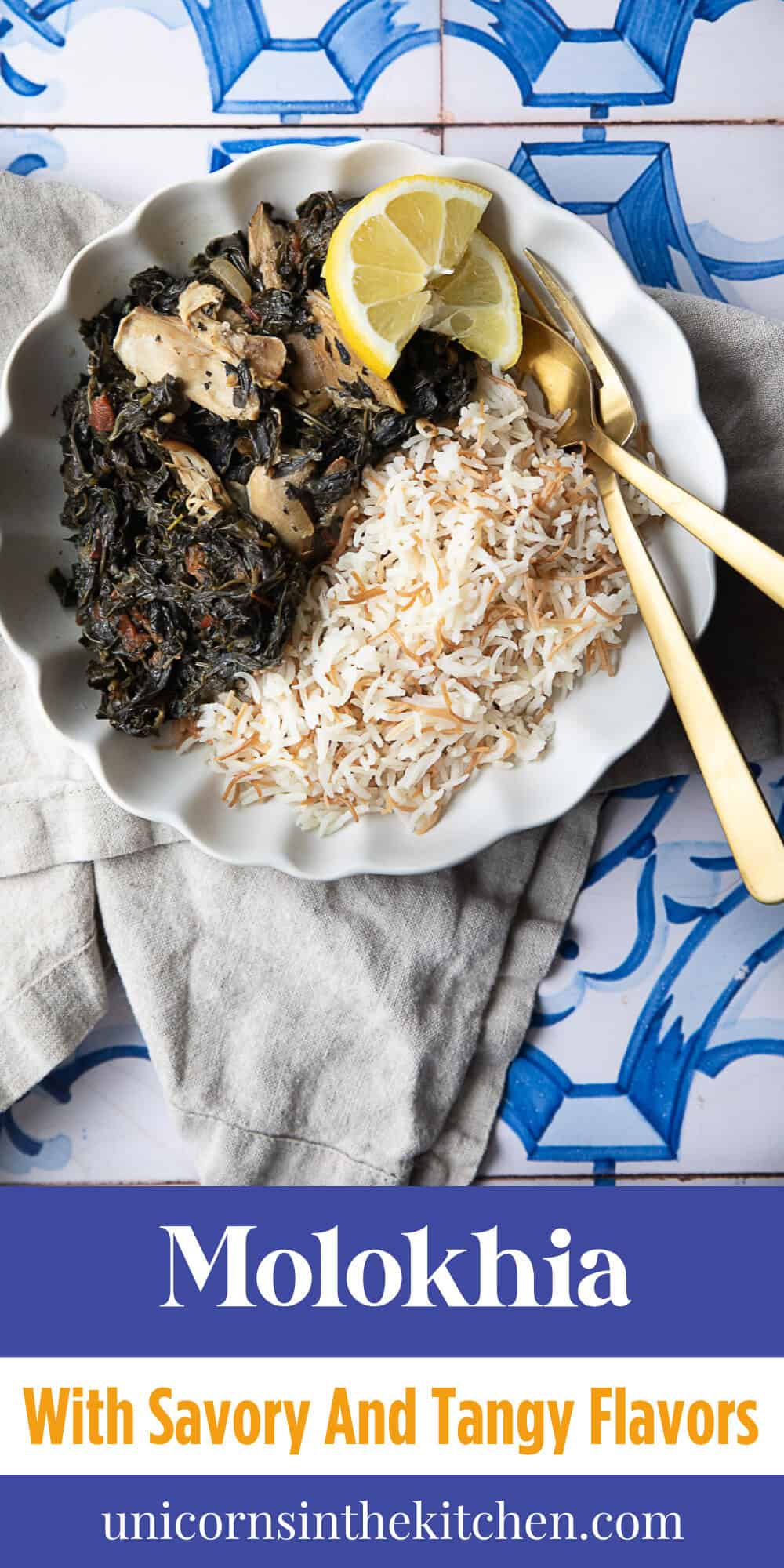
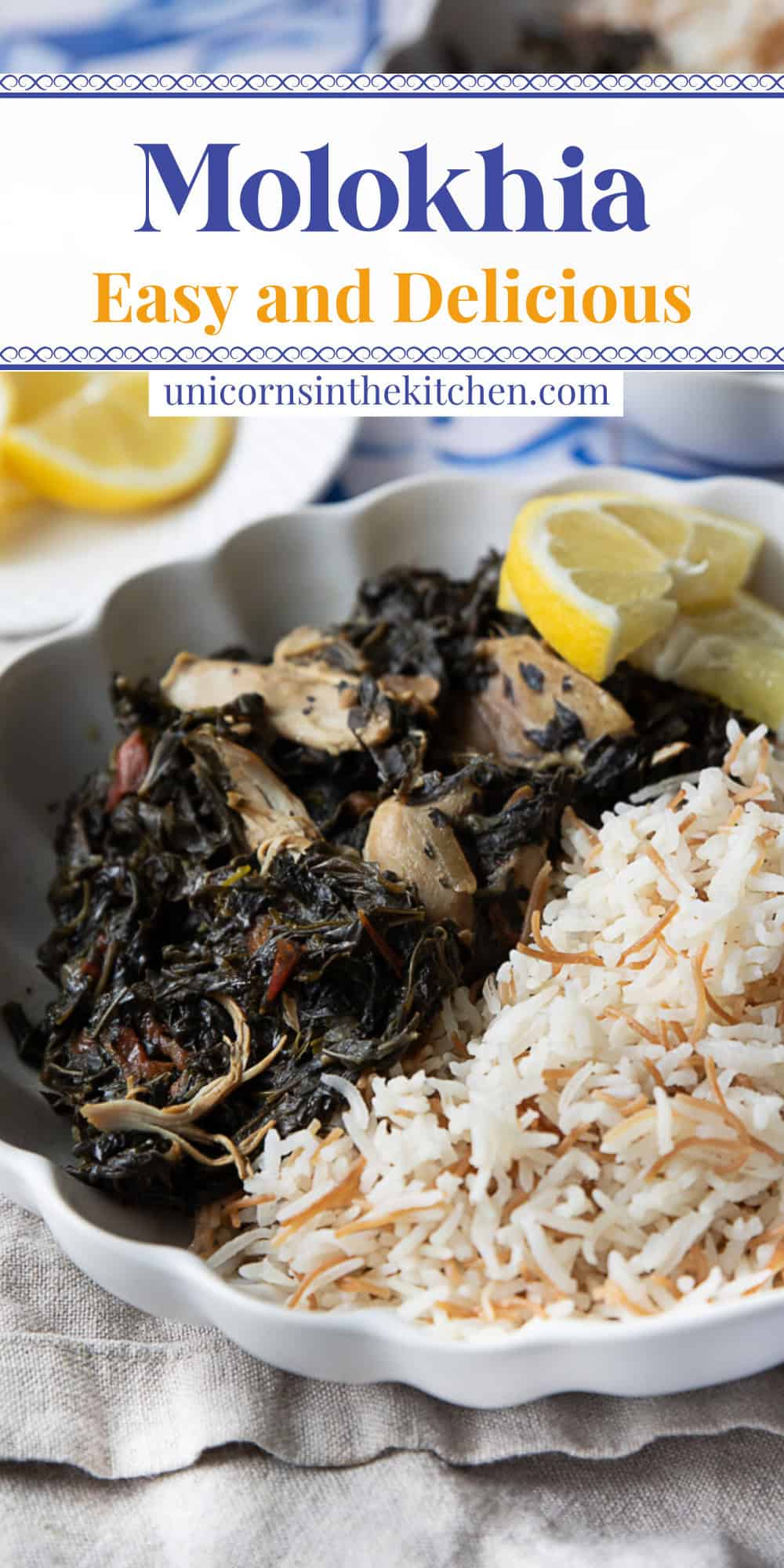
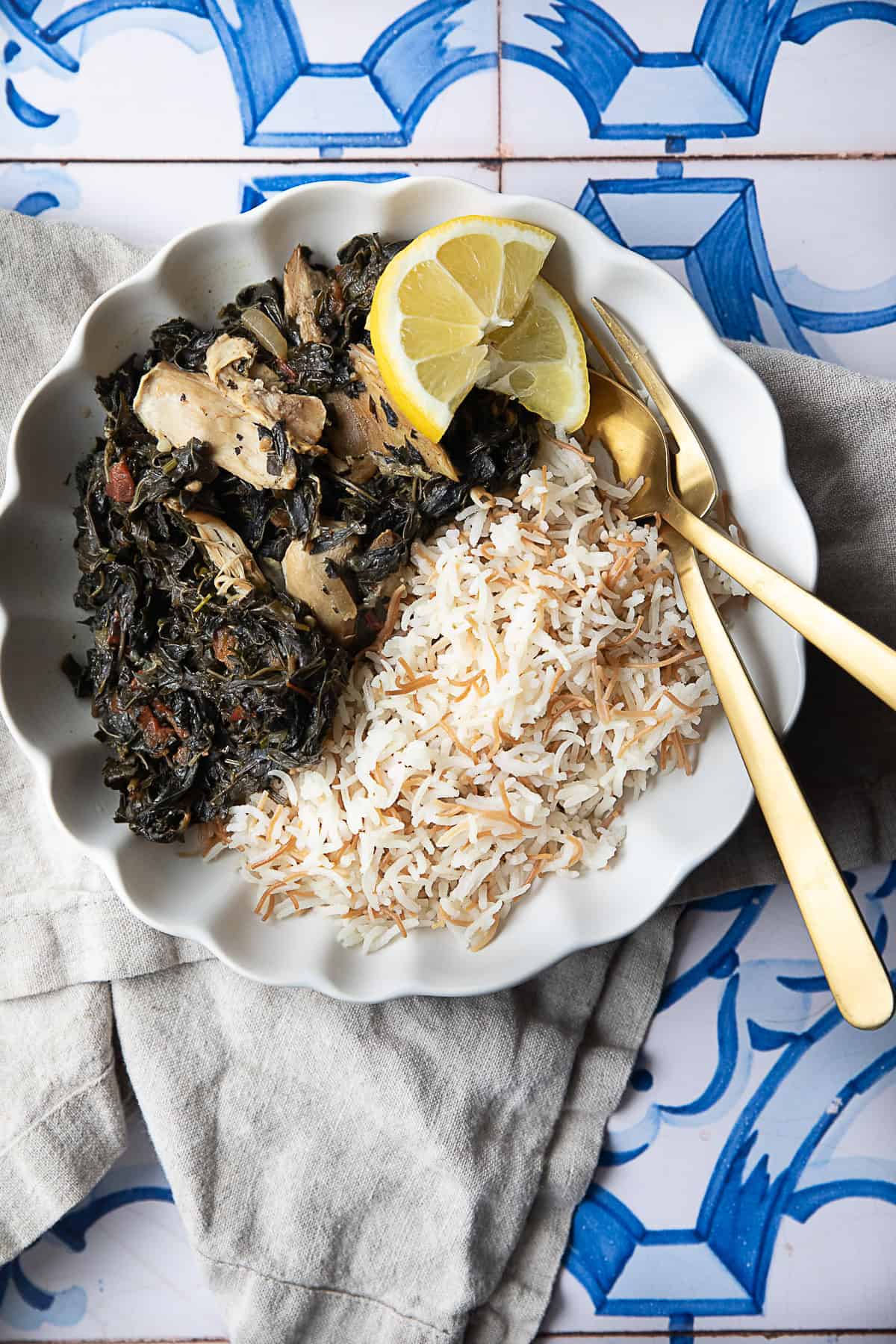
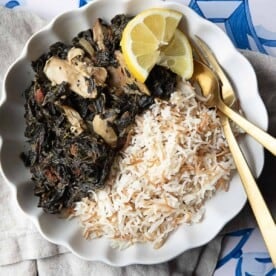
Molokhia is a classic Middle Eastern dish made with jute leaves simmered in a flavorful, lemony broth. It’s typically served with chicken, beef, or lamb alongside rice. This comforting stew is beloved in Lebanon, Egypt, and across the Arab world, and every family has its own version, making it truly special.
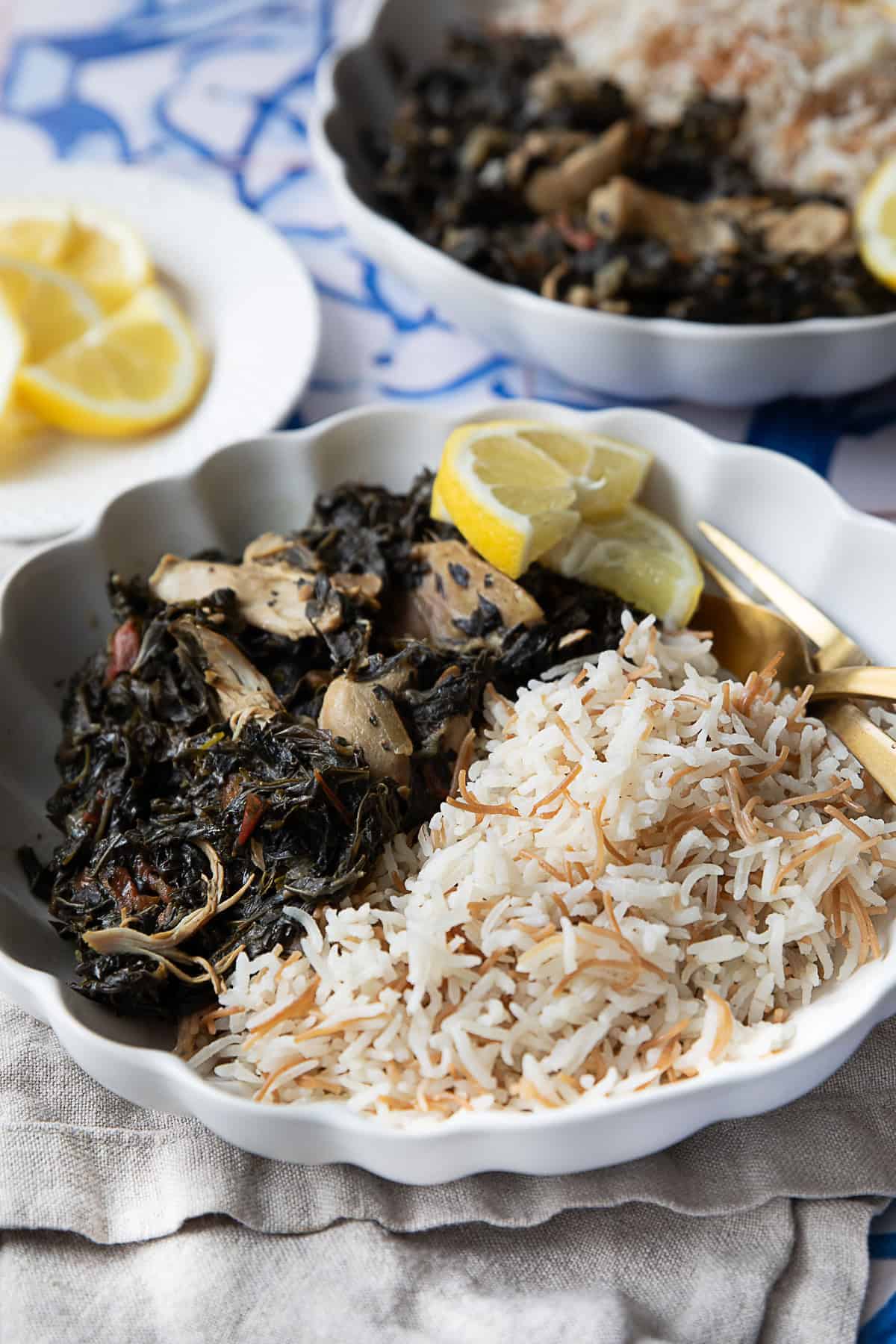
Stews are a staple in Middle Eastern cuisine and are loved for being comforting, simple, and full of flavor. They’re often served with rice and make for a hearty, satisfying meal.
Molokhia is one of the most beloved stews across the Arab world, flavored with a warm seven spice blend and a good squeeze of fresh lemon juice. With deep roots in Egypt, Lebanon, Palestine, and Syria, it’s traditionally paired with vermicelli rice.
I didn’t grow up eating molokhia, but when I tried it later in life, I quickly fell in love. Each country has its own way of preparing it: in Egypt, the jute leaves are finely chopped, while in Lebanon and Syria, whole leaves (often dried and then rehydrated) are used.
Like bamya, molokhia is one of those dishes people either love or avoid because of its natural sliminess. Since I was determined to reduce the sliminess, I discovered that adding tomatoes along with lemon juice works beautifully. The result is a molokhia that’s flavorful, vibrant, and much less slimy.
Ingredient Notes
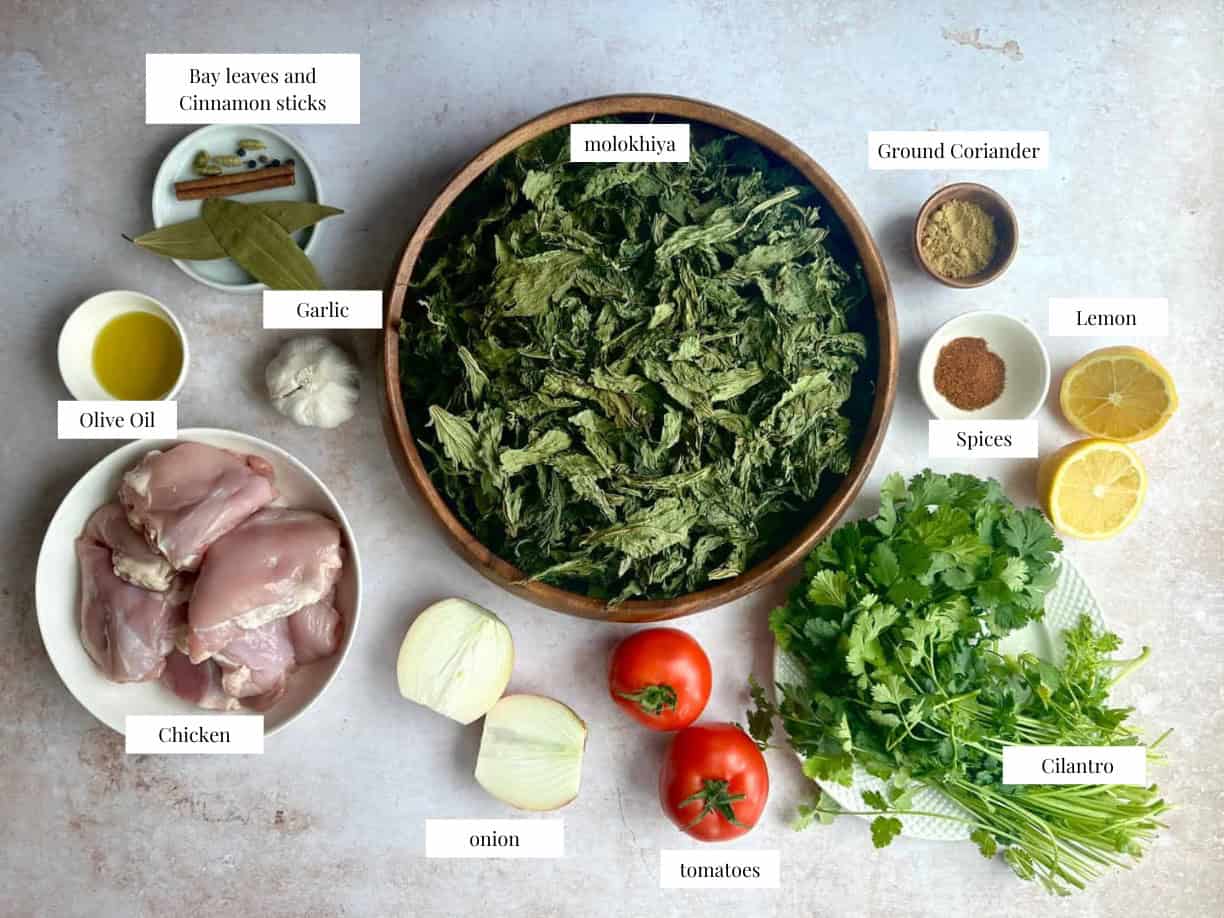
For the Broth and Chicken:
- Chicken thighs (bone-in, skinless): I find chicken thighs to have the perfect texture for this stew. However, you can use other cuts of chicken as long as they are skinless. You can also use a mix of chicken breast and thighs.
- Onion and garlic
- Whole Spices: Use cinnamon sticks, bay leaf, cardamom pods and peppercorns.
For the Molokhia:
- Olive oil: Used for sautéing and adds a smooth richness.
- Onion: Finely chopped for a sweet, caramelized base.
- Garlic: Minced for a bold, savory flavor.
- Cilantro: To make “tasha”, which is a combination of chopped cilantro and garlic fried in olive oil and added to the stew.
- Tomato: Adds a slight acidity and freshness and reduces the sliminess.
- Molokhiya (jute mallow): The star ingredient, I used dry jute leaves for this Lebanese style molokhia.
- Seven spice: A blend of spices that adds a lot of flavor to the dish. You can use store bought or make it at home using my seven spice blend recipe.
- Chicken broth: The flavorful base of the stew, you will use the broth from cooking the thighs earlier.
- Lemon juice: Brightens the dish with acidity
Ingredient Spotlight: Molokhia
Where to Buy: Molokhia can be found in various forms, including fresh, frozen, and dried. Fresh molokhia is very hard to find so we usually use frozen or dried.
Frozen molokhia is a convenient option and can be found in the frozen section of the Middle Eastern, Mediterranean and some North African markets. Dried molokhia is also available and can be rehydrated before use. Online retailers specializing in international foods may also carry it.
How To Work With Molokhia
Handling molokhia requires a bit of care to ensure the best texture and flavor. Here’s a step-by-step guide:
- Preparation: If using fresh molokhia, wash the leaves thoroughly to remove any dirt. Pick through the leaves to remove any tough stems. Soak the leaves in water for about 20 minutes, then squeeze out as much liquid as possible.
- Cooking: When cooking molokhia, it’s important to avoid overcooking as it can become slimy. Sautéing the leaves with aromatics like garlic and onions helps to reduce the sliminess. Adding acid, such as lemon juice or chopped tomatoes, also helps to maintain the texture.
Tip From The Experts
A Lebanese acquaintance of mine told me about a trick her grandmother used to use when cooking molokhia. She would sauté the molokhia before adding broth or water.
So, she’d add the molokhia to the pot to sauté in batches. After adding each batch, she’d add a sprinkle of citric acid (salt-like texture) and mix it in. This ensures that the leafy green doesn’t get a slimy or sticky texture. Then, she’d add the broth or water.
How to Make Molokhia
Cook the chicken by boiling it in a pot with onion, garlic, bay leaves, all the spices and enough water to cover the chicken. Make sure the chicken is cooked completely.
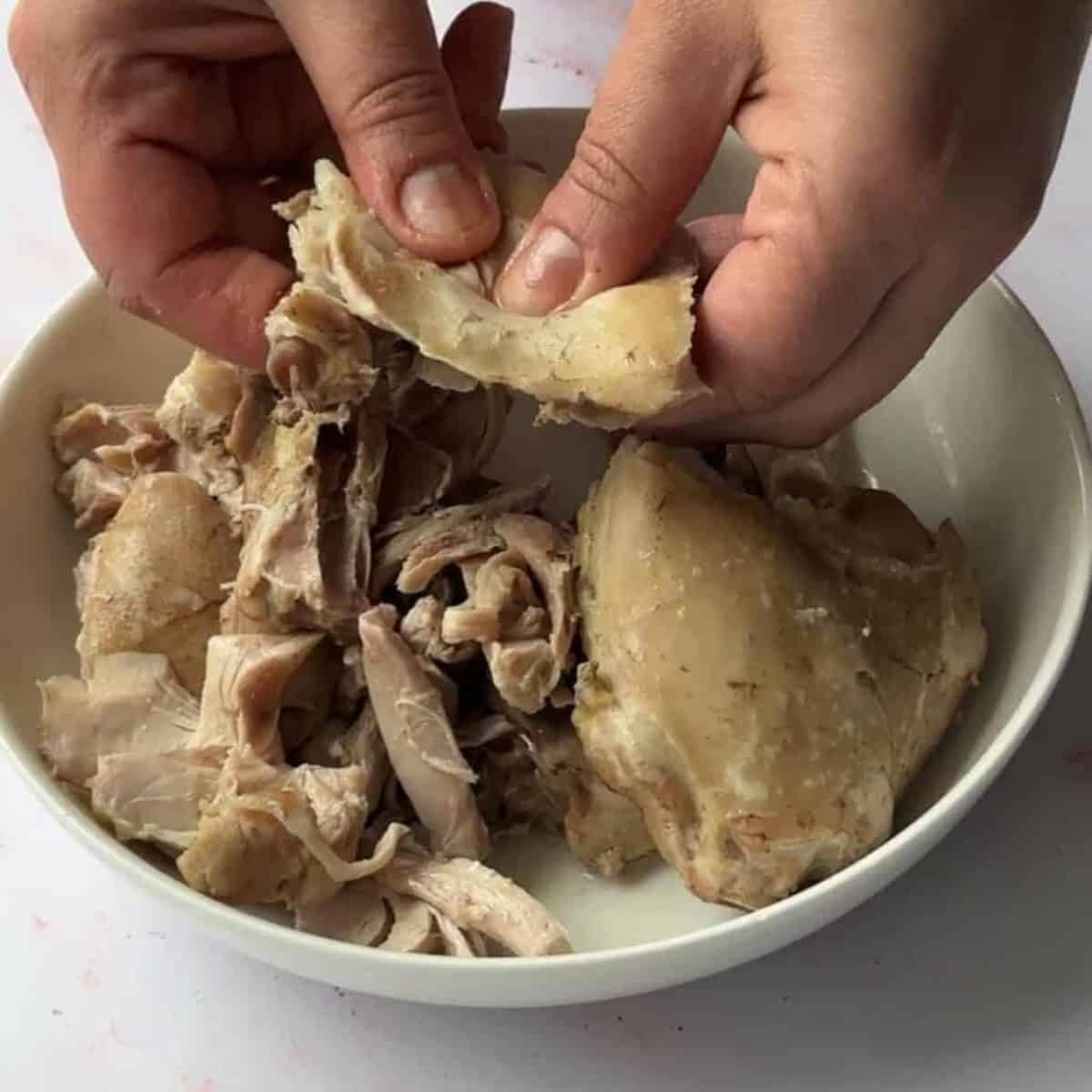
Once cooled, strain the broth, set it aside and shred the chicken with your hands.

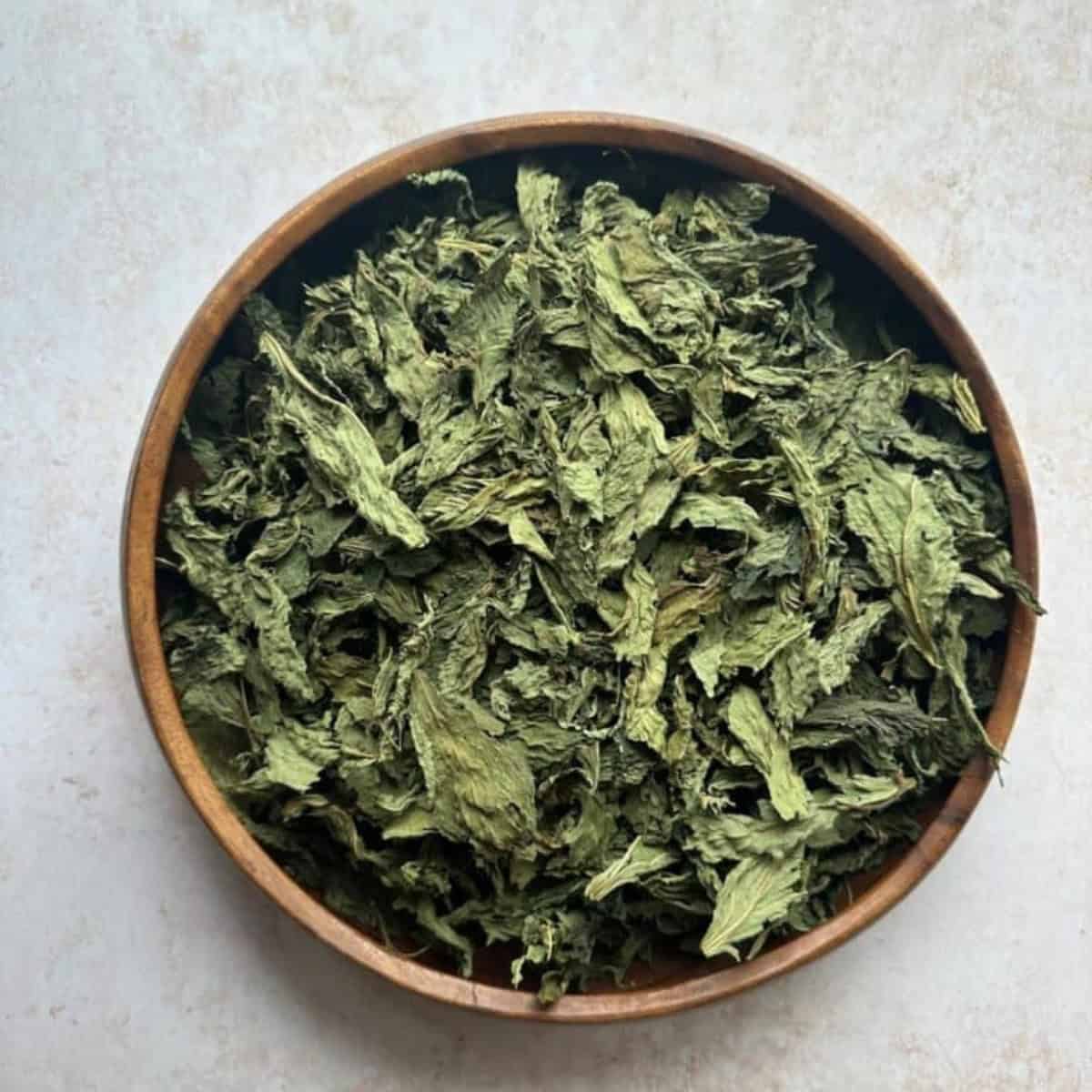
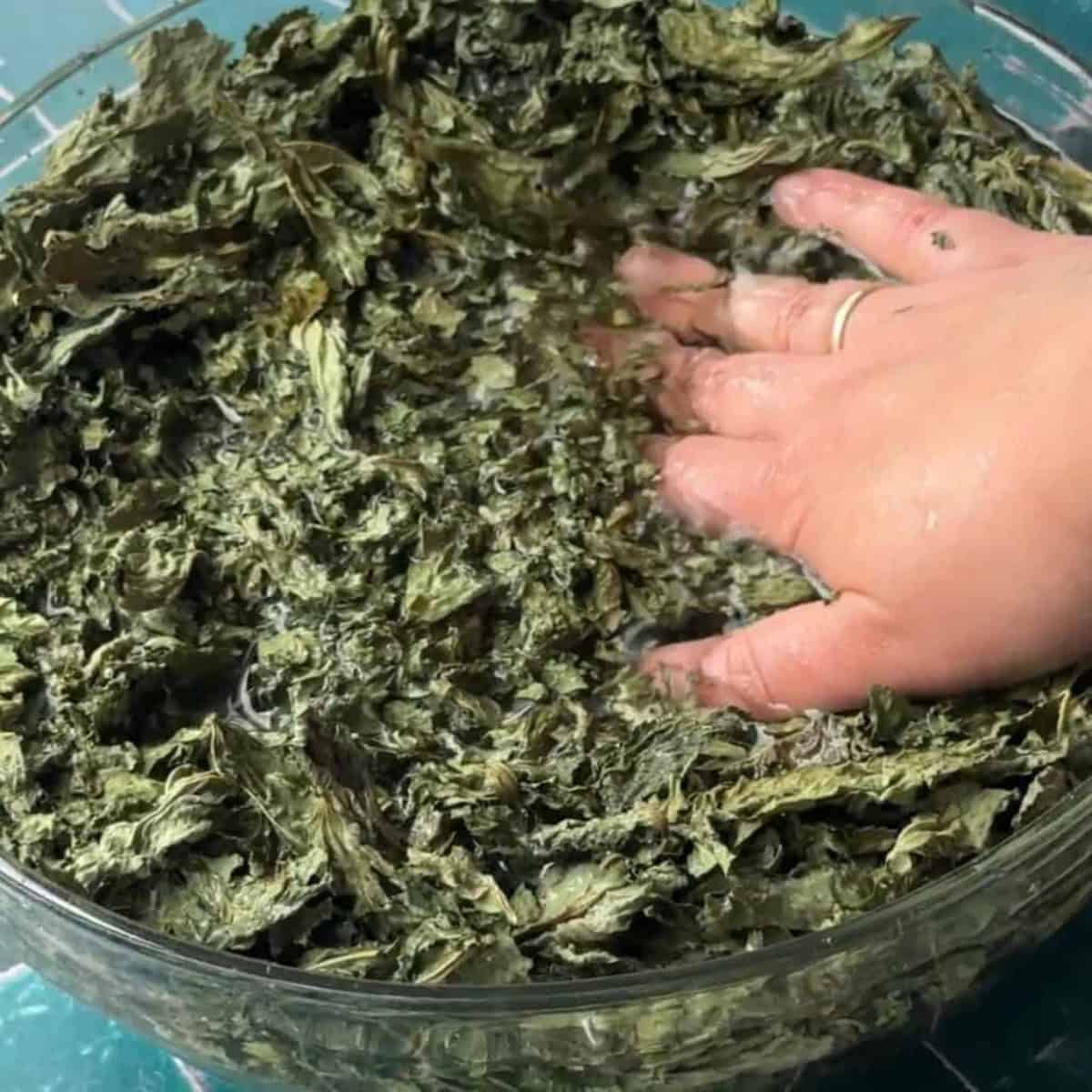
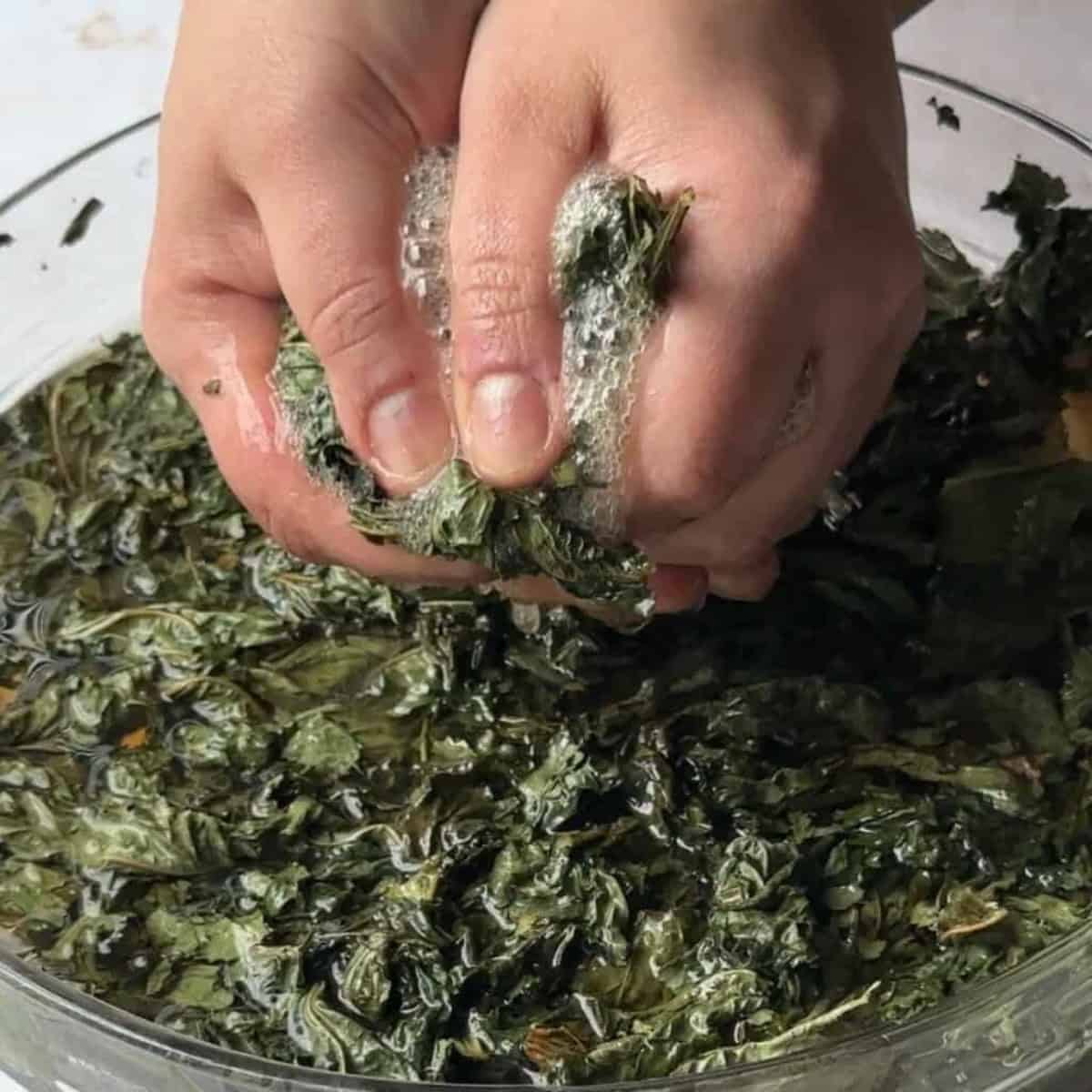
Pick through the molokhia for thick stems and soak the leaves in water for 20 minutes.
Squeeze completely (it will be a bit slimy) and set aside.

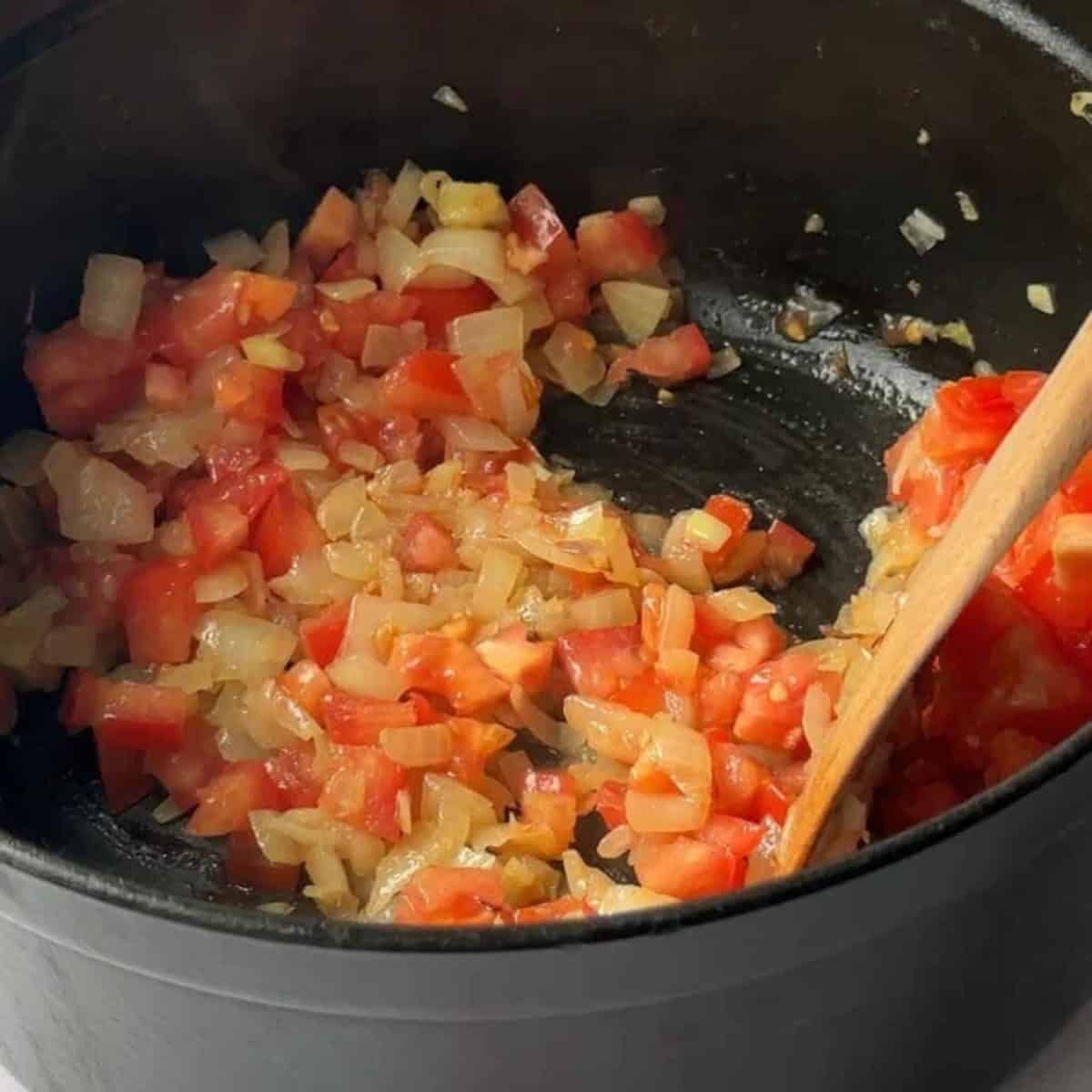
Heat the olive oil in a pot over medium high heat. Sauté the onion until golden.
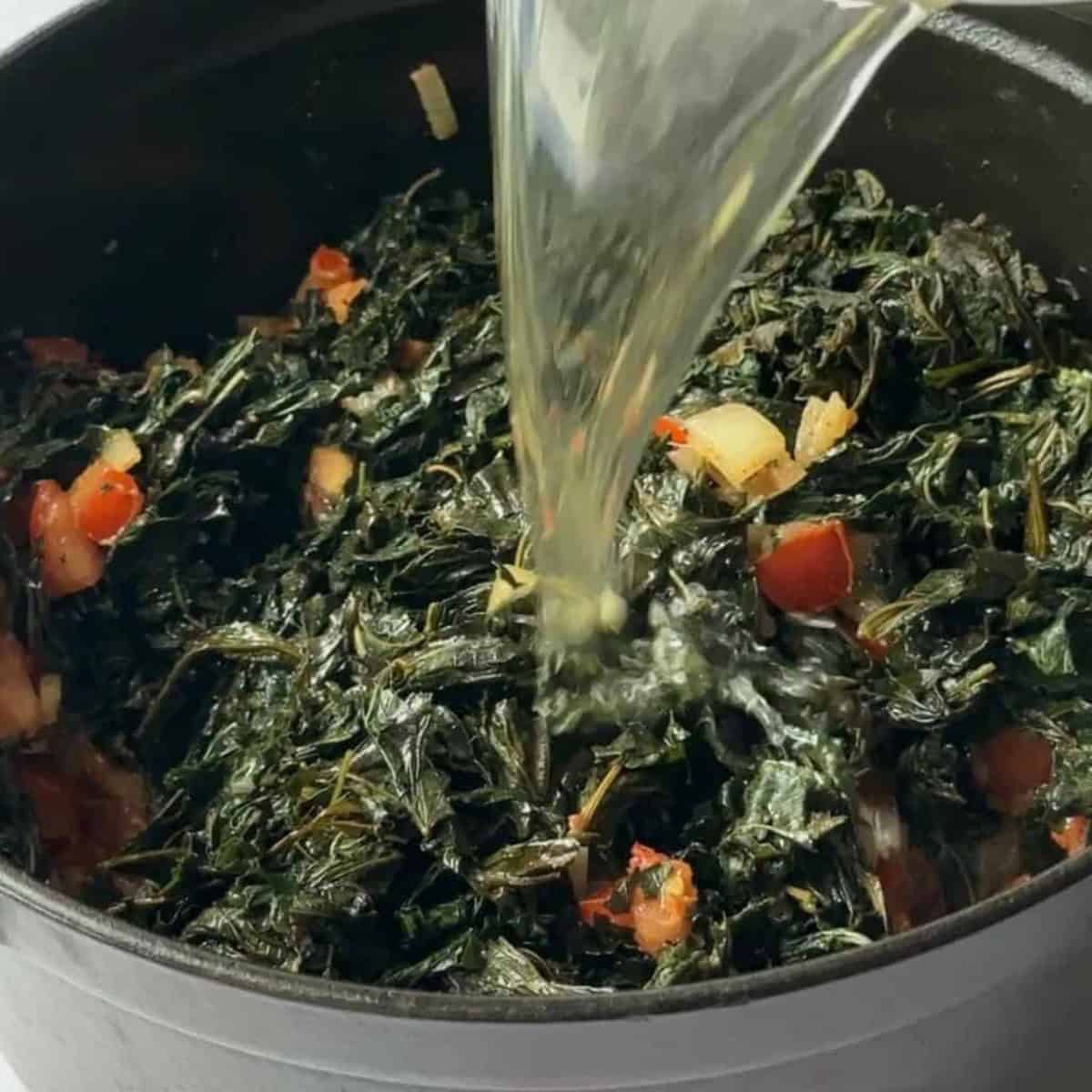
Add the tomato and cook for a minute. Next, add the seven spices and coriander as well as salt and pepper followed by the squeezed molokhiya leaves. Then, add the broth, cover, and cook for 40 minutes on medium.

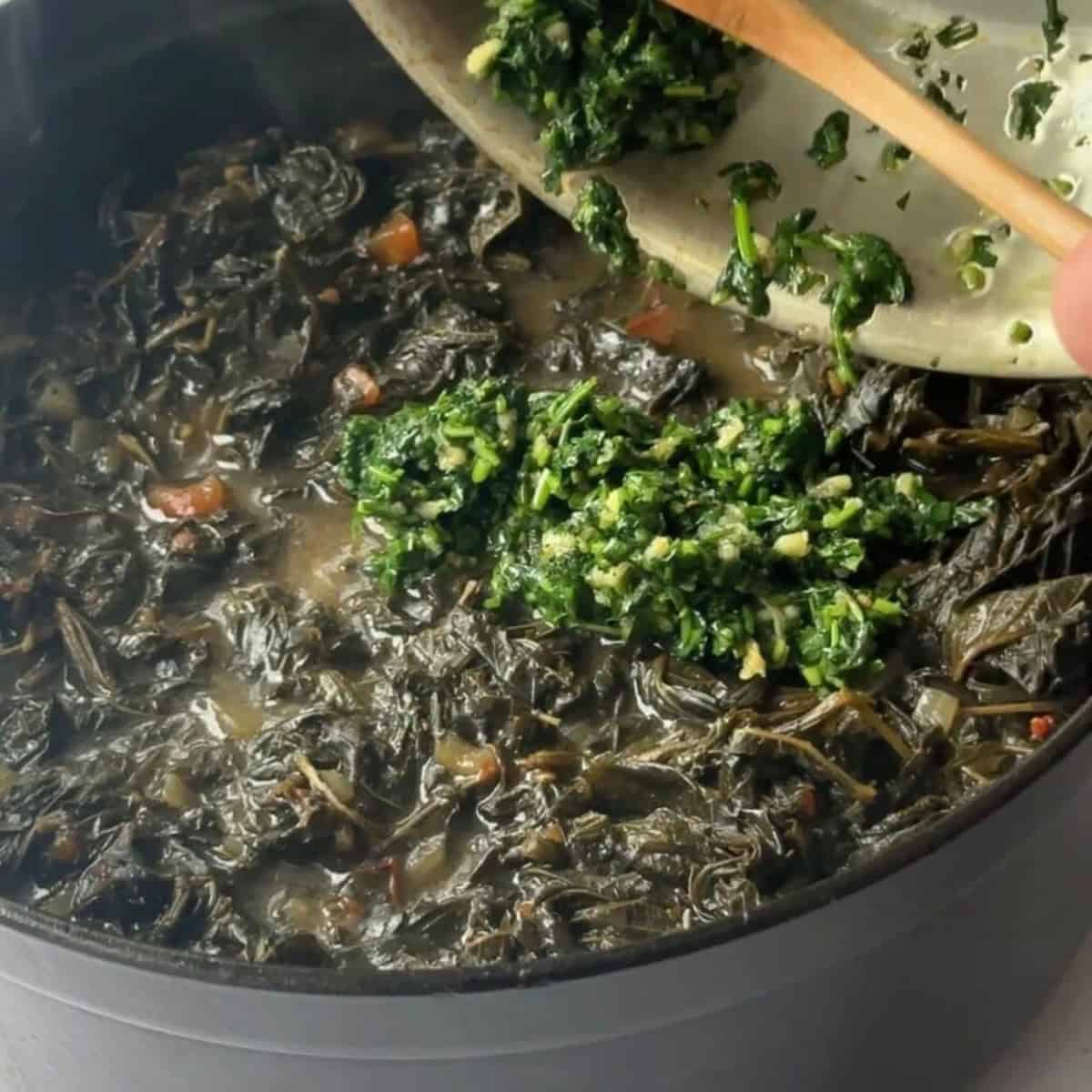
To make the “tasha”, sauté the minced garlic in a pan and add the cilantro. Cook for 5 minutes and add it to the stew followed by the shredded chicken and lemon juice. Cook for 30 more minutes. Serve warm with vermicelli rice.



Recipe Tips
- Avoid Overcooking: Molokhia can become slimy if overcooked. To prevent this, keep the cooking time precise. Also, avoid letting it simmer for too long.
- You can sauté the molokhia before adding the broth. You can add a little extra lemon juice as you sauté it. This helps prevent the sliminess and it cuts cooking time a bit.
- Blanch the Molokhia: To further reduce sliminess, blanch the molokhia leaves briefly before adding them to the stew. Boil water, blanch the leaves for a minute, then transfer them to an ice bath before draining and using.
- Acid to the Rescue: Adding lemon juice not only enhances the flavor but also helps reduce the sliminess. Make sure to add extra lemon juice towards the end of the cooking process to maintain its bright, tangy flavor.
- Stirring Technique: Stirring continuously while adding the molokhia to the pot can help achieve a smoother texture. Use a wooden spoon and stir gently but consistently.
What to Serve with Molokhia
Molokhia stew is usually served with vermicelli rice. Your other options can be white rice, rice pilaf with orzo or brown rice.
We love serving this Lebanese stew with a side of fresh salad such as fattoush, Middle Eastern chopped salad or tahini salad.
Frequently Asked Questions
Yes, both frozen and dried molokhia can be used in this recipe. If using frozen molokhia, thaw it completely and drain any excess water before cooking. If using dried molokhia, rehydrate it according to package instructions before proceeding with the recipe.
When using fresh molokhia leaves, rinse them thoroughly, remove any tough stems, and pat them dry before cooking. Fresh molokhia should be used soon after purchase for the best flavor and texture.
You can refrigerate the leftovers for up to 4 days or freeze for up to 3 months. To serve, let molokhiya thaw in the fridge (if frozen) and reheat in a saucepan over medium heat for 15 to 20 minutes.
Yes, you can use chicken breasts instead of thighs. However, chicken thighs tend to be more flavorful and moist, making them a preferred choice for this dish.
Traditional Middle Eastern Dishes To Try
Middle Eastern Recipes
Hashweh (Arabic Ground Beef and Rice)

Middle Eastern Recipes
Maqluba (Makloubeh) With Lamb

Middle Eastern Recipes
Machboos (Kabsa Chicken and Rice)

Mediterranean recipes
Beef Shawarma
Did you make this recipe? I’d love to hear about it! Please comment and leave a 5-star🌟 rating below. You can also follow us on Instagram, Facebook, Pinterest or subscribe to our newsletter to get a free e-Cookbook!
Molokhia (Mulukhiyah)
Ingredients
Broth and Chicken
Molokhia
- 4 tbsp Olive oil
- 1 Onion, finely chopped
- 1 Tomato, finely chopped
- 4 oz Molokhia
- 1½ tsp Seven spices
- 1 tsp Coriander
- 1 tsp Salt
- ½ tsp Black pepper
- 5 cups Chicken broth
- 4 cloves Garlic, minced
- 1½ cups Cilantro, chopped
- 1 Lemon, juiced
Instructions
Broth and Chicken
- Place the chicken thighs in a pot and add the onion, garlic, cinnamon, bay leaf, cardamom and peppercorns. Add in enough water to cover the chicken. Place the pot over medium high heat and cook the chicken for 30-40 minutes. Make sure the chicken thighs are cooked completely.
- Once cooled, strain the broth and set aside and shred the chicken.
Molokhia
- Pick through the molokhia for thicker stems and remove them. Place the leaves in a large bowl and cover with cold water. Soak for 20 minutes.
- Working in batches, squeeze the leaves between your hands to get rid of the excess water. Set the squeezed leaves aside and discard the excess slimy water.
- Heat 2 tbsp olive oil in a pot over medium high heat. Sauté the onion until golden.
- Add the chopped tomato and cook for a minute. Add the seven spices and coriander as well as salt and pepper followed by the molokhia leaves. Cook for 5 minutes.
- Add the broth, cover, and cook for 40 minutes on medium.
- Heat the remaining 2 tbsp of olive oil in a small pan over medium heat. Sauté the mined garlic for a minute and add the cilantro. Cook for 5 minutes and then add it to the stew followed by the shredded chicken and lemon juice. Cook for 30 more minutes.
- Serve with vermicelli rice.
Video
Nutrition
Nutrition information is automatically calculated, so should only be used as an approximation.










Very tasty and full of flavor. I love trying new recipes, this one’s a keeper—thanks!
The rich, earthy flavor of the jute leaves combined perfectly with the garlic and coriander, creating a comforting and hearty dish. I highly recommend this recipe to anyone looking to explore new and delicious cuisines!
Wow – this is my first time hearing of this dish – it sounds so tasty and flavorful! Thanks for sharing this one.