Khoresh Karafs (Persian Celery Stew

Feb 12, 2019, Updated Apr 17, 2026
This post may contain affiliate links.
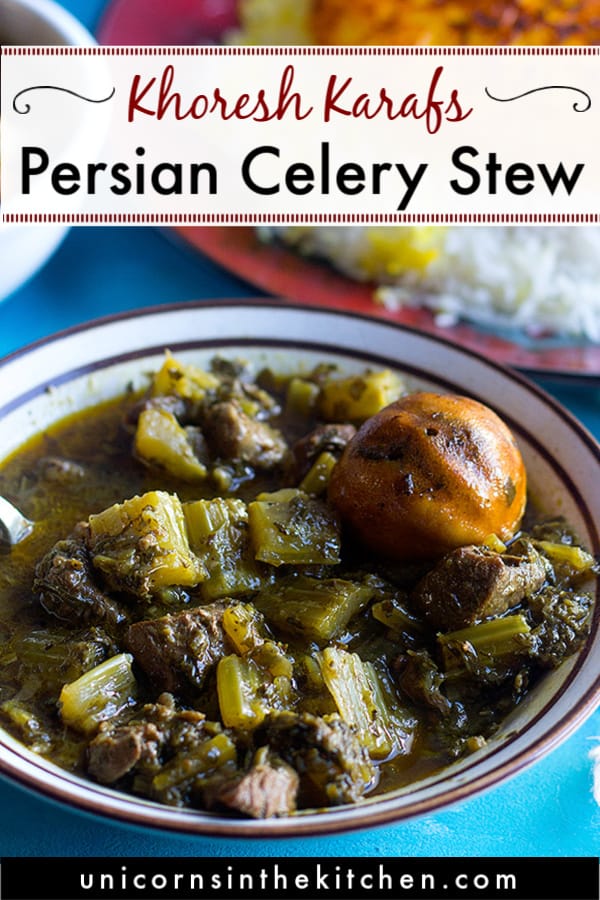
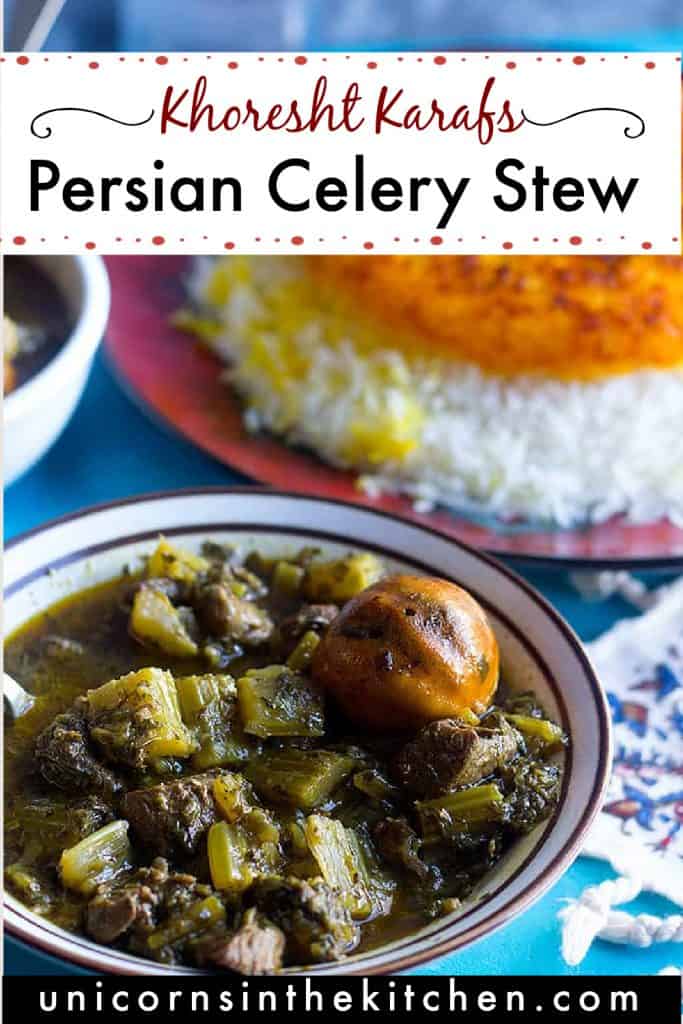
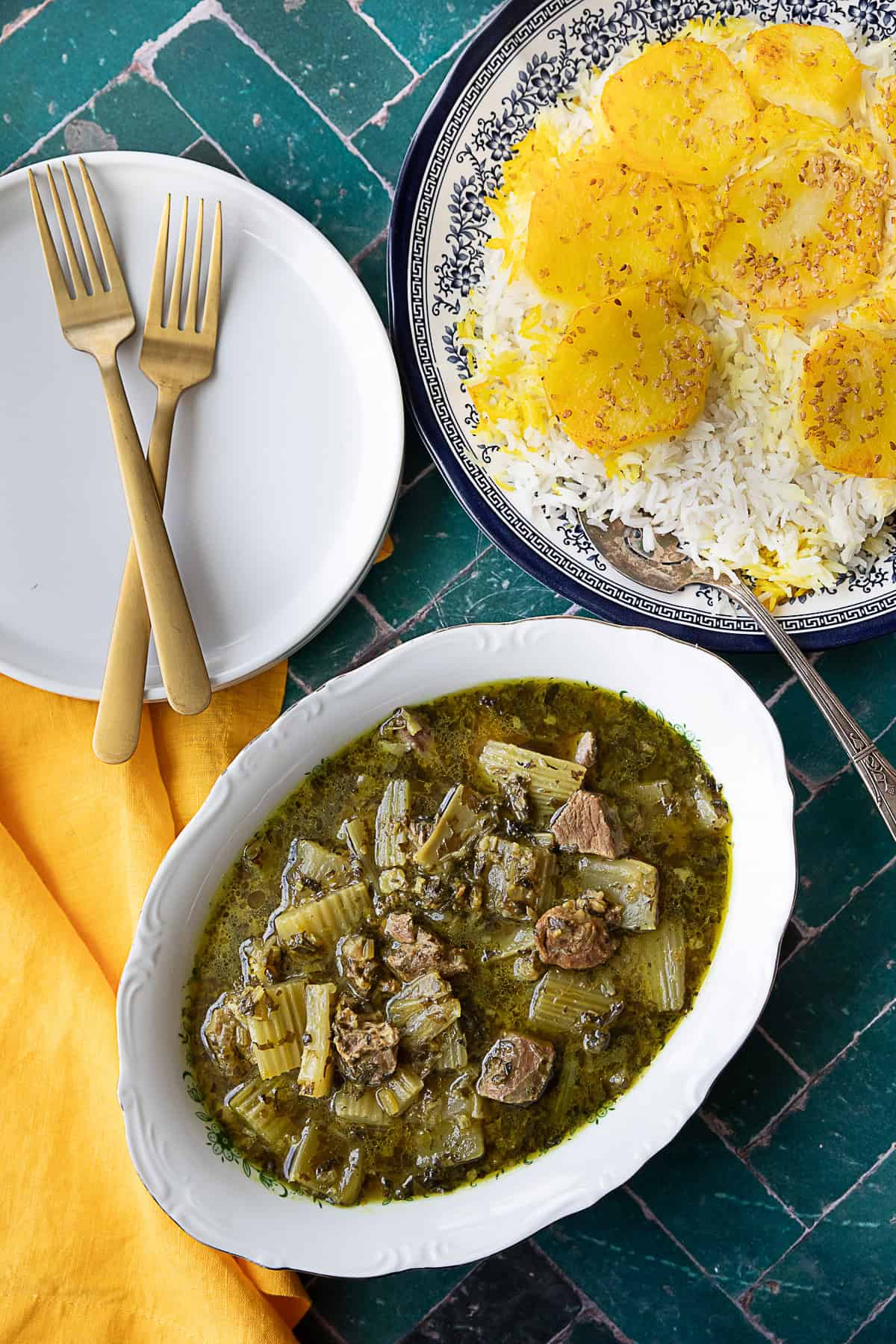
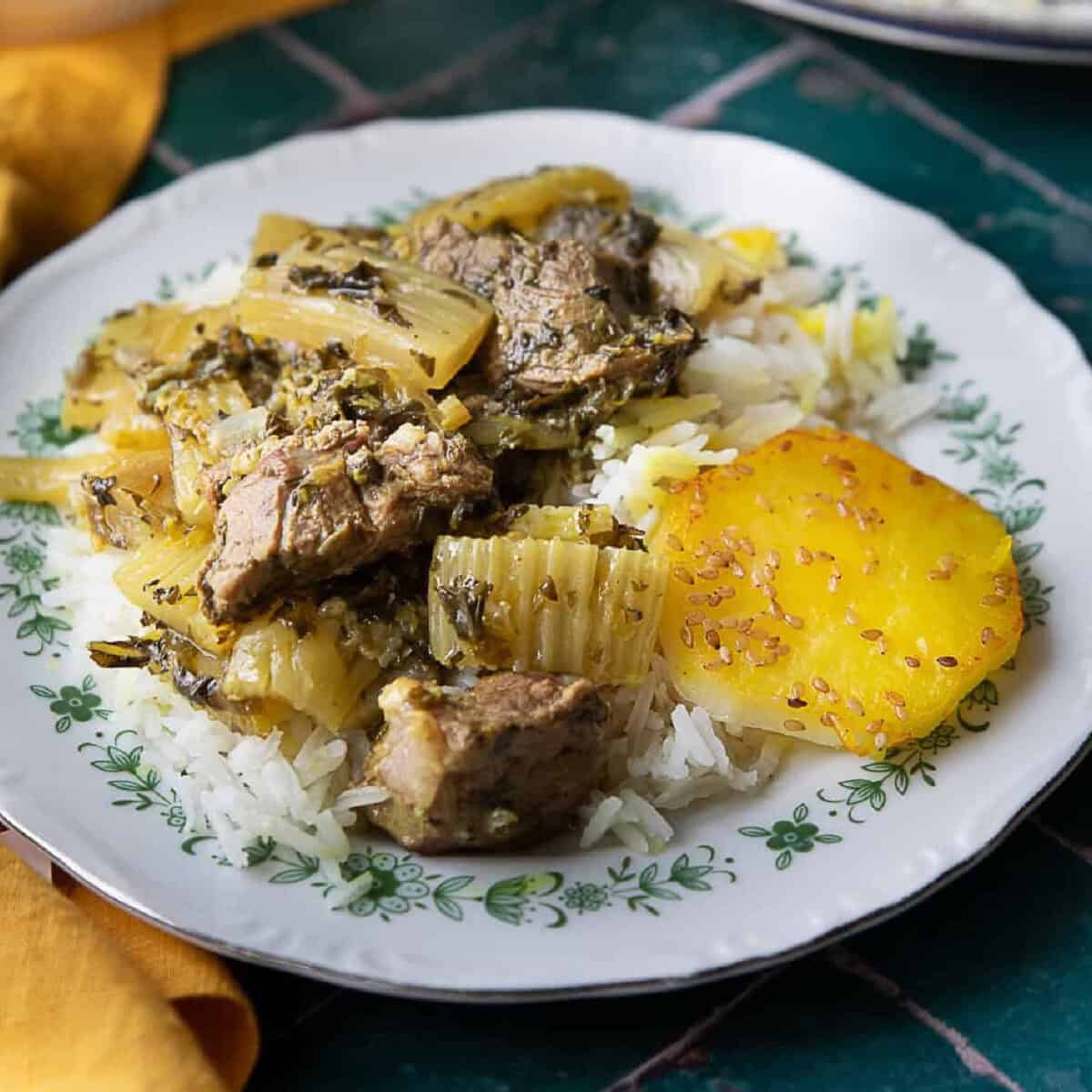
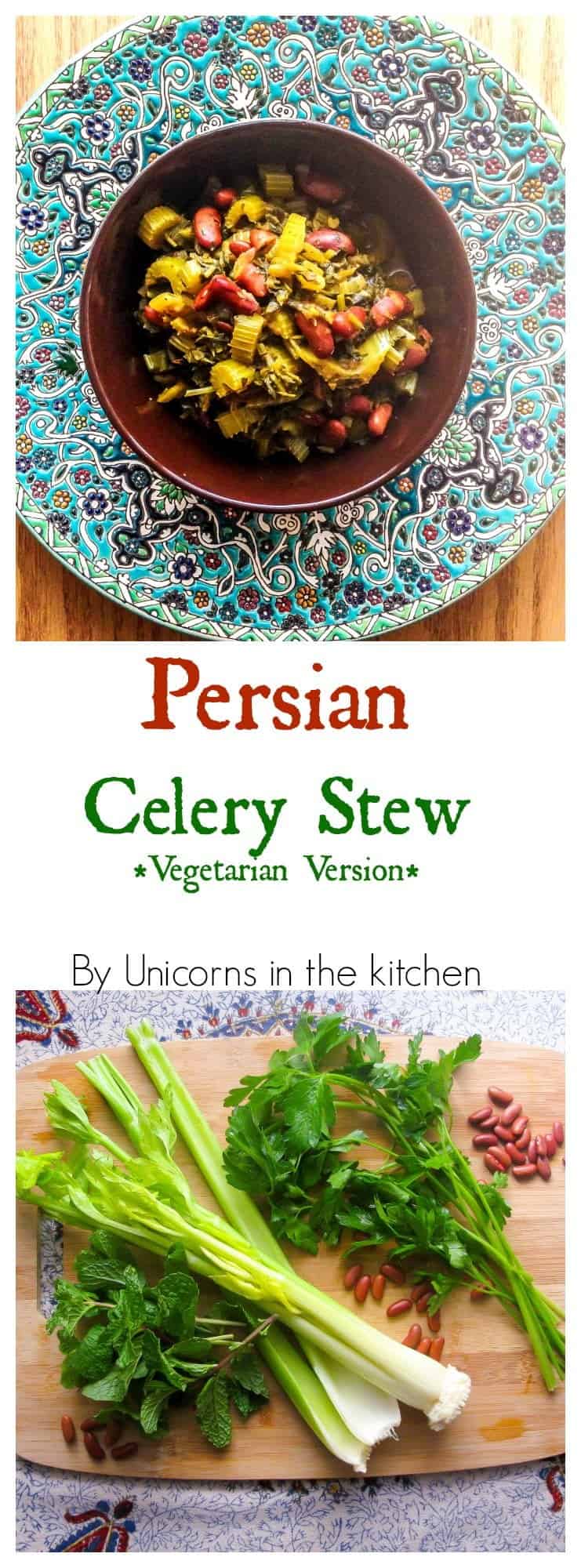
Khoresh karafs is a Persian celery stew made with lamb, fresh mint, parsley and a squeeze of lemon, cooked on the stovetop until the meat is tender and the herbs have melted into a thick, fragrant stew. It can be made vegetarian, and most of the cooking time is hands-off. Serve it with Persian white rice for a complete Iranian dinner.
Why I Love Khoresh Karafs
My mom made Khoresh karafs regularly in summer when fresh mint was at its most abundant. I remember watching her chop the herbs with such care, and the smell of mint and parsley hitting a hot pan is something I still associate with home. It was always one of my favorites growing up.
When I moved to Turkey years ago I couldn’t find celery stalks anywhere, only celery root, which is a completely different ingredient, so this stew quietly disappeared from my table. Once I moved to the US it came back into regular rotation and has been there ever since. It’s one of those recipes I never get tired of.
One thing worth saying before we get into the recipe: in Persian cuisine, herbs are not garnish. They are the main ingredient. The mint and parsley in this stew are not sprinkled on top, they go in by the cupful and get cooked down into the base of the dish. This is true across Persian cooking, from ghormeh sabzi to ash reshteh (Persian noodle soup) to this stew. If you’re new to Iranian food, that’s the most important thing to understand.
What Is Khoresh Karafs?
Khoresh, sometimes written as khoresht, is the Persian word for stew. It refers to a whole category of slow-cooked dishes that form the backbone of Iranian home cooking, always served alongside rice. Karafs means celery in Persian, so khoresh karafs is literally celery stew.
It’s worth noting how this stew differs from ghormeh sabzi, since the two are often compared. Both are herb-forward Persian lamb stews, but ghormeh sabzi uses dried fenugreek, dried lime and red kidney beans, giving it a darker and more complex flavor. Khoresh karafs is lighter and brighter, with a clean celery bite and no beans. If you love ghormeh sabzi, this is absolutely worth trying
Ingredients
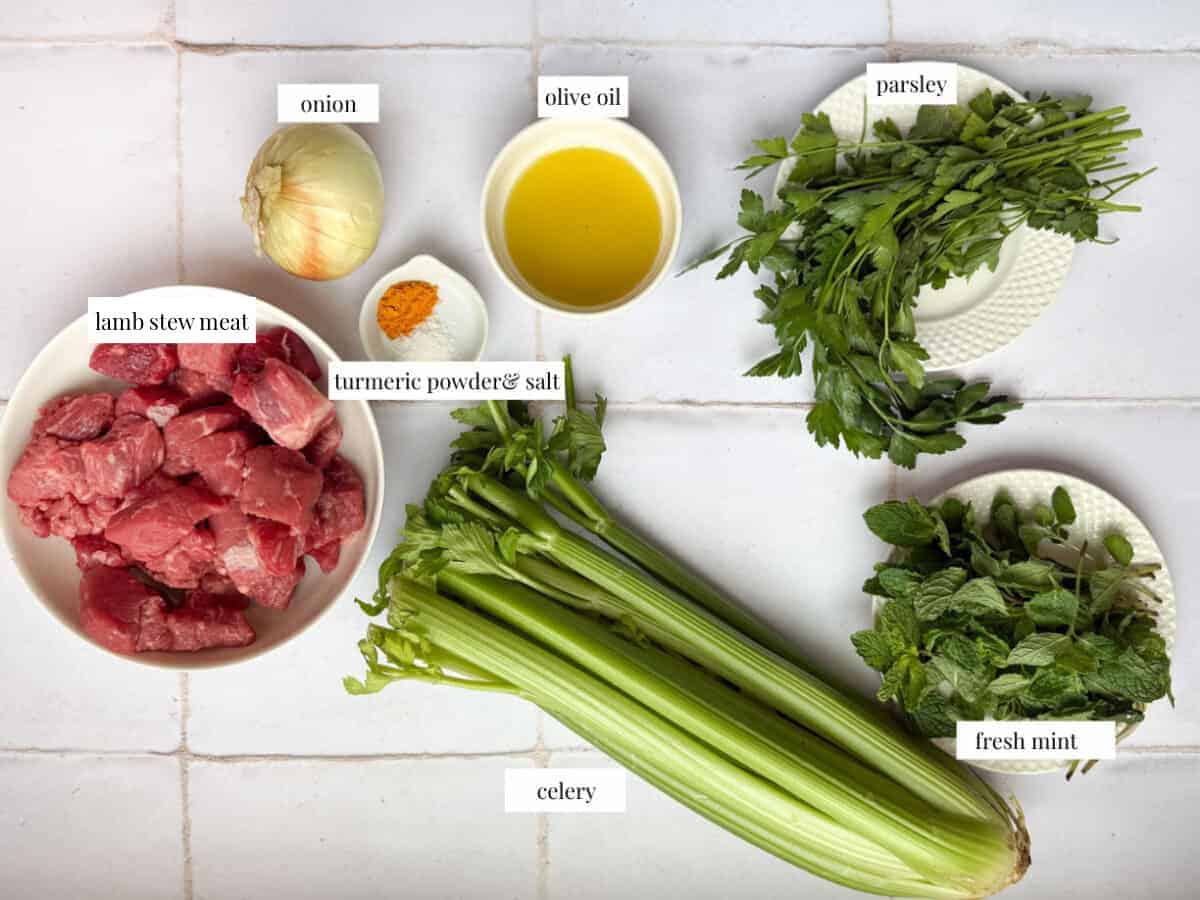
Celery stalks: The star of this Persian celery stew. Cut into roughly 1 1/2 inch pieces, not too small or they’ll lose their texture during the long cook. If your bunch came with leaves, chop those in too.
Fresh mint: This is what gives the stew its distinctive Persian herb stew flavor. Don’t overdo it though, too much mint tips into bitterness. Follow the recipe ratio.
Fresh parsley: Works alongside the mint to build the herby base. Always use fresh for this recipe. Dried parsley will not give you the same result.
Lamb stew meat: My preference and what I grew up eating. Lamb suits the herbs in a way that feels completely right for this dish. Beef stew meat works well too, but if you can get lamb from a halal butcher or good butcher counter, use it. Cut into roughly one inch pieces.
Onion: The base of almost every Persian stew. This builds the flavor foundation of the stew and cannot be rushed.
Turmeric: A small amount, added with the meat at the beginning. It gives the stew warmth and a gentle golden color without overpowering the herbs.
Lemon juice: Added at the very end. Half a lemon is all you need. It lifts the stew, brightens the herbs and balances the richness of the lamb.
How To Make Persian Celery Stew
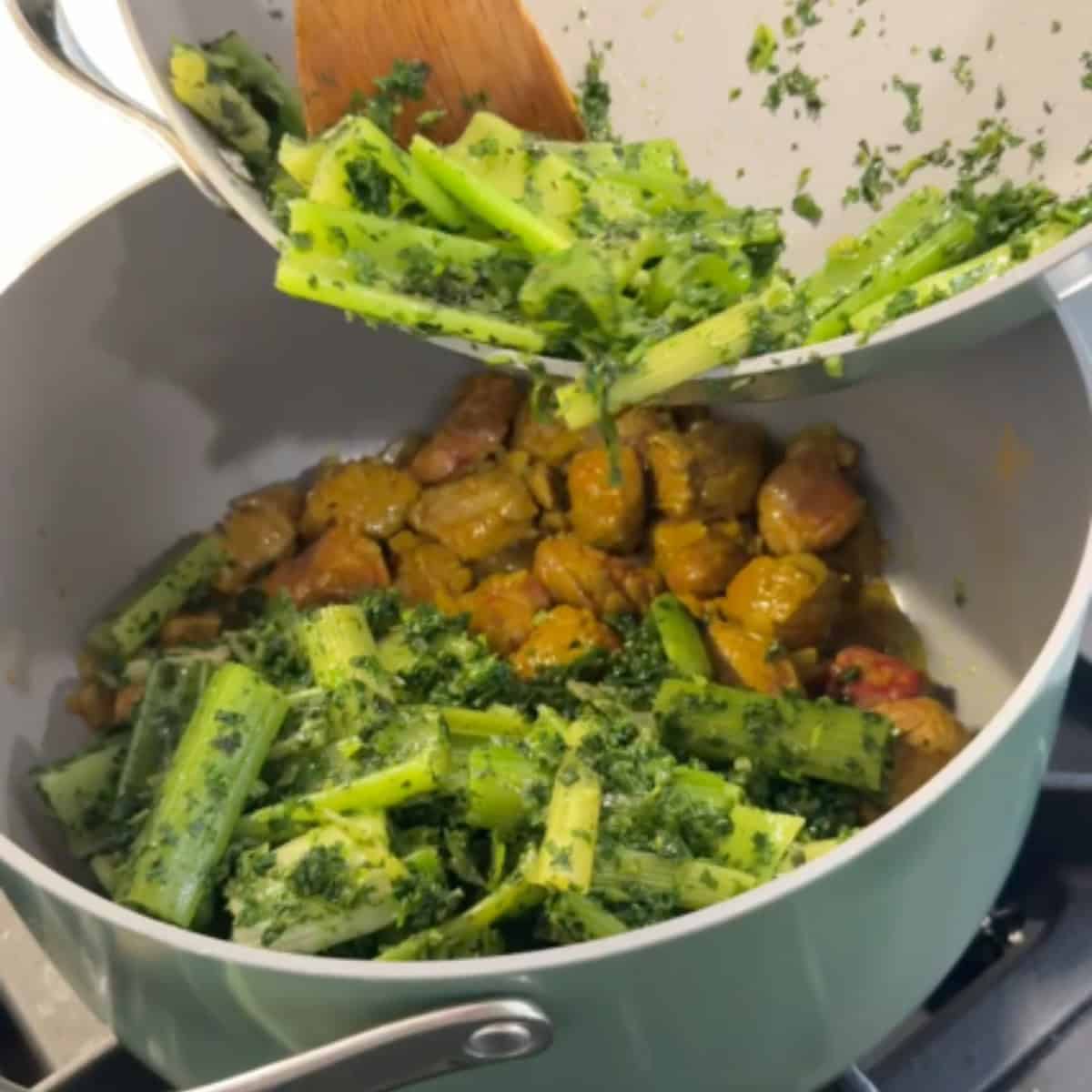
Heat 2 tablespoons of olive oil in a wide pan over medium heat. Add the celery and cook it for a few minutes until it’s glossy. Add in the mint and parsley and sauté for 10 to 15 minutes, stirring occasionally, until the herbs darken and become deeply fragrant. The smell at this stage should be intensely herby, that’s exactly what you want. Turn the heat off and set aside.
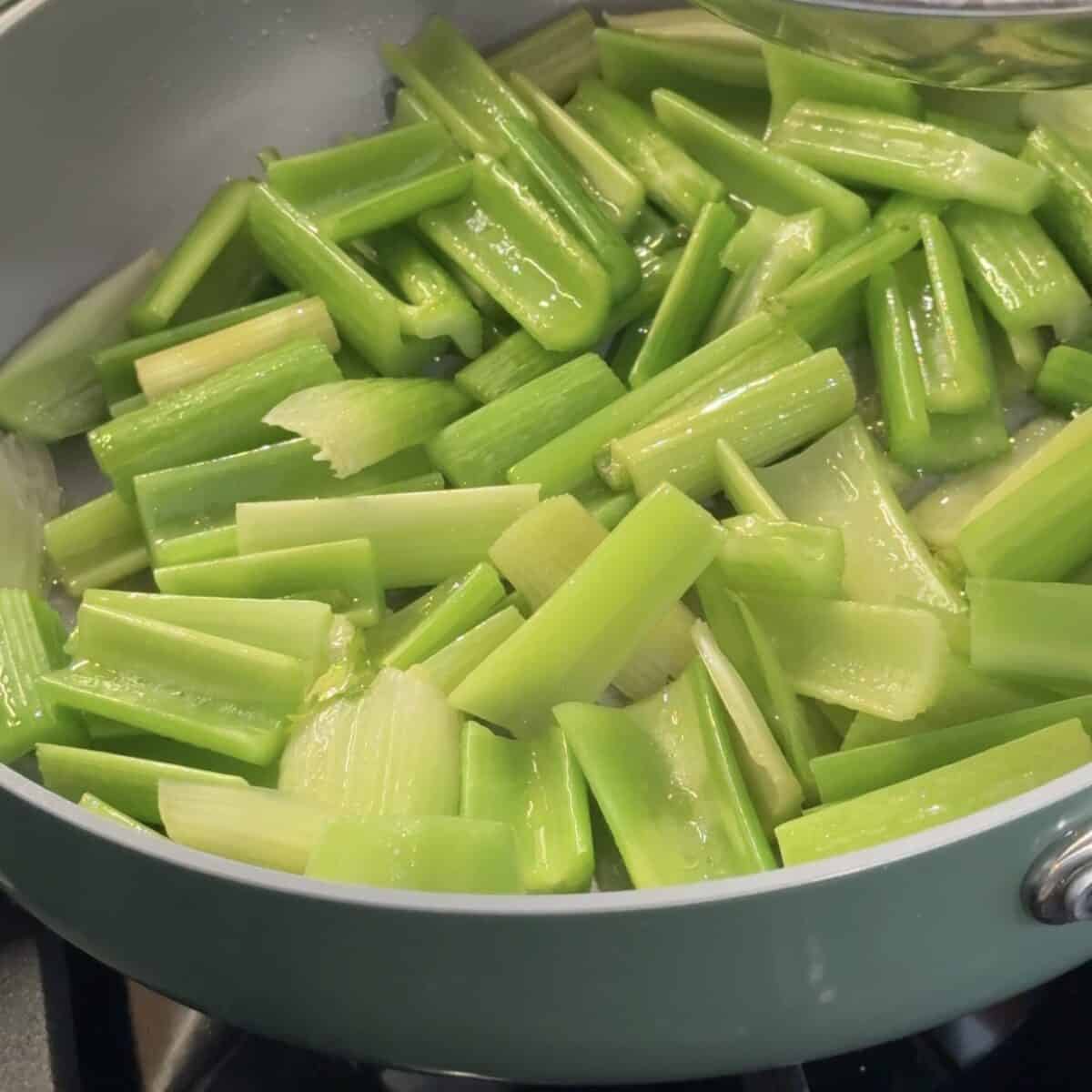
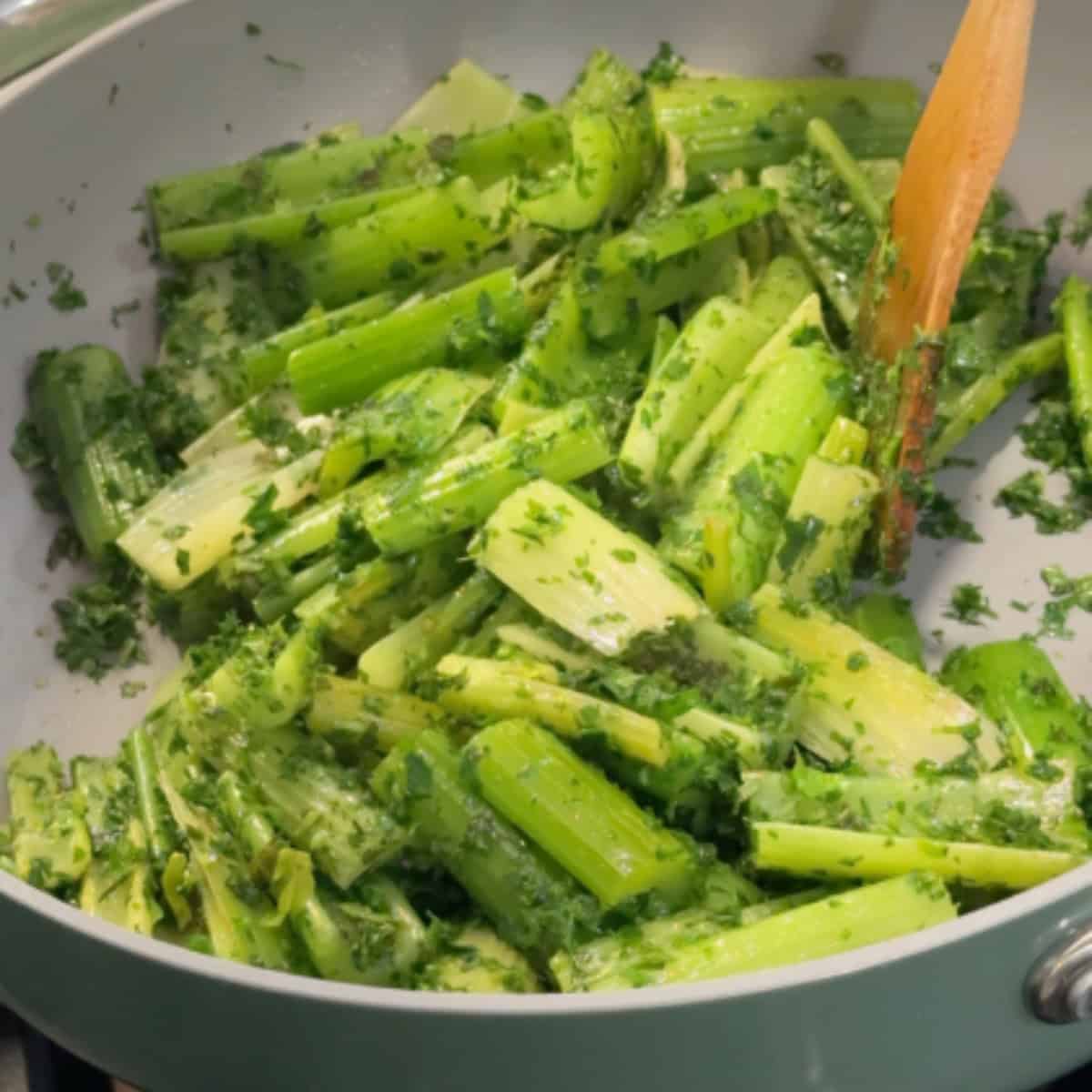
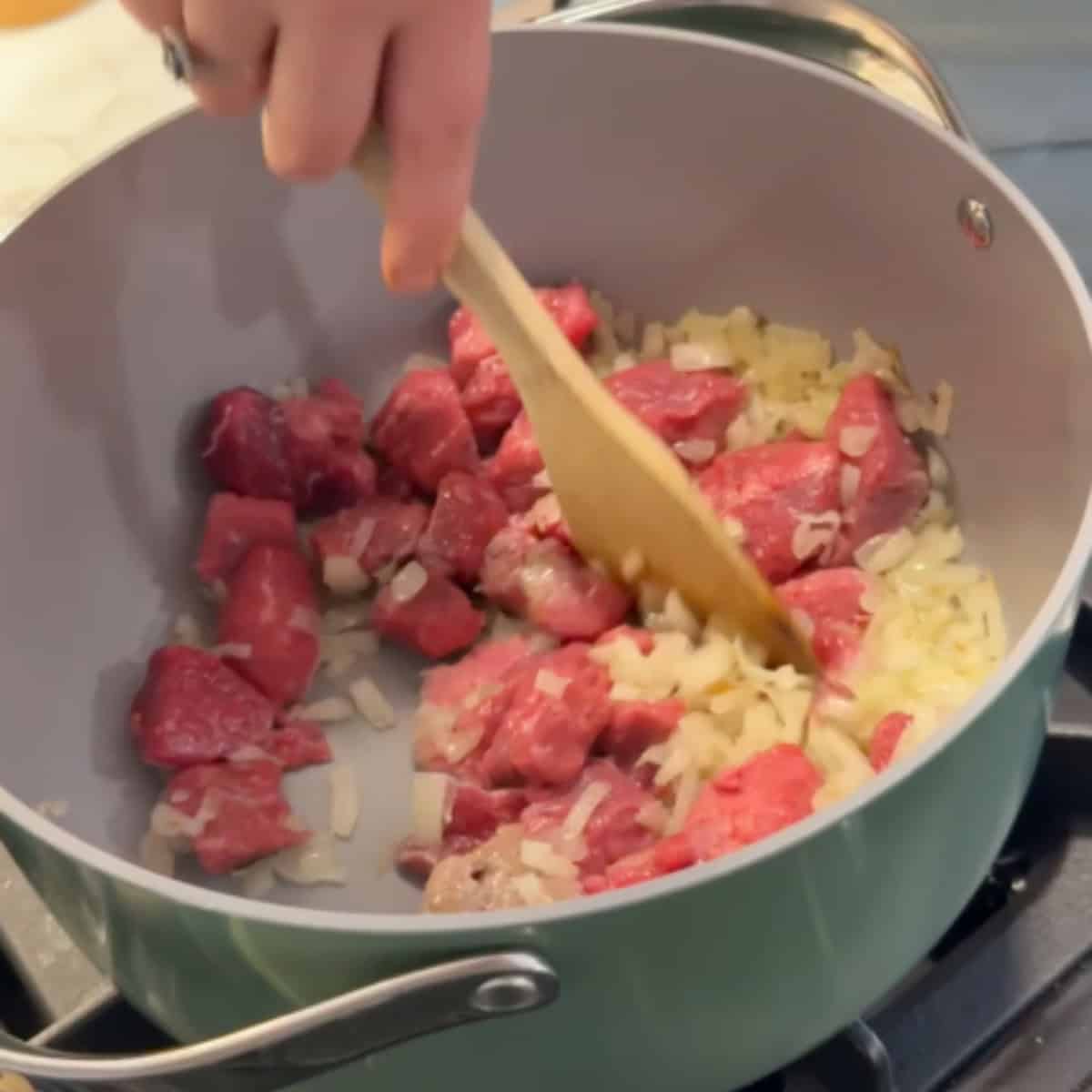
In a large pot or Dutch oven, heat the remaining 2 tablespoons of olive oil over medium high heat. Add the onion and cook until deeply golden, about 10 minutes. Don’t rush this step.
Add the lamb, turmeric salt and pepper. Sauté until the meat is browned on all sides, about 5 to 7 minutes. It doesn’t need to be fully cooked through at this stage.
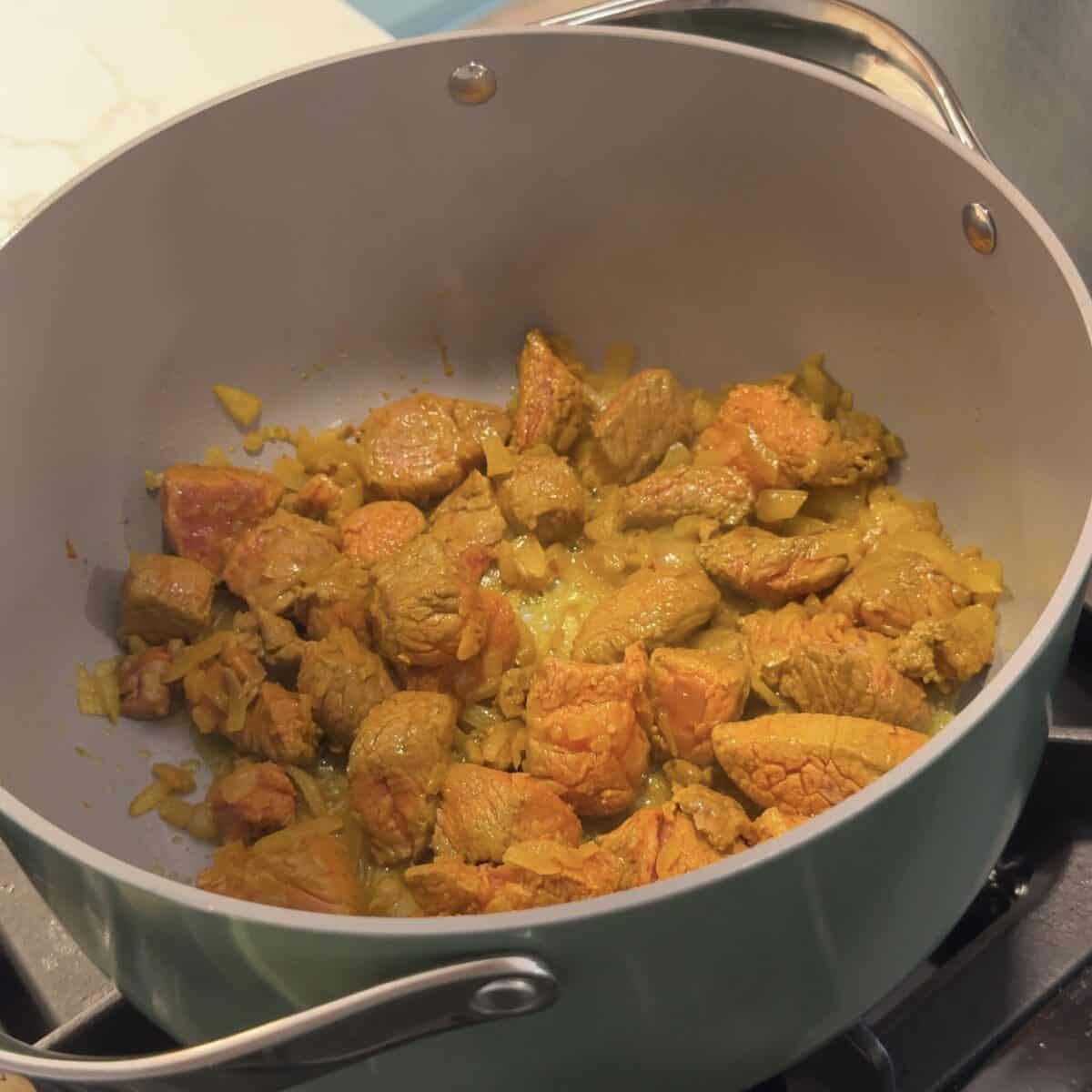
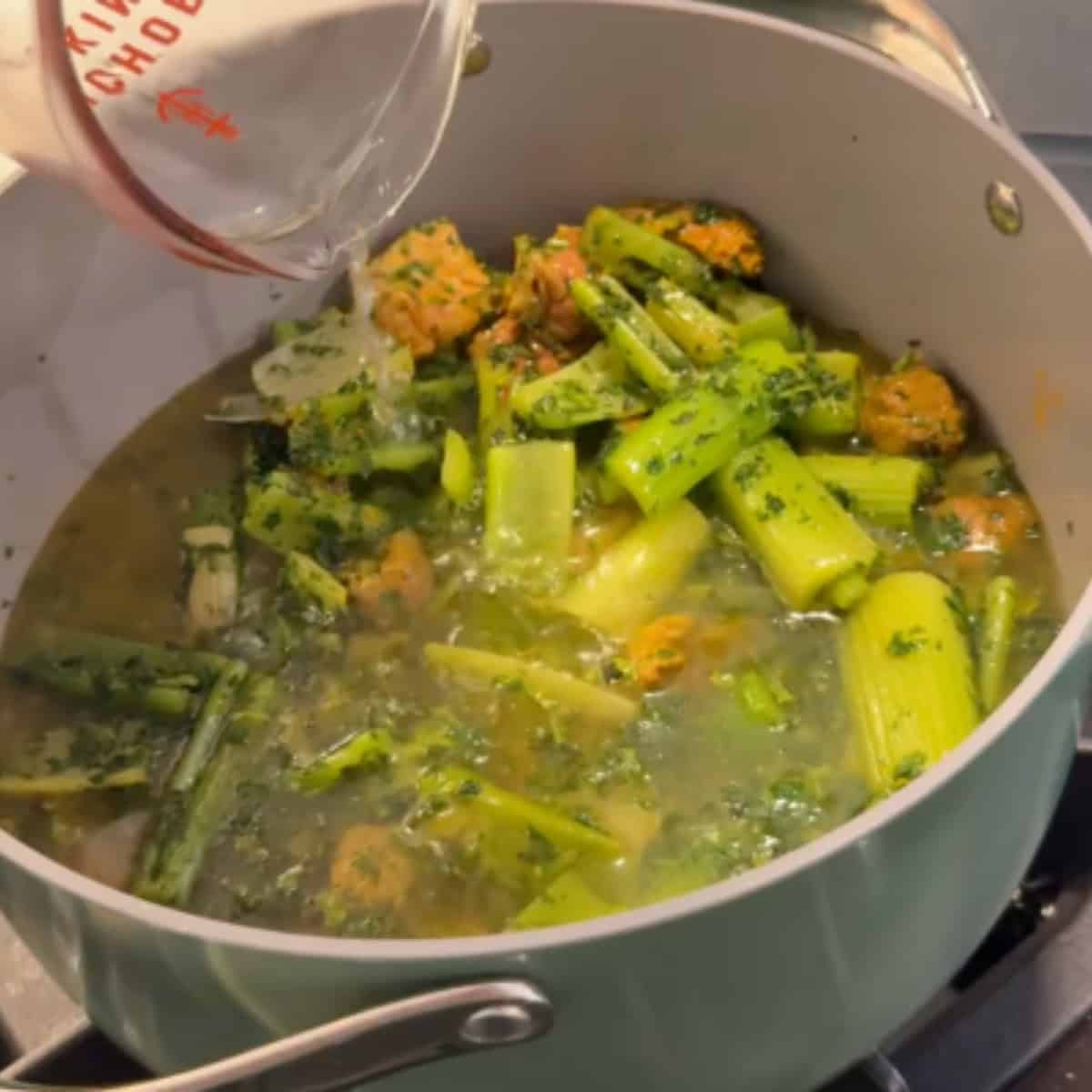
Add the sautéed celery and herbs to the pot and stir everything together. Pour in 5 cups of water and bring to a simmer. Cover and cook on medium heat for a little over an hour, until the lamb is completely tender and the celery has softened but still has a slight bite.
Squeeze in the juice of half a lemon, stir, and taste. Adjust salt as needed. If the stew looks too thick add a little more water half a cup at a time. Serve warm with Persian white rice or saffron rice.
Tips For The Best Khoresh Karafs
Don’t skip sautéing the herbs separately: This step is what sets Persian herb stews apart from everything else. Cooking the mint and parsley in oil before adding them to the pot concentrates their flavor completely and removes the raw edge. It takes 10 to 15 minutes and it makes the stew what it is.
Watch your mint: Too much makes the stew bitter. The ratio in this recipe is tested, so resist the urge to add more just because you love mint.
Lamb over beef if possible: Beef works perfectly well but lamb has a richness and depth that suits the herbs in a way beef doesn’t quite replicate.
Control the consistency: I like this stew thick, and I hold back on the water accordingly. Add the full 5 cups and then check after 40 minutes. If it’s too thick, add more water, half a cup at a time. If it’s thinner than you’d like, leave the lid slightly ajar for the last 15 minutes.
Lemon goes in last: Add it at the very end, not during the cooking process. Acid added too early works against the meat during the long cook.
Serving Suggestions
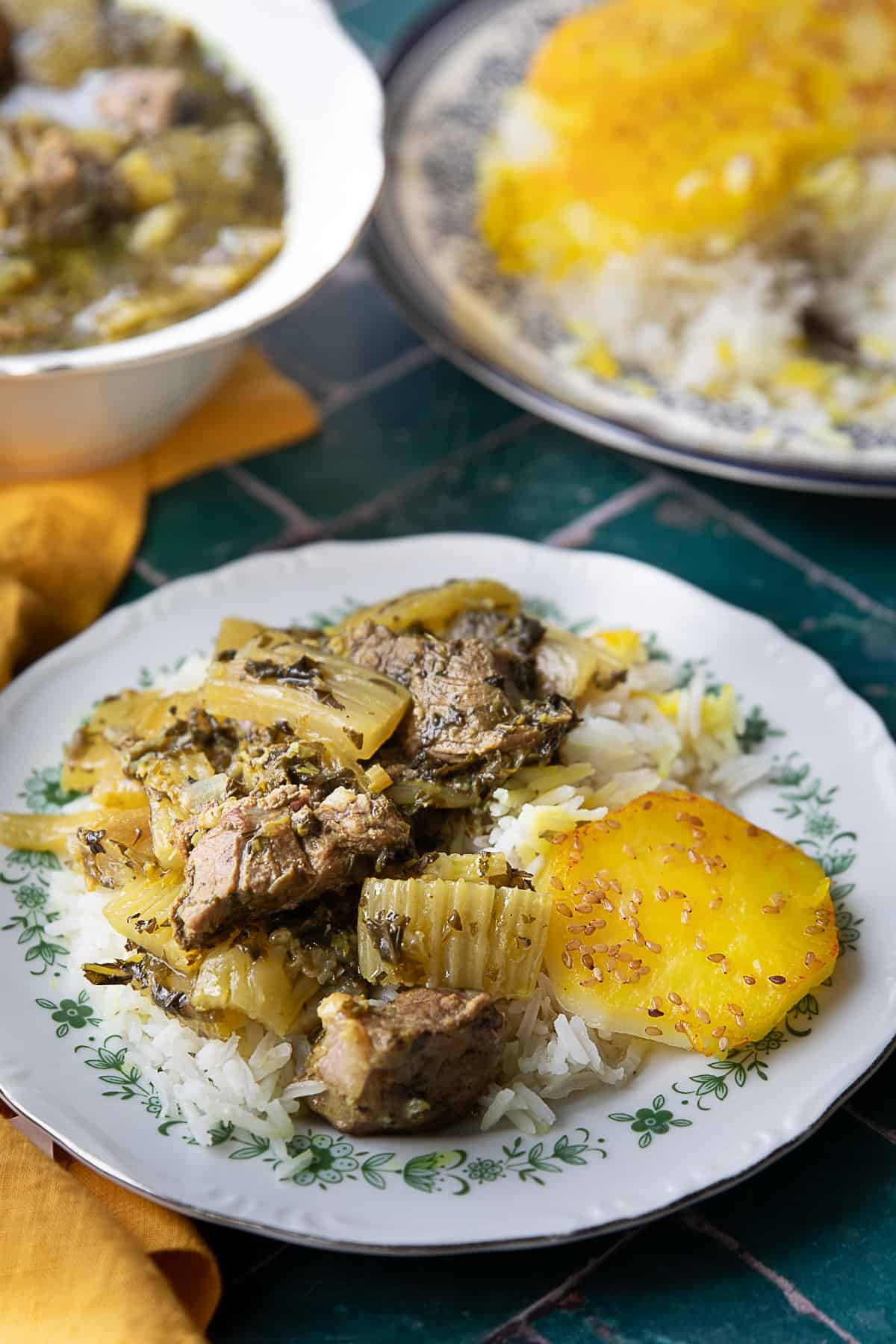
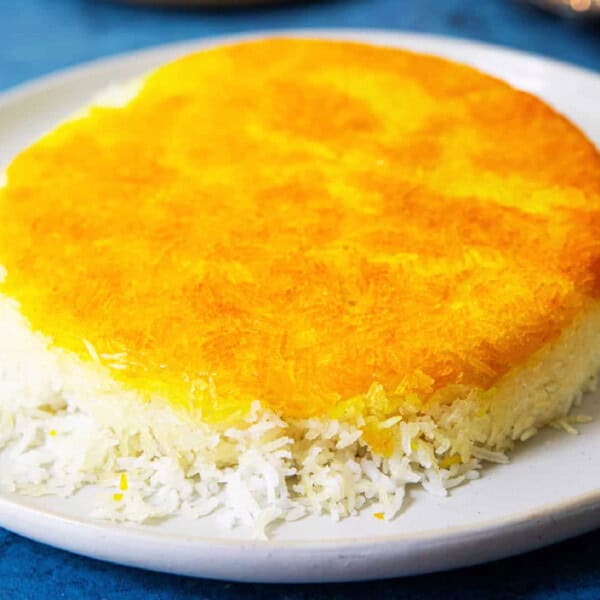
Khoresh karafs is always served with rice in Iranian homes. The stew needs the rice to absorb into, and the rice needs the stew to give it flavor and moisture. My recommendation is Persian saffron rice or plain Persian white rice with a golden tahdig crust.
If you’re putting together a larger Persian spread, this pairs well alongside other khoresh dishes like fesenjan or khoresh bademjan.
Frequently Asked Questions
Yes, bone-in chicken thighs work as a substitute. The cooking time will be shorter, about 30 to 35 minutes rather than 45 to 60. Keep an eye on it.
To make this stew vegetarian, leave out the lamb entirely and add a can of rinsed red kidney beans or pinto beans in the last 15 minutes of cooking. The herbs and celery carry the dish on their own, and this is one of those stews where the vegetarian version doesn’t feel like something is missing.
Yes, and it’s actually better the next day as the flavors deepen overnight. Store in an airtight container in the fridge for up to 5 days. Reheat gently on the stove with a splash of water if needed.
No. The fresh herbs are sautéed in oil as a foundational step and dried herbs won’t give you the same result. Fresh mint and parsley are widely available and worth seeking out for this recipe.
Did you make this recipe? I’d love to hear about it! Please comment and leave a 5-star🌟 rating below. You can also follow us on Instagram, Facebook, Pinterest or subscribe to our newsletter to get a free e-Cookbook!

Khoresh Karafs (Persian Celery Stew)
Ingredients
- 4 tbsp olive oil, divided
- 8 celery stalks, chopped into 1/2 inch pieces
- 1 cup fresh mint, finely chopped
- 1 1/2 cup fresh parsley, finely chopped
- 1 large yellow onion, finely diced
- 1 lb lamb stew meat, cut into 1 inch pieces
- 1/2 tsp turmeric
- 1 tsp coarse salt
- 1/2 tsp black pepper
- 5 cups water
- 1 lemon , juice of
Instructions
- Heat 2 tbsp olive oil in a pan over medium heat.
- Add the celery and saute for 5-7 minutes until they're glossy. Add in the mint and parsley and saute until herbs start getting dark and release their aroma, about 10 minutes. Turn the heat off and set aside.
- In a large pot, heat 2 tbsp olive oil over medium high heat. Saute onion until golden, about 10 minutes.
- Add in lamb meat stew with turmeric, salt and black pepper. Saute until lamb is brown.
- Add in sauteed celery and herbs to the lamb and onion mixture.
- Cook for about a minute. Add in the water and bring to simmer.
- Cover and cook for about 50-70 minutes until the lamb is fully cooked and tender.
- Add in the lemon juice and let it cook for 5 more minutes.
- Serve warm with Persian style white rice or saffron rice.
Notes
- Too much mint makes the stew bitter, so don’t overuse it.
- To make this stew vegetarian, use kidney beans or pinto beans instead of lamb. Add the beans after the lamb is cooked and 10-15 minutes before turning the heat off.
Nutrition
Nutrition information is automatically calculated, so should only be used as an approximation.
More Persian REcipes
Persian Recipes
Tahdig Recipe (Persian Crispy Rice)

Persian Recipes
Khoresh Kadoo (Persian Chicken Zucchini Stew)

Persian Recipes
Khoresh Gheimeh Recipe (Persian Split Chickpea Stew)

Persian Recipes










I love trying food from all over the world! I’m intrigued since celery is usually just used to add a pop of color to a dish, but here you use it as the main ingredient. Very interesting! Also- I have to say that blue plate is just gorgeous.
OMG Nagi you are here! Nagi is on my blog yipeeeeee 😀 Thank you for your kind comment! Yes for many foods celery is not a main ingredient and you may not believe it but celery stalk is SO RARE in Turkey! I love America 😀 The plate is from Iran too 🙂 Thank you again for your visit! <3
This recipe sounds so good. I loved the plates you have used in the first two pictures. They are so pretty.
Thank you Deepika! The plate is from Iran too 🙂
I love trying dishes from other countries that I have never tried before. This sounds intriguing! I am really curious about the powered dry lime. I think I would definitely use that in more than one recipe!
Hey Willow! You can use dried lime in any recipe that is supposed to have a sour taste kick in it! You will love it!
Celery khoresht doesn’t have beens and parsley and… , this food is something from yourself. Maybe this is good too but is not Persian food!
Hi Elham, Thanks for your comment. Here are several references that state parsley is used in this stew. If you have read the post completely, you should have noticed that I stated that my friend is a vegetarian and even in the topic it has been stated that this is the vegetarian version and because people need protein, we added beans instead of meat 🙂 Have a great day!
P.S: In addition to all the references here, my mom also adds parsley. So, parsley it is 🙂
https://2nafare.com/%D8%B7%D8%B1%D8%B2-%D8%AA%D9%87%DB%8C%D9%87-%D8%AE%D9%88%D8%B1%D8%B4%D8%AA-%D9%83%D8%B1%D9%81%D8%B3-%D9%85%D8%B1%D8%AD%D9%84%D9%87-%D8%A8%D9%87-%D9%85%D8%B1%D8%AD%D9%84%D9%87/
https://irancook.ir/09/29/khoresht-karafs/3671/
https://fa.wikipedia.org/wiki/%D8%AE%D9%88%D8%B1%D8%B4_%DA%A9%D8%B1%D9%81%D8%B3#.D9.85.D9.88.D8.A7.D8.AF_.D9.84.D8.A7.D8.B2.D9.85_.D8.A8.D8.B1.D8.A7.DB.8C_.D8.AA.D9.87.DB.8C.D9.87_.D8.AE.D9.88.D8.B1.D8.B4_.DA.A9.D8.B1.D9.81.D8.B3
Never made or even heard of a celery stew before! Sounds intriguing — would love to test out some more Persian recipes : )
Thank you Vicky for your sweet comment! Every Saturday, there is going to be a new Persian food and I’m so excited about it!
Shadi this is a great recipe. I was so excited to see dry lime in your recipe. Last time I saw it being used was when I was living in Saudi and most of the food had dry lime. I still remember that aroma and flavour. Thank you for bringing back those memories 🙂
Dalia I didn’t know other countries use it too! Well then you definitely know how awesome it tastes and smells! 🙂
Hi Shadi, what a beautiful plate! And a healthy, simple vegetarian recipe. Wonder if I’ll ever get the nerve to try to make the rice? I always make rice in a rice cooker these days to avoid burning it.
Hey Mary! Thank you! The plate is actually my friend’s and has come all the way from Iran! You can definitely make the rice it’s pretty simple!
We’ll definitely give this a try.
I enjoy trying new dishes. Thanks.
interesting to find celery as a main ingredient. usually i see it as a minor ingredient used only to add some color or flavor.
It tastes very good when it’s mixed with mint and all the spices! 🙂